
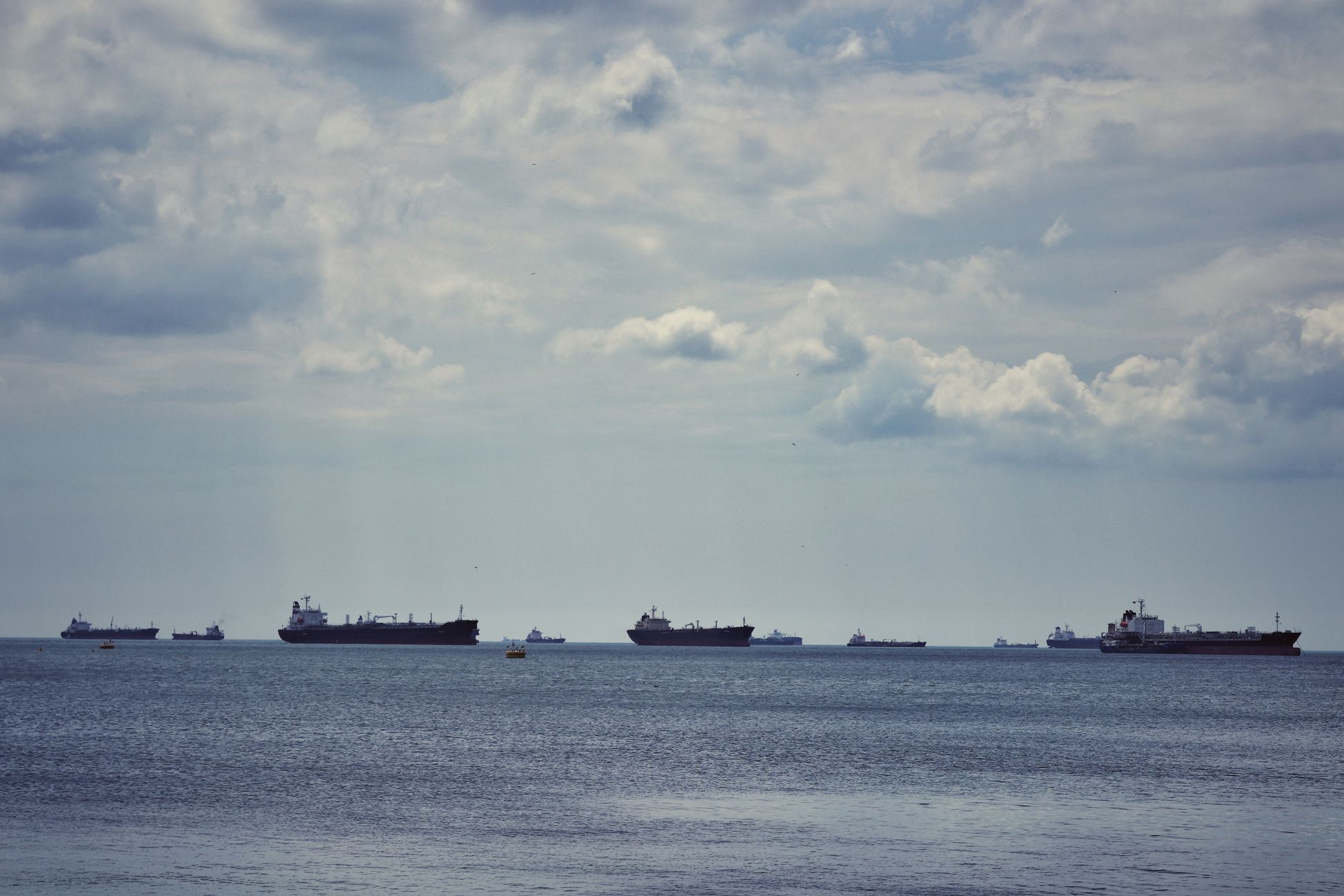
The MV Ever Given, the same 400-metre container ship that wedged itself across the Suez Canal in March 2021, passes through the Singapore Strait on almost every Asia-Europe rotation, threading a waterway that narrows to roughly 3 kilometres wide at Phillip Channel and carries a significant portion of the world’s traded goods. On a clear morning from Bukit Selat Buloh on Pulau Sebarok, you can count more than a hundred ships at anchor at once, stacked toward the horizon like parked cars at a stadium.
The Strait is only about 105 kilometres long. It is the southern leg of the longer Malacca corridor, and it is the chokepoint inside the chokepoint.
At its narrowest navigable point, near Phillip Channel south of Singapore, the usable two-way fairway shrinks to about 3 kilometres of water, with shoals and small islands biting in from either side. Pilots call it the eye of the needle.
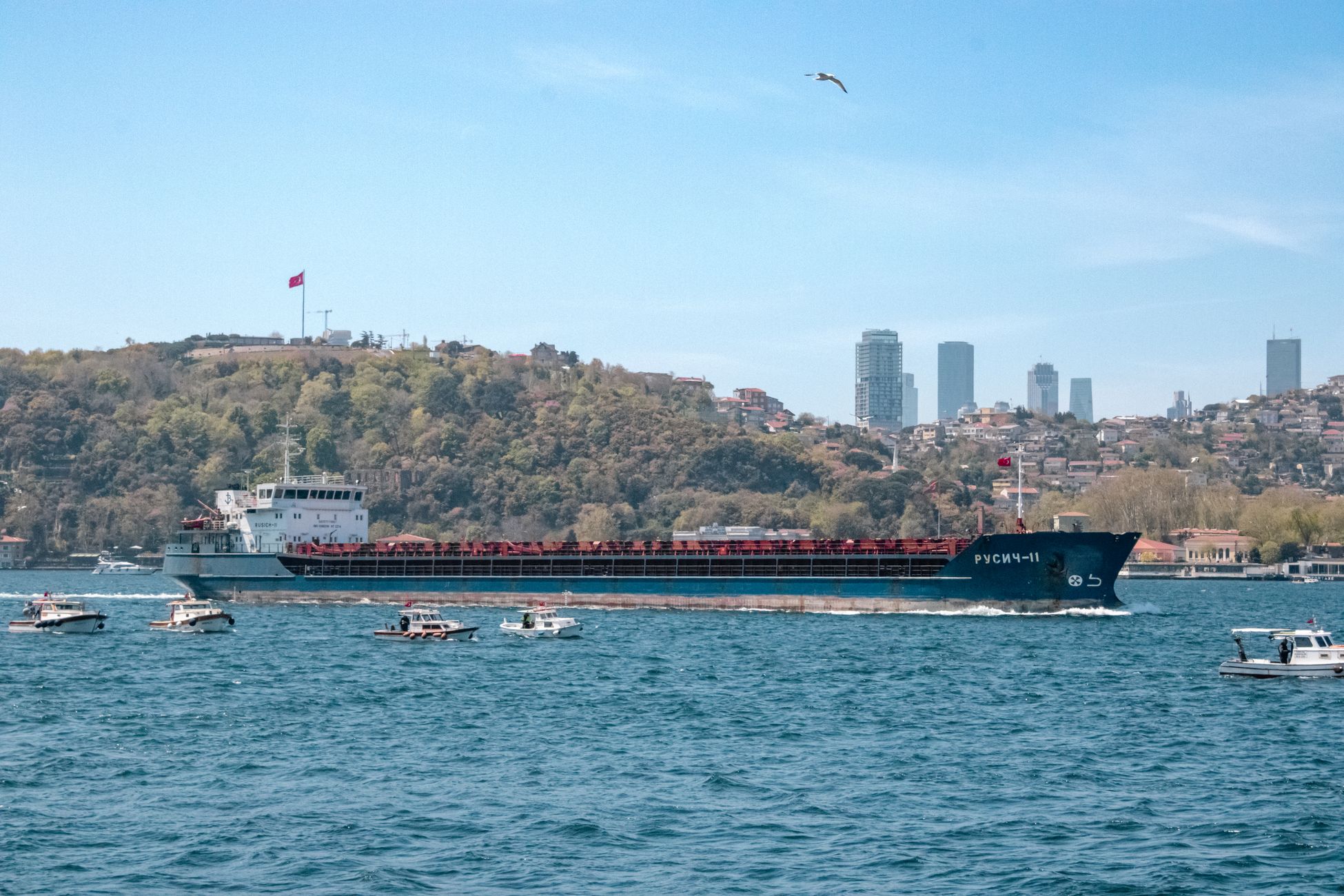
A third of world trade, squeezed into 3 kilometres
Roughly 90,000 to 100,000 vessels transit the Malacca and Singapore Straits each year. That is more than 250 ships a day, every day.
The cargo on those ships includes a substantial portion of the world’s seaborne oil, the bulk of liquefied natural gas heading to Japan, South Korea and China, and the iron ore, soybeans, sneakers, lithium batteries and refrigerators that keep modern supply chains stitched together. Analysts at the Jakarta Post have argued the corridor is now so central to global commerce that a serious disruption would ripple through every major economy within weeks.
The geography is brutal. The strait is shallow in places, with a controlling depth of about 21 metres that sets the global standard for a class of tanker known as Malaccamax — built to the absolute maximum draft the strait can swallow.
Ships any deeper must detour through the Lombok or Sunda Straits, adding three days and thousands of tonnes of bunker fuel to the voyage.
Why the queue forms
The waiting is not weather. It is throughput.
Singapore is one of the world’s largest bunkering ports — the place where ships refuel — and one of the busiest container ports globally. The Port of Singapore Authority processes tens of millions of container units a year across terminals at Tuas, Pasir Panjang and the old Tanjong Pagar berths.
When a containership arrives off the eastern anchorages, it joins a queue managed by Vessel Traffic Information Services. Slots for berths, pilots, tugs and bunker barges are scheduled to the hour. A delay in Yantian or Rotterdam ripples down the line, and ships sometimes sit at anchor in the Singapore Strait for three to five days waiting for a window.
During post-pandemic congestion, the queue has stretched substantially, with some boxships idling for over a week. Analysts tracking the spillover noted that disruption at a single chokepoint cascades through global manufacturing schedules within days.
The pirates of Phillip Channel
The same narrowness that throttles trade also breeds piracy. Phillip Channel sits within sight of the Riau Islands of Indonesia, a maze of mangroves, fishing villages and small inlets that make perfect launch points for boarding parties.
The ReCAAP Information Sharing Centre, the regional anti-piracy body headquartered in Singapore, has recorded significant numbers of incidents in the Singapore Strait in recent years. Most involved small skiffs catching up to slow-moving bulkers at night, with crews of two to six climbing aboard with grappling hooks and knives.
The typical target is not the cargo. It is the ship’s safe, the crew’s personal effects, spare engine parts and any unsecured stores on the poop deck. The robberies are quick, often under fifteen minutes, and the boarders disappear back into the islands before navy patrols can respond.
Tugs towing barges of palm oil or scrap metal at 5 knots are the easiest marks. A loaded VLCC tanker doing 12 knots, with a freeboard of less than 6 metres, is the next easiest.
Living in the queue
For the crews — overwhelmingly Filipino, Indian, Chinese and Indonesian seafarers — the wait is its own occupational hazard. A ship at anchor still requires watchkeeping, anti-piracy rounds, engine maintenance and bridge presence around the clock.
Research on occupational health in maritime environments has consistently flagged the combination of long contracts, restricted shore leave and unpredictable port calls as a leading driver of fatigue, depression and accident rates among seafarers. The Singapore queue concentrates all three.
A typical bulker crew of 20 may spend nine months at sea under a single contract. If the ship makes the Asia-Europe loop six times, they will pass through the Singapore Strait twelve times and anchor in the queue for somewhere between two and eight weeks of their contract, total. They are close enough to see the lights of Marina Bay Sands. Most never set foot on land.
The economics of the bottleneck
Every day a large containership spends at anchor costs its operator tens of thousands of dollars in charter hire, fuel for hotel load, crew wages and capital costs. Multiply that across the fleet and the Singapore queue burns millions of dollars a day in collective idle cost on container shipping alone, before tankers and bulkers are counted.
The carriers pass the cost on. Spot freight rates spike measurably whenever the Singapore queue extends beyond 72 hours, and forwarders have begun pricing congestion surcharges directly into customer contracts.
Logistics platforms have responded by reorganising around the chokepoint. The supply chain software firm OMP, for example, has been pitching what it calls decision-centric planning to speed up shipper responses when a single waterway slips by even a day.
On the human side, Forbes contributors writing about logistics in 2026 have argued that warehouse and factory productivity is now downstream of whether workers can reroute and reschedule shipments confidently when a chokepoint clogs. A four-day Singapore delay can mean a Polish auto plant runs out of wiring harnesses.
How the strait is policed
The Singapore Strait sits inside the territorial waters of three countries — Singapore, Malaysia and Indonesia — and the patrol arrangement is famously delicate. The Malacca Strait Patrol coordinates surface patrols and aerial surveillance missions among the three navies plus Thailand.
Singapore’s Police Coast Guard runs PT-class fast craft out of Brani Base. Indonesia’s Bakamla operates from Batam. Malaysian Maritime Enforcement Agency vessels work the northern flank near Johor.
None of them can pursue a fleeing skiff across a maritime border without permission. Pirates exploit this. A successful boarding off Phillip Channel can end with the boarders ashore in Indonesia within twelve minutes of jumping back into their skiff.
The traffic separation scheme
What keeps the strait from descending into permanent chaos is a traffic separation scheme adopted by the International Maritime Organization. Westbound deep-draft traffic uses the northern lane. Eastbound uses the southern lane. A precautionary area sits at Horsburgh Lighthouse on the eastern end.
Pilotage is compulsory for tankers above certain drafts. Vessel Traffic Information Services in Singapore and Klang track every ship by AIS and radar, vectoring crossing traffic and warning of fishing fleets.
Even with all that, collisions happen. In August 2017 the destroyer USS John S. McCain collided with the tanker Alnic MC in the eastern approaches, killing ten US sailors. The Navy’s investigation pointed to a steering control mix-up on the bridge, in waters where a thirty-second hesitation closes the distance between ships.
A choke point that cannot be widened
There is no engineering fix for the Singapore Strait. The shoals are bedrock. The shallow patches that define the Malaccamax draft are geological, not muddy. Dredging the Phillip Channel approach to allow a second deep-draft lane has been studied repeatedly and abandoned every time on cost and environmental grounds.
The alternatives are detours. The Lombok Strait between Bali and Lombok is deep and wide but adds roughly 1,600 nautical miles to a Persian Gulf-to-Yokohama voyage. The proposed Kra Canal across southern Thailand has been discussed since the seventeenth century and never built.
Which means, for the foreseeable future, the world will continue to push a substantial portion of its traded goods through a corridor narrower than the length of Manhattan. The crews on the bridges will keep watching the radar. The pirates will keep watching the freeboards. And on any given evening, from a beach on Pulau Sebarok, the queue of waiting ships will keep stretching toward the horizon, their navigation lights blinking in slow sequence, like a city that has somehow learned to float.
