
Space, science, and the human mind. Since 1995.
Space Daily Editorial Team
Editorial Team

Space Daily Editorial Team

Editorial Team

The Space Daily Editorial Team produces content across our two editorial pillars: space industry news and Mind & Meaning. We cover launches, missions, satellites, defense, and the technology of getting humans to space, alongside the psychology of ambition, isolation, and meaning under extremes. Articles reflect our team's collective editorial process, source verification, drafting, technical review, and editing, rather than a single writer's work. Space Daily takes editorial responsibility for content under this byline. For more on how we work, see our editorial policy.

Space Travel

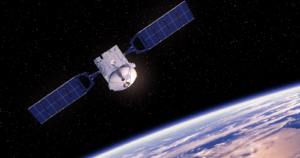
A Russian module called Zvezda has been venting the space station’s air through cracks since 2019 — losing nearly 2 kilograms a day before NASA auditors flagged it the highest safety risk aboard

Since September 2019, the Russian-built Zvezda service module has been leaking air through hairline cracks in a narrow tunnel called the PrK — at one point losing 1.7 kilograms of atmosphere a day. NASA auditors now rate it the highest open safety risk on the entire International Space Station.

Banking

In 2016, Singapore moved to shut BSI Bank’s local operation after 1MDB-linked accounts moved hundreds of millions of dollars through private-banking structures, and Switzerland’s regulator said the 143-year-old Lugano bank had treated suspicious wealth like a premium client relationship

How a Seychelles shell company, a 143-year-old Swiss private bank, and roughly $700 million in 2009 transfers became the institutional case study that ended BSI — and what the Singapore regulator's 2016 shutdown revealed about the plumbing of global private banking.

Science

On 28 September 1969, a fireball broke apart over a small Victorian farming town called Murchison and scattered black, carbon-rich rocks across the paddocks — and those rocks turned out to contain grains of stardust formed 7 billion years ago, older than the Sun, older than Earth, and the oldest solid material any human has ever held

The Murchison meteorite preserved presolar silicon carbide grains that formed before the Sun, with some dated to roughly 7 billion years old.

Human Behaviour

On May 11, 1997, the reigning world chess champion Garry Kasparov sat down in a Manhattan office tower to play the final game of his rematch against an IBM computer called Deep Blue — and resigned in under an hour, in what may be the cleanest moment in modern history when a domain of human cognition quietly crossed over to a machine

The boundary between what computers can do and what only humans can do has moved many times across the past 80 years, but it has rarely moved in a way that anyone could see happening in real time.

Science

Harry Harlow gave infant rhesus monkeys a choice between a wire mother that could feed them and a soft cloth mother built for warmth and comfort. Again and again, the monkeys clung to the cloth mother, going to the wire one only when they needed milk — a finding that helped overturn the idea that love was just hunger in disguise.

Harlow's wire-and-cloth mother experiments challenged the idea that early attachment could be explained by feeding alone, while leaving a difficult ethical legacy.

Science

In 1909, the chemist Fritz Haber pulled a few millilitres of ammonia out of ordinary air in a Karlsruhe laboratory, and the reaction he started now supplies the nitrogen atoms in roughly half the protein inside every human body alive today

In 1909 the German chemist Fritz Haber found a way to pull nitrogen out of thin air. A 2008 Nature Geoscience paper calculates that roughly half the nitrogen atoms in the protein and DNA of every living human now trace back to that single reaction — a fact with a feeding history, a war history, and a chemistry that still runs on natural gas.