
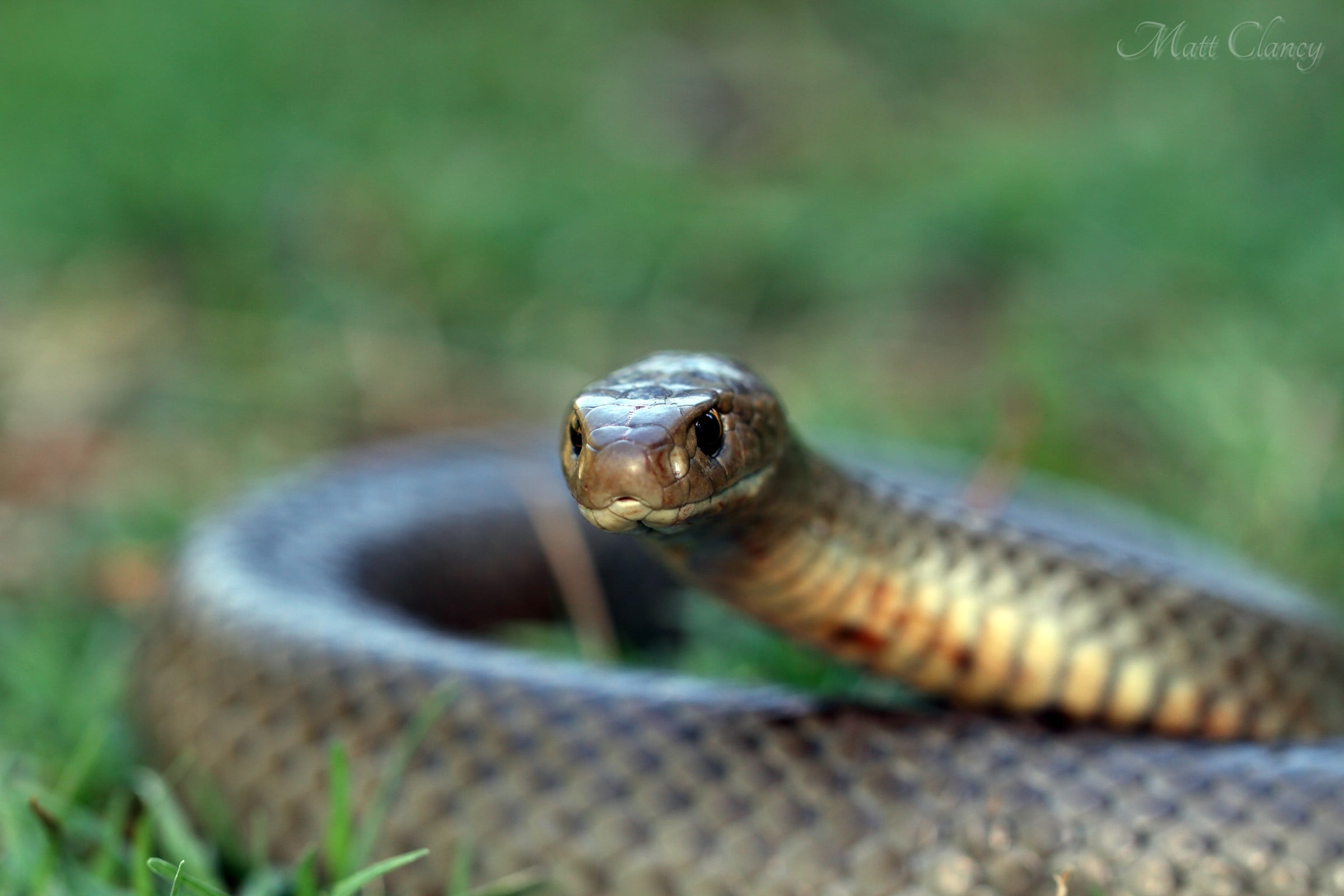
The eastern brown snake (Pseudonaja textilis) is among the snakes most likely to kill an Australian, and the place it is most likely to do it is not the outback. It is a tool shed in suburban Brisbane, a pool pump housing in western Sydney, or the gap behind a dishwasher in a Toowoomba rental, where the snake has followed the warm, food-rich scent trail of a black rat (Rattus rattus) that itself arrived with European settlement. Professional snake catchers across the eastern seaboard report removing large numbers of these animals from suburban homes every summer, and the single best predictor of where they will find one is where the rats already live.
The fact that bothers ecologists is simple. The deadliest snake in the country is not retreating from cities. It is moving in.
A snake that prefers a kitchen to a paddock
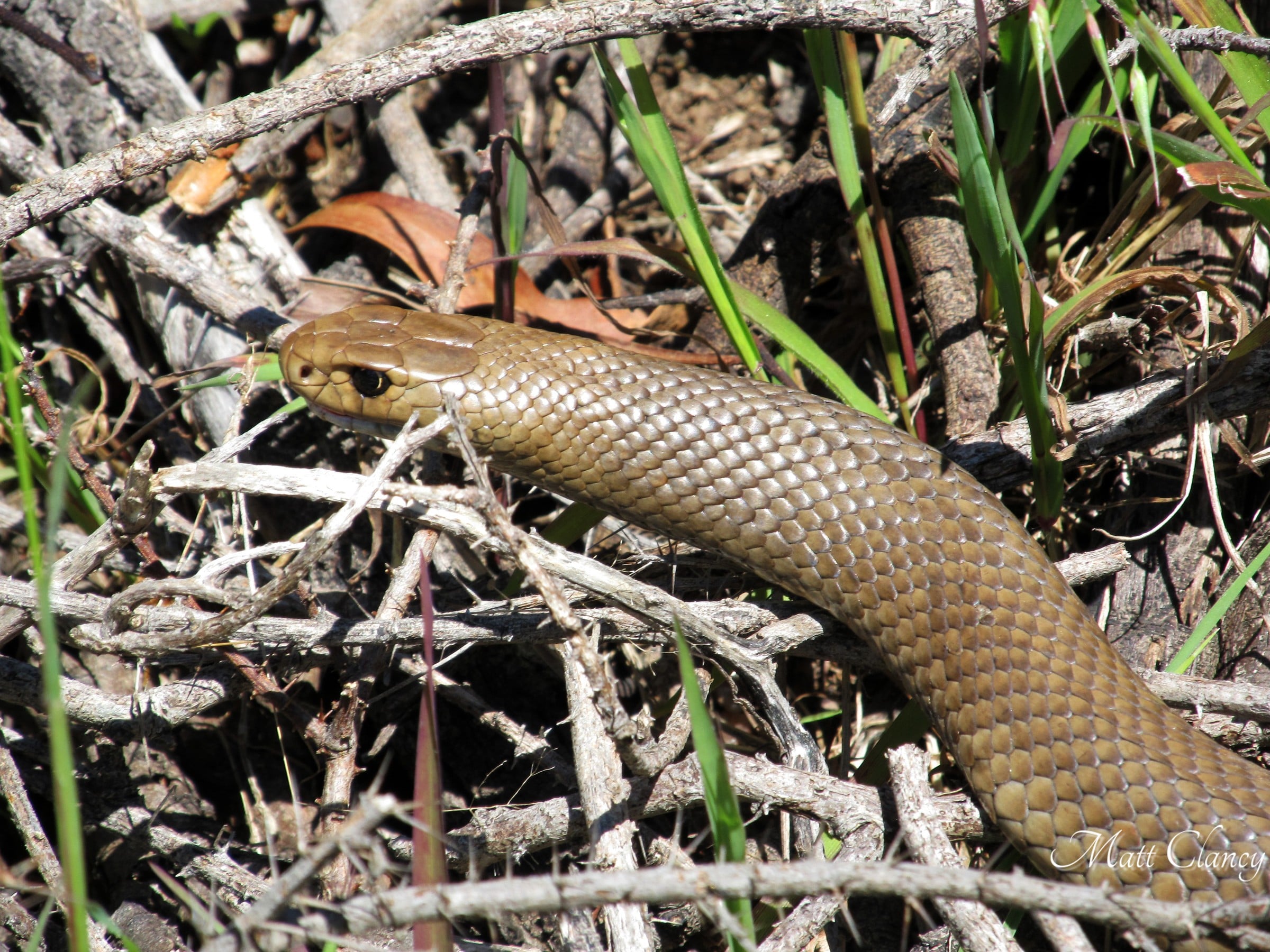
Eastern browns are slender, fast, and usually somewhere between caramel and chocolate in colour, with a pale belly often flecked with orange. Adults commonly reach 1.5 to 2 metres. Their venom is among the most toxic of any land snake, and it kills primarily by triggering catastrophic blood clotting rather than paralysis. Eastern brown snakes account for the majority of Australian snakebite deaths.
What makes the snake a public health problem is not the venom on its own. It is the habitat overlap. Eastern browns are diurnal hunters that key in on small mammals, and their preferred prey across most of their range is now the introduced black rat and house mouse, both of which breed in walls, compost bins, chicken coops, and pantries. Foraging studies on snakes show that species with active, visually guided hunting styles, like Pseudonaja, track prey by movement and scent corridors, the exact cues a suburban backyard generates in abundance.
What the catchers actually find
Licensed snake catchers in Queensland and New South Wales report that common removal sites show consistent patterns. The most common removal sites are garages, garden sheds, pool filter boxes, aviaries, chicken runs, compost heaps, retaining walls, and the cavities behind kitchen appliances. In a Brisbane summer, busy catchers report handling numerous call-outs daily, and a substantial share are eastern browns.
The pool filter is a signature site. The pump housing is warm, dark, and often has a small drainage gap a juvenile snake can squeeze through while chasing a frog or skink that came in first. Owners lift the lid in October to start the season and find a coiled brown snake staring back. Kitchens are the other classic. A pantry that has any rodent activity at all is, from the snake’s point of view, a baited trap.
A widely shared recent video of two children walking past a motionless brown snake on a dirt road captured something catchers say constantly: the animal is not aggressive by default. It freezes, then flees, and only rears into the S-shaped strike posture if cornered or stepped on.
The 1788 cargo that built the food chain
Black rats and house mice arrived with the First Fleet in 1788 and spread through the colony within a generation. They were followed by feral cats, foxes, rabbits, cane toads, and a long catalogue of other introductions that have reshaped Australian ecology more thoroughly than almost any other continent. Feral cats alone now kill more than a million native birds a day across the country, an ecological pressure the native fauna evolved no defence against.
The rodents did something different. They built a permanent, year-round food supply in human settlements. Where pre-1788 eastern browns hunted native rodents, dunnarts, lizards, and bird eggs across grasslands and open woodland, the post-colonial snake found a richer and more reliable prey base in towns. Granaries, stables, rubbish tips, and eventually suburban kitchens concentrated rats at densities the bush could not match.
The snake followed. It is one of the few large Australian predators that has done better, not worse, since European arrival.
Why eastern browns and not the others
Australia has numerous species of land snake, most of them venomous, and only a handful regularly bite people. Most are shy, nocturnal, or live in places humans rarely walk. The eastern brown is unusual on several axes at once.
It is diurnal, so it is active during the hours humans are also outside. It tolerates open, disturbed ground better than forest specialists like the rough-scaled snake. It is a strong climber for its body type and will enter roof cavities through weep holes and gaps under tiles. It produces large clutches and the hatchlings are venomous and capable of a fatal bite from day one. And it eats almost anything warm and small, with rodents at the top of the list.
A biologist’s survey of the deadly snakes most likely to turn up near homes puts eastern browns at the top of the Australian list specifically because of this combination of traits, not because of venom potency alone. The inland taipan is more venomous and almost never seen by anyone outside a few remote channel-country properties.
The bite that clots the blood
Eastern brown venom contains a cocktail dominated by prothrombin activators, enzymes that hijack the body’s clotting cascade. Within minutes of a serious envenomation, a victim’s fibrinogen is consumed building useless clots throughout the small vessels, and what should have been a clotting system collapses into uncontrolled bleeding. Collapse can occur within 15 minutes. Cardiac arrest from massive thrombotic events has been documented in under an hour.
First aid is the pressure-immobilisation bandage, which slows lymphatic spread of the venom while the patient is moved to a hospital with antivenom on hand. Brown snake antivenom is stocked in emergency departments across the country. With prompt treatment, the case fatality rate is low, with only a small number of deaths nationally each year despite thousands of snakebites, most of them not envenomations.
The deaths that do occur tend to share a profile. The victim was alone, did not realise they had been bitten, or did not seek help fast enough. Many happened while gardening, mowing long grass, or reaching into a woodpile.
What a snake catcher actually does
Snake removal in Queensland is regulated, and catchers carry hooks, pinning tongs, and a calico bag, and they work without sedation or harm to the animal. The catcher’s job is to identify the species, bag it, and release it within a few kilometres of the capture site under state wildlife rules. Snakes are protected under wildlife legislation in Australian states, including the eastern browns that turn up in suburban kitchens.
The catchers also do something quieter that matters more for long-term risk: they tell the homeowner where the rats are. A brown snake in a garage almost always means a rodent population somewhere within 50 metres. Sealing weep holes, clearing leaf litter, moving woodpiles away from the house, securing chicken feed in metal bins, and dealing with the rats are the actual interventions that reduce repeat visits. Removing the snake without removing the prey base just creates a vacancy.
The climate variable
Eastern browns are temperature-sensitive predators with an optimal activity window in warm conditions. Warmer, longer summers along the east coast have extended the active season at both ends, and milder winters have reduced overwinter mortality in juveniles. Catchers in Sydney and the Central Coast report call-outs starting weeks earlier in spring than they did 20 years ago and continuing later into autumn.
The snake’s range is also creeping. Records from the Atlas of Living Australia show eastern browns turning up in suburbs and altitudes where they were rare or absent in mid-20th century surveys. The combination of urban heat islands, year-round rodent populations, and warmer winters is, from the snake’s perspective, a habitat upgrade.
The fact that lingers
An eastern brown snake in a Brisbane pantry in February is the end point of a chain that started in 1788. A British ship unloaded rats. The rats moved into colonial kitchens, then suburban ones. The snakes that had hunted native rodents across the open woodland followed the new prey into the new habitat, and 240 years later their descendants are pulled out of pool filters by men in steel-capped boots with calico bags.
The deadliest snake in Australia is, in a real sense, a co-resident of the suburbs. It is not invading. It is doing what it has always done, in the only landscape its prey now lives in. The garage light comes on, the catcher’s phone rings, and somewhere behind the hot water system, a 1.6-metre snake is waiting for a rat to move.
