

Universe
The Big Bang did not explode into empty space from a central point
Ask where the Big Bang happened and most people will gesture at some distant point in the sky, the spot where it all went off.

Ask where the Big Bang happened and most people will gesture at some distant point in the sky, the spot where it all went off.

On January 14, 2005, the European Space Agency's Huygens probe parachuted through Titan's orange haze for two hours and twenty-seven minutes, landed on a damp plain of methane-soaked ice pebbles, and transmitted for another seventy-two minutes before its batteries died. It remains the only spacecraft ever to land in the outer solar system.
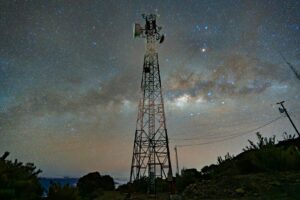
On 23 January 2003, NASA's Deep Space Network heard Pioneer 10's last faint signal from 11.9 billion kilometres away — a spacecraft built for a 21-month mission, still transmitting after three decades, falling silent as its plutonium power supply finally ran too low to speak.

The Apollo Guidance Computer's flight program was not loaded onto the spacecraft — it was physically woven into memory by women threading copper wire through magnetic rings by hand, a process the engineers nicknamed LOL memory.
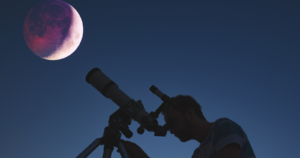
A sub-10-kilogram X-ray telescope modeled by researchers at Tokyo Metropolitan University could map oxygen, iron, magnesium, aluminum, and silicon across the entire lunar surface in about two years, if it ever flies on a small satellite around the Moon.
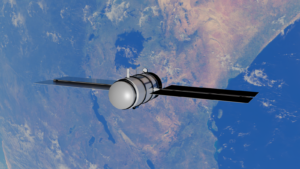
A small satellite the size of a briefcase may soon become one of the most flexible spacecraft NASA has ever flown — and the reason comes down to a single tank of fuel doing two very different jobs.

A research team at the University of Twente has taken one of thermal engineering's hardest problems off the simulation bench and into the air, running pool…
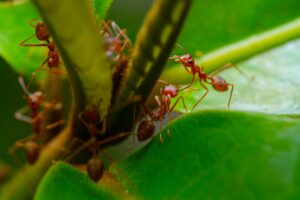
The fungus Ophiocordyceps unilateralis has been hijacking carpenter ants for at least 48 million years, steering them to a precise height and humidity before locking their jaws to a leaf and sprouting a spore-shedding stalk from their heads.

In the former Cistercian convent church of St. Burchardi, in the small town of Halberstadt in the German state of Saxony-Anhalt, a single sustained chord has…

Correction, September 20, 2026: The headline was revised because the 1999 results showed large overestimation among bottom-quartile performers, not that they consistently rated themselves above the top performers.

Long-running studies link stronger social relationships with several health and wellbeing outcomes. They do not rank relationships above exercise or diet, or prove that connection prevents dementia.
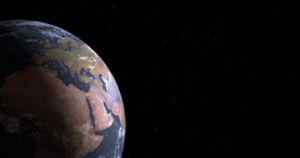
Eratosthenes of Cyrene, born around 276 BCE in what is now Libya and serving from his mid-thirties onward as the third chief librarian of the great Library of…
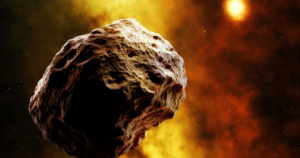
The competition that matters most in planetary science right now is not about boots or banners.
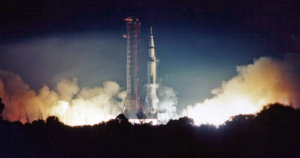
On the morning of 17 December 1903, on a stretch of windswept sand at Kill Devil Hills near Kitty Hawk, North Carolina, Orville Wright lay flat on the lower…
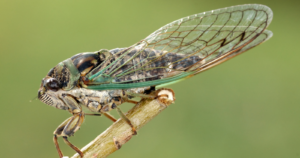
In the spring of 2024, two enormous populations of periodical cicadas emerged simultaneously from the soil across the eastern and midwestern United States for…
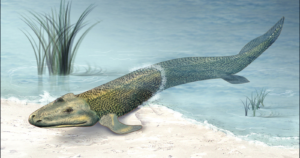
In 1999, three paleontologists made a decision that would, five years later, lead them to one of the most important fossil discoveries of the twenty-first century.