
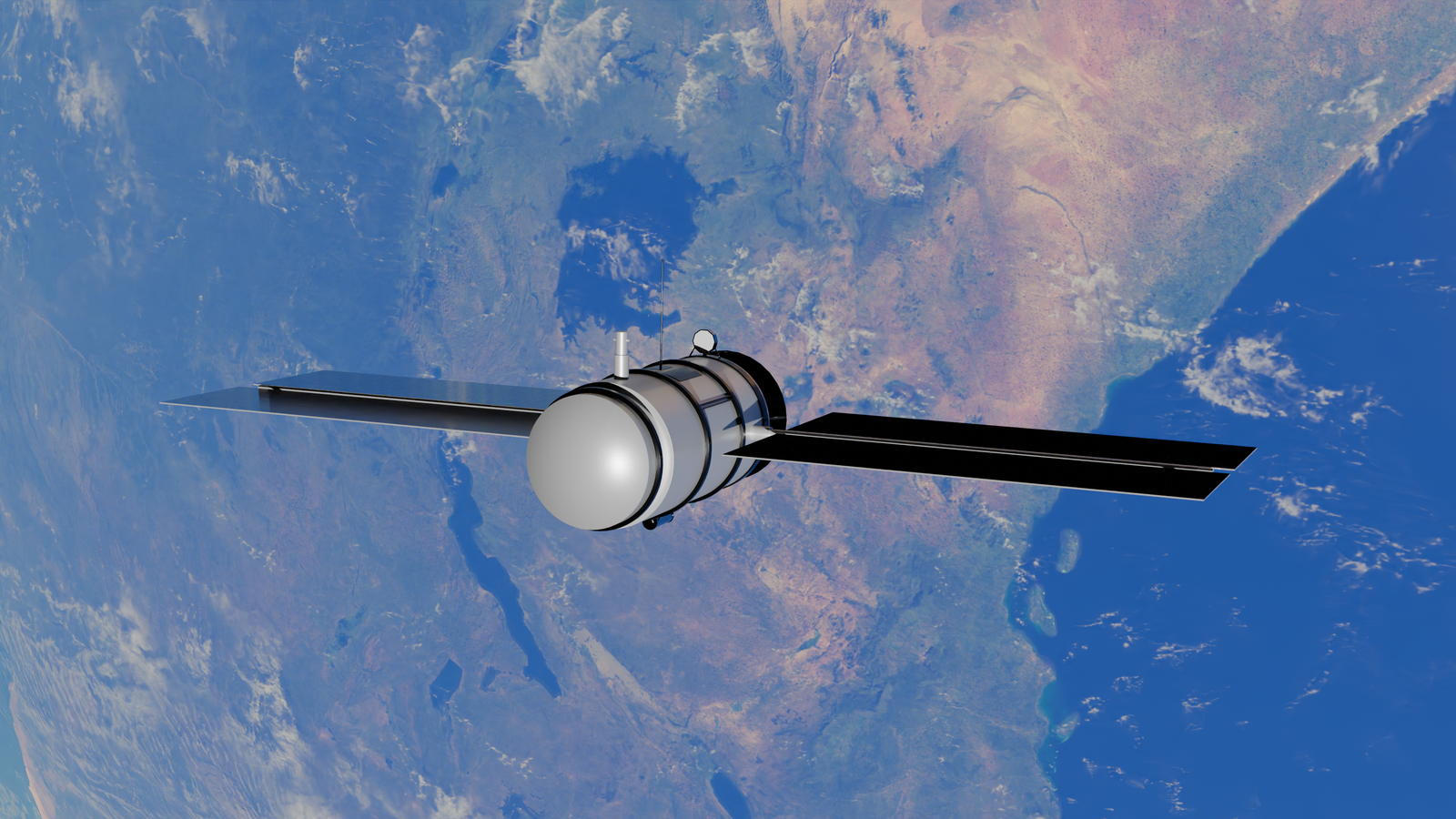
A small satellite the size of a briefcase may soon become one of the most flexible spacecraft NASA has ever flown — and the reason comes down to a single tank of fuel doing two very different jobs.
MIT engineers have shown that a green monopropellant originally developed by the U.S. Air Force for chemical rockets can also feed the dime-sized electrospray thrusters used for slow, precise orbital nudges. The finding sets up an in-space test scheduled for no earlier than November aboard NASA’s Green Propulsion Dual Mode (GPDM) cubesat.
If the demo works, it would mark the first time a satellite has flown both chemical and electric propulsion off a shared propellant tank — a long-standing dream for cubesat designers who have spent two decades watching mass and volume budgets eat into mission ambition.
One fuel, two jobs
Chemical thrusters and electric thrusters do almost opposite things. Chemical engines burn propellant fast, dumping a lot of energy in a short blast — ideal for orbital insertions or dodging debris. Electrospray thrusters, by contrast, use an electric field to accelerate charged ions out of a liquid propellant in a fine, low-thrust spray that can run for months. They sip fuel and steer with surgical precision.
Pairing them on a small satellite has historically meant two propellants, two tanks, two plumbing systems, and two sets of safety considerations. On a spacecraft the size of a carry-on bag, that is often a deal-breaker.
The MIT team found a way around the problem by exploiting an overlooked property of a propellant called ASCENT — Advanced Spacecraft Energetic Non-Toxic Propellant. The fuel was designed as a less hazardous substitute for hydrazine, the toxic workhorse of in-space chemical propulsion. But it is also an ionic liquid — a salt that remains liquid in vacuum — which makes it a natural fit for electrospray hardware.
The dual-mode propulsion system offers advantages of both chemical and electrical propulsion in a single compact package, potentially enabling small satellites to conduct more complex missions on smaller, more cost-effective platforms.
How the ground test worked
To check whether ASCENT would actually behave as an electrospray fuel, the MIT team loaded about a gram of the propellant into small tanks connected to thrusters mounted on a model cubesat. The cubesat was suspended on a magnetic levitation platform inside a vacuum chamber to mimic the free-floating conditions of orbit.
The engineers then fired the thrusters at varying voltages and watched the cubesat spin like a slow-motion top. ASCENT matched the performance of standard electrospray propellants, and the thrusters ran continuously for extended periods without measurable degradation. That parity is the headline — because the chemical-side benefits come for free once the dual-mode architecture is on the table.

The GPDM flight test
The orbital demonstration will be carried out by NASA’s Green Propulsion Dual Mode mission, a cubesat carrying one chemical thruster and four electrospray thrusters all fed from a single ASCENT tank. The mission is now targeted for launch no earlier than November.
The propulsion hardware itself is being integrated by a small commercial partner, Rubicon Space Systems, which delivered the chemical side of the system. MIT supplied four flight-unit electrospray thrusters to NASA for integration. The GPDM project is tracked publicly in NASA’s TechPort database.
ASCENT has flown before. In its earlier incarnation as AF-M315E, the propellant was tested aboard NASA’s Green Propellant Infusion Mission. That demo, however, fired only chemical thrusters. GPDM is the first time both modes will share a tank in orbit.
Why the architecture matters
The case for dual-mode propulsion is fundamentally about what small spacecraft can be asked to do. Microsatellites in the shoebox-to-suitcase range are cheap to build and cheap to launch, but they have been mostly stuck in low Earth orbit, doing one job each. The fuel budget is the bottleneck.
Sharing a tank changes the math. The same kilogram of propellant can be partitioned by the mission planner — burn most of it chemically for a fast maneuver, or sip it through the electrosprays for a months-long
