
Universe
A massive star appears to have exploded twice
The unusual sequence began with a signal from a routine source. On 18 August 2025, the LIGO gravitational wave detectors in the United States and the Virgo…
The unusual sequence began with a signal from a routine source. On 18 August 2025, the LIGO gravitational wave detectors in the United States and the Virgo…
A minor G1 geomagnetic storm in February 2022 warmed Earth's upper atmosphere just enough to drag 40 newly deployed Starlink satellites back into a fiery reentry within days — the largest single-event satellite loss in Starlink history and a wake-up call for an industry whose forecasting models were built for the wrong customers.

On September 2, 1859, telegraph operators George Wood in Boston and Frederick Royce in Portland unplugged their batteries during the Carrington Event and kept sending messages on the geomagnetic current induced by the storm itself — while elsewhere on the network, sparks jumped from keys and paper tape caught fire.
JWST has caught the galaxy cluster XLSSC 122 bending light from galaxies behind it into long blue-gray arcs, making a dark matter knot visible from a time when the universe was only about 3.3 billion years old.
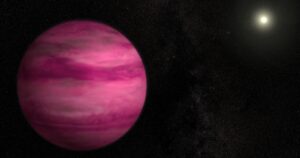
GJ 504 b, the rosy world that defeated the world's biggest ground telescopes for years, gave up its first spectrum to JWST in a few hours of telescope time. The model that matched the light needed clouds made of salt.
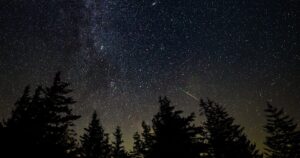
One of the year's most erratic meteor showers is active now. A handful of times it has stunned observers. Most years it barely registers, and the official 2026 calendar predicts nothing unusual.
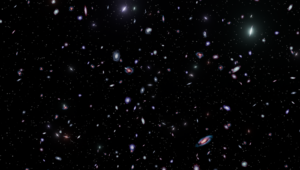
Measured against the cosmic microwave background, the Local Group moves at about 631 km/s. The motion is a tug-of-war: pulled toward the Great Attractor and Shapley Concentration, and pushed from the Dipole Repeller void, identified in 2017. Why a void can 'push', and what is still being mapped.
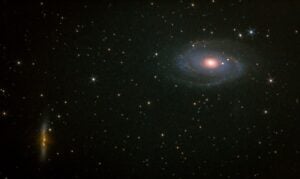
Accelerating expansion will eventually push every galaxy beyond the Local Group past the cosmic horizon, erasing the three pillars of Big Bang evidence. As Krauss and Scherrer argued, future astronomers would reasonably conclude they live in a static, eternal galaxy. What that says about what we may have already lost.
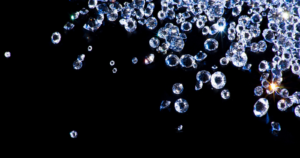
Deep in the ice giants, methane is thought to break apart and the freed carbon crystallise into diamond that sinks toward the core. In 2017 a team at SLAC recreated the key step in the lab. The evidence, and why it is a strong case rather than a sighting.
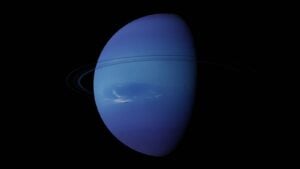
HD 189733b is a deep cobalt blue, the first exoplanet to have its visible colour measured (Hubble, 2013). But the blue comes from silicate hazes, not oceans, in an atmosphere above 1,000C with winds near 7,000 km/h. Same colour as Earth, opposite cause.
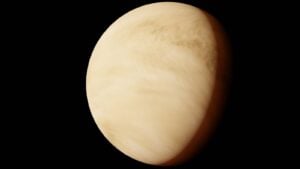
Venus spins once every 243 Earth days, longer than its 225-day year, and backwards. But sunrise to sunrise takes only about 117 Earth days, because the orbital motion and slow retrograde spin pull against each other. And through its opaque clouds, a sunrise is really a slow, diffuse glow.
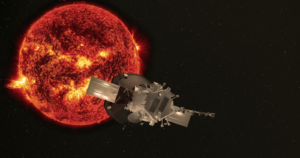
When NASA's Parker Solar Probe passed through the solar corona during perihelion encounters at the heliospheric current sheet, its instruments recorded…
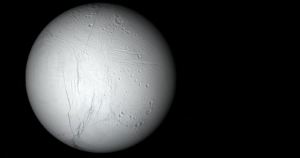
Cassini found Enceladus venting its hidden salty ocean into space, complete with organics, hydrogen pointing to hydrothermal vents, and phosphorus. Modelling suggests the ocean could be long-lived and warm. But habitable conditions are not the same as life, and the ocean's age is still debated.
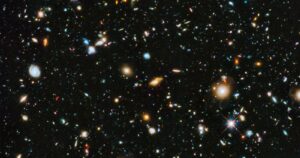
The color was an afterthought to a study of cosmic light. When color scientists spotted a mistake in the software's white point, the universe's average shade slid from turquoise to a milky beige, and the astronomers owned the error in public.
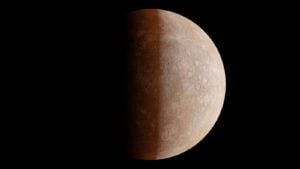
Arecibo radar found bright polar patches on Mercury in 1991; MESSENGER confirmed water ice in 2012 through three converging measurements. The reason ice survives on the hottest planet is geometry: a near-zero axial tilt leaves crater floors in permanent shadow at about minus 170C.
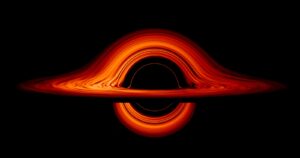
Two Goethe University physicists have found a solution to Einstein's equations in which a collapsing star spawns an expanding speck of dark energy that halts its own ruin, producing a black hole lookalike with neither a singularity nor an event horizon. The catch: it only works under finely tuned conditions.