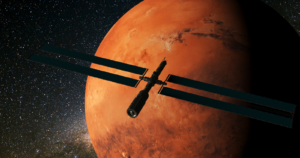

In 2019, Canada launched three radar satellites that can see through Arctic cloud…
For much of the year, vast stretches of the Canadian Arctic sit under cloud or in polar darkness, invisible to ordinary cameras in orbit.
Astronomy and cosmology
Deep Field covers astronomy and cosmology. Telescopes and what they find, planets near and far, and the strange physics of the deep universe, traced back to the journal papers and observatory data behind the headlines.

For much of the year, vast stretches of the Canadian Arctic sit under cloud or in polar darkness, invisible to ordinary cameras in orbit.
Jun 25, 2026

For most of the past sixty years, the search for life beyond Earth has been a search for places like Earth.
Jun 25, 2026

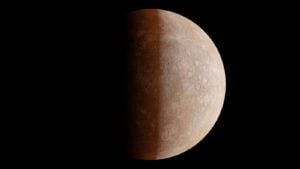
The Moon has a far side, not a permanently dark side: synchronous rotation keeps one hemisphere facing Earth while sunlight still moves across the whole lunar surface.
Jun 25, 2026

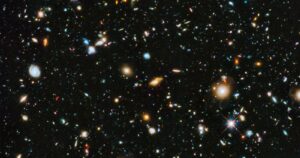
The Hubble Deep Field began as a ten-day stare into an apparently empty patch of sky near the Big Dipper and became one of astronomy's defining images.
Jun 25, 2026

A Webb-confirmed galaxy at redshift 14.44 adds to the evidence that bright, chemically active galaxies were present earlier and more often than many pre-Webb models predicted.
Jun 24, 2026

A careful look back at the 27 December 2004 giant flare from SGR 1806-20, what instruments recorded, and why the energy estimate depends on distance.
Jun 24, 2026

The popular picture of mining in space is precious metal: an asteroid packed with platinum, worth some unfathomable sum, towed home to make someone rich.
Jun 24, 2026

Jupiter-mass, squeezed into a lemon by the dead star it hugs, and wrapped in an atmosphere of almost pure carbon unlike any planet ever measured. The team that found it says it appears to break every known way of building a planet.
Jun 23, 2026

Harvard astronomer Jonathan McDowell has tracked every object in orbit since 1989 from a personal database — and as Starlink crossed 10,600 active satellites in June 2026, his private catalog became the number governments, reporters, and regulators cite.
Jun 23, 2026

Europa, the ice-covered moon of Jupiter, has a problem that turns out to be a clue.
Jun 23, 2026

Voyager 1 has been in flight for longer than most of the people on Earth have been alive.
Jun 23, 2026

Light leaves the surface of Proxima Centauri and arrives at Earth approximately 4.24 years later.
Jun 23, 2026

A coronal mass ejection carries roughly a billion tons of magnetized plasma from the Sun at millions of miles per hour, yet takes one to three days to reach Earth — leaving forecasters a warning window measured in hours, not the years it would take to harden a power grid.
Jun 23, 2026

The Cosmic Microwave Background is the oldest light there is, the faint heat left over from the Big Bang, released when the young universe first cooled enough to turn transparent.
Jun 23, 2026

For most of the time astronomers have thought seriously about other worlds, the basic numbers were missing.
Jun 23, 2026

Voyager 1 is the fastest and most distant object people have ever built. It left Earth in 1977 and, almost half a century later, it is still moving at about 17 kilometres every second, far quicker than any rifle bullet.
Jun 23, 2026