
Science & Engineering
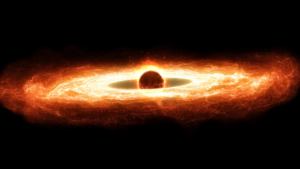
A supermassive black hole in a distant galaxy cluster has erupted after…
Every large galaxy in the observable universe is thought to host a supermassive black hole at its centre.
Every large galaxy in the observable universe is thought to host a supermassive black hole at its centre.
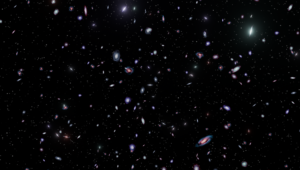
Light from a galaxy called JADES-GS-z14-0 left on its way to us when the universe was only about 290 million years old, and the James Webb Space Telescope has confirmed both how far away it sits and how oddly grown-up it already looks.
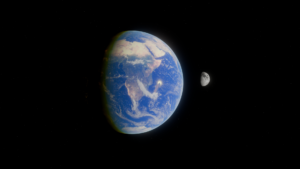
On 1 April 2026, Artemis II lifted off from Kennedy Space Center with four people aboard Orion, beginning the first crewed lunar mission since Apollo 17 in 1972. By 6 April, the mission had moved beyond the familiar scale of low Earth orbit.
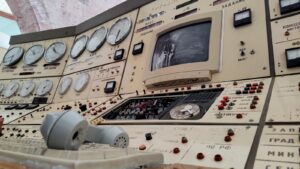
On 14 January 1966, Soviet chief designer Sergei Korolev died during surgery in Moscow at 59 — and two days later, Pravda printed his name and photograph for the first time. Until that obituary, the man who launched Sputnik and put Gagarin in orbit was known publicly only as the Chief Designer.
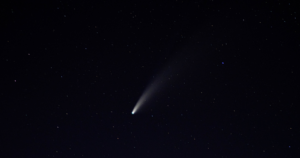
A shooting star is not a star. It is a meteor: the brief streak of light you see when a tiny piece of rock or dust from space slams into the top of Earth's atmosphere and starts to glow.

The problem was longitude. For most of the age of sail, mariners could determine their latitude, or north-south position, straightforwardly enough by measuring the height of the noonday sun above the horizon.
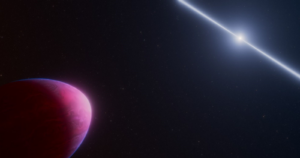
Astronomers using the James Webb Space Telescope have found a Jupiter-mass world orbiting a dead star, with an atmosphere so strange that its clouds appear to be soot condensing into diamond, and a composition that fits no known way of building a planet.
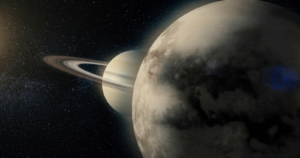
Titan, the largest moon of Saturn, is the only world besides Earth known to have rivers, lakes, seas, clouds and rain.
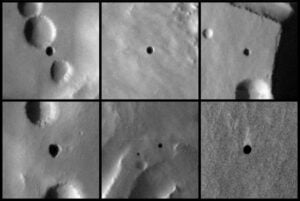
For years, the simplest explanation for Martian caves was lava. Mars has enormous volcanic provinces, long lava flows and many pit-like openings that look like skylights into lava tubes.
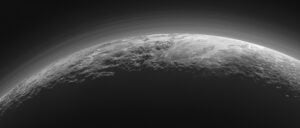
Before New Horizons reached Pluto, the safest expectation was age. At nearly 40 times Earth's distance from the Sun, Pluto seemed like the kind of world that should preserve scars.
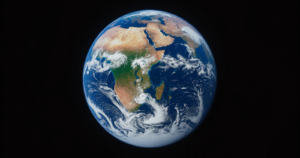
In 1990, with its tour of the outer planets finished, Voyager 1 turned its camera back the way it had come and photographed the Earth from about six billion kilometres away.
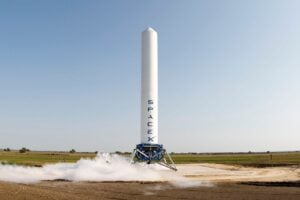
On the night of June 28, 2026, a Falcon 9 first stage that had already lifted off and landed sixteen times pushed a 15,400-pound SiriusXM broadcasting satellite away from Cape Canaveral.
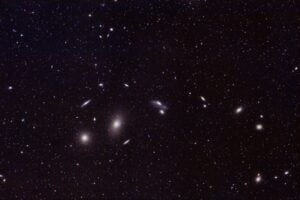
In 2025, astronomers reported one of the largest rotating structures ever found: a cosmic filament some 50 million light-years long, holding close to 300 galaxies, with many of them turning in step with the filament as a whole.
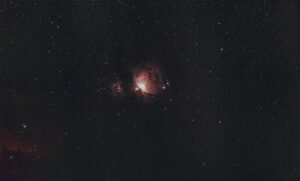
In 2025, astronomers found one of the closest molecular clouds to the Sun, and it had been sitting almost on our doorstep the whole time, unseen.
Hayabusa, Hayabusa2 and OSIRIS-REx have returned roughly 127 grams of asteroid material, showing why sample return is about context and cleanliness, not bulk mass.
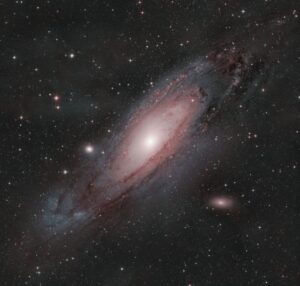
The European Space Agency's Euclid telescope has captured a highly detailed image of the visible light at the center of the Milky Way, resolving more than 60 million individual stars in a region so crowded that most instruments see only a glowing blur.