

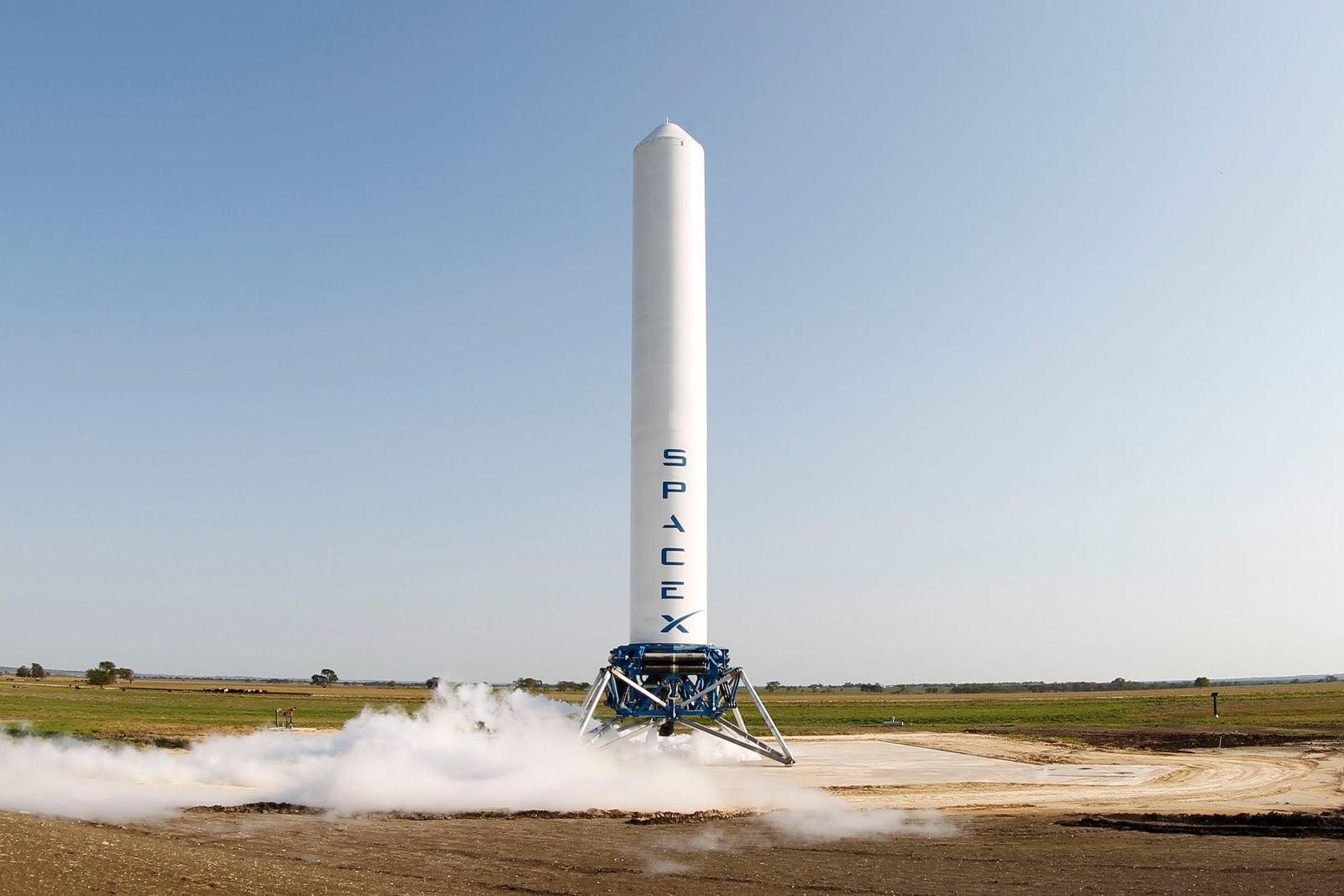
On the night of June 28, 2026, a Falcon 9 first stage that had already lifted off and landed sixteen times pushed a 15,400-pound SiriusXM broadcasting satellite away from Cape Canaveral. Eight and a half minutes later the booster — designated B1085 — was standing upright on a drone ship in the Atlantic, parked under floodlights, ready to be towed back to Port Canaveral for the seventeenth time.
The SXM-11 satellite reached its initial geosynchronous transfer orbit 34.5 minutes after liftoff, according to Spaceflight Now. Over the next several weeks, the spacecraft’s onboard propulsion will circularize that path roughly 22,000 miles above the equator, where it will join SiriusXM’s seven-satellite broadcasting fleet.
The launch itself was unremarkable in 2026 terms. The booster underneath was not.
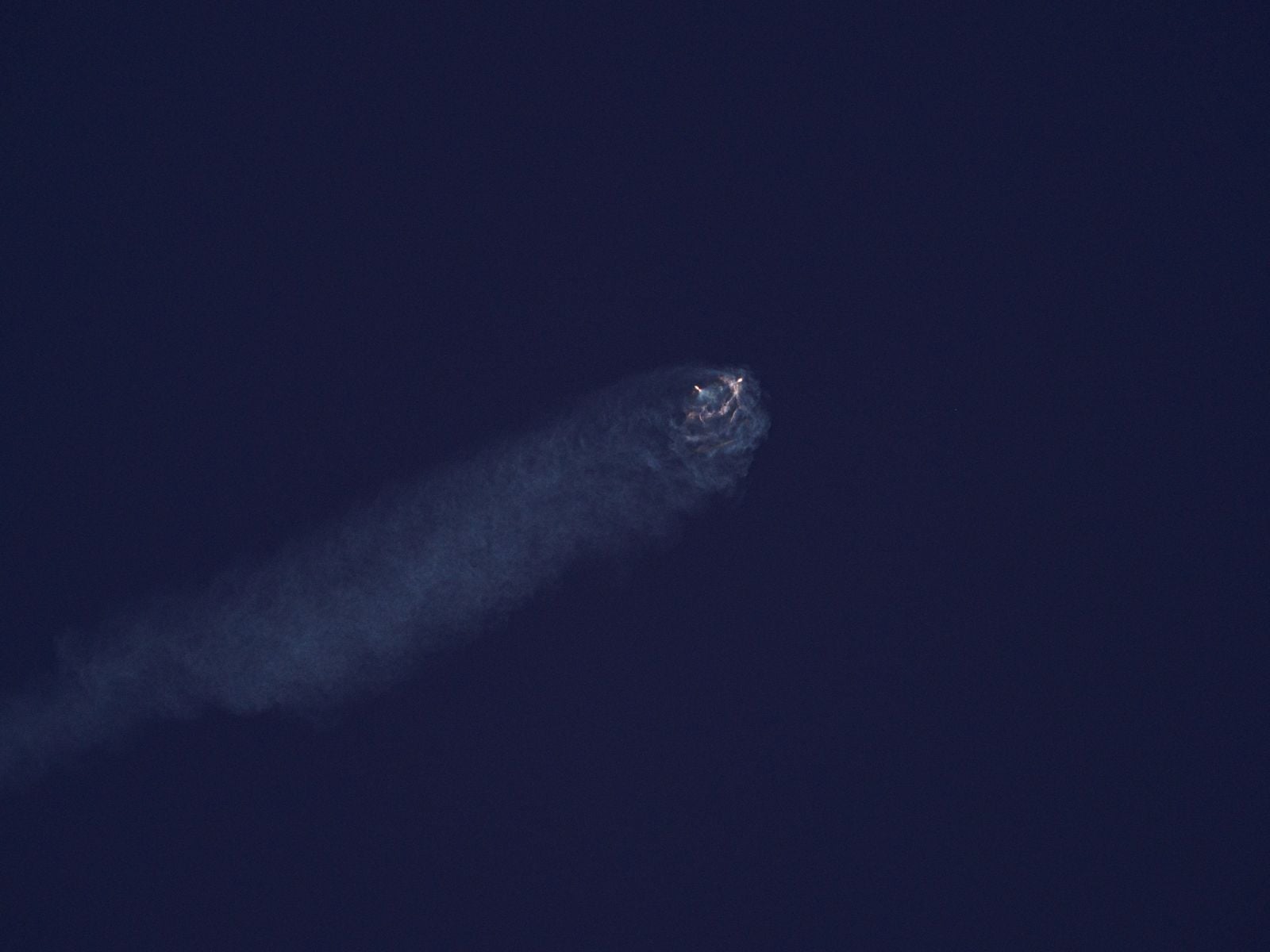
What B1085 had carried before this flight
B1085 first lit its engines on August 20, 2024, lofting a batch of Starlink satellites on what was at the time an unremarkable maiden flight. Five weeks later, on September 28, 2024, the same first stage carried NASA’s Crew-9 mission to the International Space Station — Nick Hague and Aleksandr Gorbunov on board, two empty seats reserved for Butch Wilmore and Suni Williams, the astronauts who had been on the station since Boeing’s Starliner test flight that summer and who would not return home until March 2025.
It kept flying. RRT-1, a rapid-response demonstration mission for the U.S. Space Force in late 2024. Firefly Aerospace’s Blue Ghost Mission 1 in January 2025 — the lunar lander that touched down successfully on Mare Crisium on March 2, 2025, and worked through a full lunar day before the cold night ended it. Fram2 in April 2025, the private polar-orbit mission funded by crypto billionaire Chun Wang, which became the first crewed spaceflight ever to fly directly over both of Earth’s geographic poles.
Then SiriusXM’s SXM-10 satellite, the immediate predecessor of the spacecraft launched Sunday. Then Europe’s MTG-S1 weather observer for EUMETSAT. Then EchoStar XXV. Then nine separate Starlink missions interleaved through 2025 and the first half of 2026.
SXM-11 made the seventeenth flight. Space.com reported the booster’s touchdown that night as the 158th successful drone-ship landing in SpaceX’s company history.
The 15,400-pound satellite riding on top
SXM-11 is the heaviest satellite SiriusXM has ever flown. Lanteris Space Systems — the satellite-manufacturing arm of Intuitive Machines, formerly known as Maxar Space Systems before Intuitive Machines acquired the business in January 2026 for roughly $800 million — built the spacecraft on the IM-1300 satellite bus at the company’s Palo Alto, California facility. With solar panels extended, it spans 106 feet.
About 60 percent of that 15,400-pound mass at launch is fuel, propellant SiriusXM will burn over the satellite’s working life to maintain its slot above the equator. The hardware itself centers on a mesh, unfurlable reflector almost ten meters across — the antenna that lets SiriusXM’s signal reach the small rooftop receivers in cars driving across North America.
SXM-11 will replace XM-5, which launched in 2010, and work alongside the forthcoming SXM-12 to replace Sirius FM-5 from 2009. Both replacement targets are well past the typical operating life of a geostationary broadcast satellite. SiriusXM’s regulatory disclosures indicate the new spacecraft is designed to remain in service into the 2040s.
Why this fleet still flies to a 22,000-mile orbit
There is something almost old-fashioned about an SXM-11 launch. Geosynchronous communications satellites were the bread and butter of the commercial launch business from the 1980s through the mid-2010s, when Arianespace, International Launch Services, and a young SpaceX competed for contracts to send four-to-seven-ton broadcasting platforms to that single high arc above the equator.
That market has shrunk. Most communications operators have shifted spending toward low-Earth-orbit constellations, where latency is lower and where Starlink, Amazon’s Project Kuiper, and OneWeb chase the same broadband dollars. SiriusXM is one of the holdouts. The physics of satellite radio still favor the geostationary belt: a small number of large satellites can cover an entire continent without the complex hand-off logic LEO constellations require.
Cars are still the main listening environment for SiriusXM’s subscribers, and cars still pass through tunnels, canyons, and rural stretches where cellular streaming falters. A ten-meter unfurled antenna at 22,000 miles solves a problem that cell towers cannot.
The launch cadence underneath everything
SXM-11 was Falcon 9 mission number 76 for SpaceX in 2026. Roughly four out of every five Falcon 9 launches this year have been Starlink missions, building out SpaceX’s own broadband constellation. The remainder — NASA contracts, national security payloads, the occasional commercial GEO bird like SXM-11 — slots into the spaces between Starlink flights. SpaceX flew 165 Falcon 9 missions in 2025, a launch roughly every other day.
Five days before SXM-11 lifted off, the same launch pad — Space Launch Complex 40 — had hosted the demonstration flight of Starfall, SpaceX’s new disk-shaped reentry capsule, a 2,100-kilogram vehicle designed to bring up to 1,000 kilograms of cargo back from orbit. Starfall and SXM-11 are not directly related missions, but they share the same operational infrastructure: a small number of launch pads, a small number of drone ships, a small number of boosters cycling through a refurbishment hangar.
The cadence is also what allows competitors’ troubles to compound. Blue Origin’s New Glenn flew its third mission this spring, achieving its first booster reuse but losing AST SpaceMobile’s BlueBird 7 satellite when its upper stage failed to complete a burn. The vehicle has been grounded since, and the customers waiting for it — AST, Amazon’s Project Kuiper, the national-security community — are recalculating what it means to depend on a Falcon 9 alternative that does not yet exist at meaningful scale.
The Falcon Heavy waiting in the same hangar
The Cape Canaveral manifest stays dense through the summer. NASA’s Nancy Grace Roman Space Telescope is the marquee mission: an 8,000-kilogram observatory carrying a 2.4-meter mirror and a 300-megapixel Wide Field Instrument, now targeting an August 30, 2026 launch on a Falcon Heavy from Launch Complex 39A — eight months ahead of its previously scheduled date. Engineers at Goddard are finishing the final tasks before shipping the observatory to Florida.
Roman’s wide-field camera will capture images one hundred times larger than Hubble can manage in a single frame, generating roughly 1.4 terabytes of data per day from the Sun-Earth L2 point a million miles from Earth. That mission sits on the same Florida manifest as the steady stream of Starlink batches and the occasional GEO bird, queued behind one of the most consequential summers in the history of the Space Coast.
The seventeenth flight, and the eighteenth on the way
The actual landing of B1085 happened the way SpaceX landings have happened for years now. The first stage separated about two and a half minutes after liftoff, performed a boostback burn, fell through the upper atmosphere on a southeast track, lit its center engine, then all three landing engines, and settled onto the drone ship — named A Shortfall of Gravitas, a reference to the warship names in Iain M. Banks’s Culture novels — about eight and a half minutes after leaving the pad.
SpaceX originally certified its Block 5 boosters for ten flights and has since extended that limit repeatedly on the basis of inspection data. B1085 is past that initial threshold by seven flights, and other vehicles in the active fleet are further along still — a sister booster, B1067, has now flown more than thirty missions. The marginal cost of a reused Falcon 9 launch now sits well below the manufacturing cost of any expendable Western competitor’s first stage. The economics are no longer hypothetical. The cadence is the proof.
The upper stage — still expended on every mission — carried SXM-11 onward toward GTO, performed the final separation burn, and dropped its tank.
SXM-11 will broadcast satellite radio for the next decade and a half. SiriusXM’s next satellite, SXM-12, is already under construction at Lanteris and waiting for its own launch slot. Both replacement satellites were ordered as a pair from Maxar in 2022, before that company became Lanteris under Intuitive Machines.
B1085 will be inspected, refurbished, and reassigned. Thirty days elapsed between its previous mission and SXM-11 — roughly the turnaround time Falcon 9 boosters have been holding to in 2026. Somewhere in the manifest is another Starlink batch, another commercial customer, another payload that does not yet have a sticker on its fairing. One of them will be flight eighteen, and the booster that lifted SXM-11 will rise from a Florida pad again, almost certainly before the satellite it just delivered has finished circularizing its orbit above the equator.