

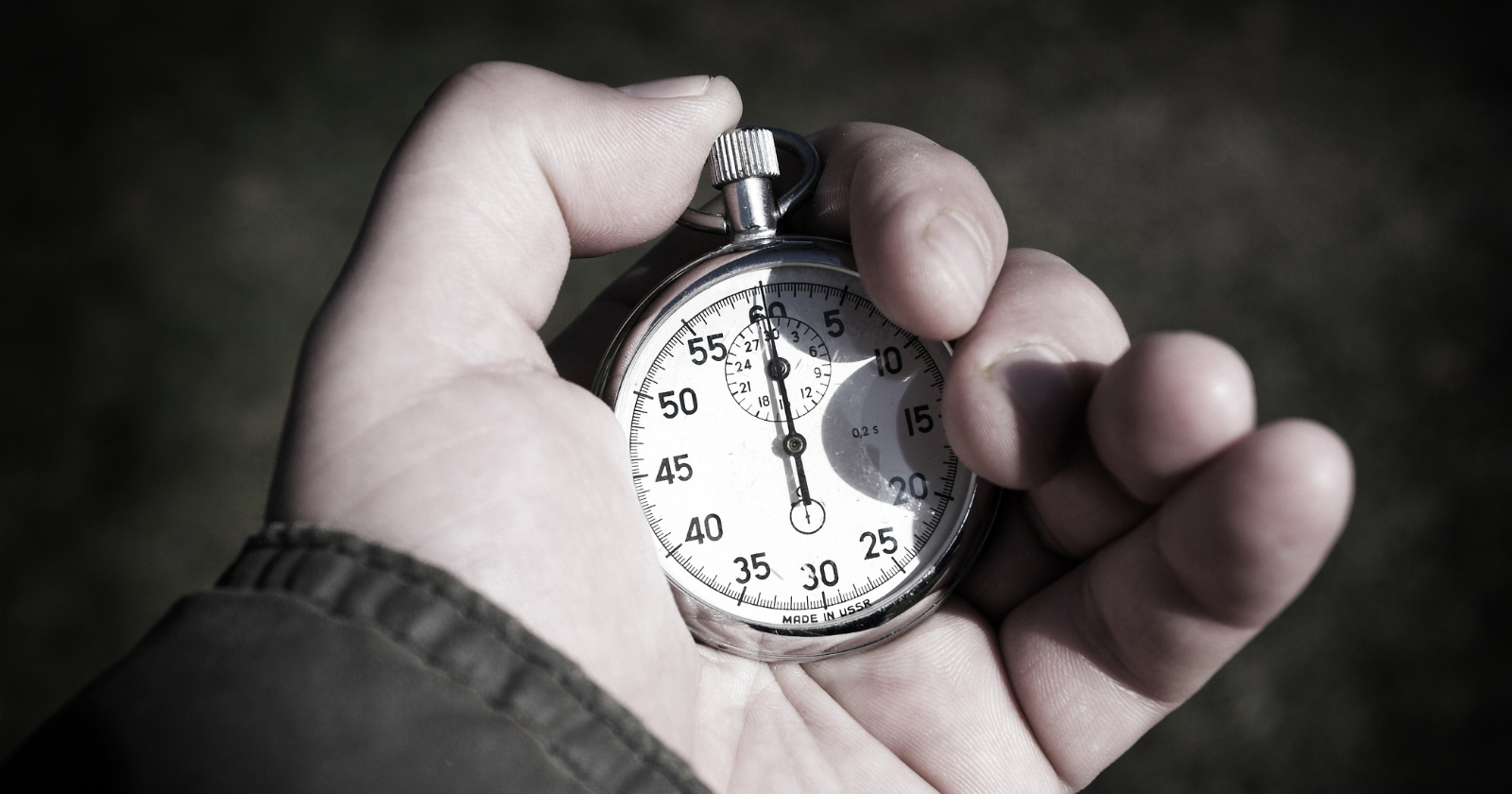
The problem was longitude. For most of the age of sail, mariners could determine their latitude, or north-south position, straightforwardly enough by measuring the height of the noonday sun above the horizon. Longitude, the east-west position, was substantially harder. It required knowing precisely what time it was at a fixed reference point on land, and comparing that time to local noon at sea. The difference in hours could be converted into a difference in degrees, and the difference in degrees into a location on the globe.
No clock existed that could keep accurate time on a ship. The motion of the deck, the changes in temperature between the tropics and northern latitudes, the humidity, the salt air, and the variable gravity at different points on Earth all conspired to destabilise every pendulum and every escapement that eighteenth-century clockmakers could produce. Sailors relied on dead reckoning, on their knowledge of currents and prevailing winds, and on educated guesses that were, with alarming frequency, wrong.
The Scilly Isles disaster
On the night of 22 October 1707, a Royal Navy fleet under Admiral Sir Cloudesley Shovell, returning from operations in the Mediterranean, mistook its longitude and struck the rocks off the Isles of Scilly. Four ships were wrecked. More than 1,400 sailors died. Some estimates run as high as 2,000. It was one of the greatest peacetime maritime disasters in British history, and one of a series of comparable losses that had accumulated across the seventeenth and early eighteenth centuries.
The British government responded, seven years later, with the Longitude Act of 1714. Parliament offered a graduated series of prizes, the largest of them £20,000, equivalent to approximately £4 million in modern currency, to anyone who could produce a method for determining longitude at sea to within half a degree, or about thirty nautical miles, after a transoceanic voyage. The Act established a Board of Longitude, dominated by astronomers and Fellows of the Royal Society, to evaluate submissions and administer the prize.
The Board expected the solution to come from astronomy. Its members, including successive Astronomers Royal, believed that longitude would be determined by careful observation of the Moon’s position against the fixed stars, using detailed lunar tables and precise instruments. The Method of Lunar Distances, as it came to be called, was the establishment’s preferred approach for most of the eighteenth century.
The solution that actually worked came from a carpenter’s son from Yorkshire.
Harrison’s clocks
John Harrison was born on 3 April 1693 in Foulby, a small village near Wakefield. His father, Henry Harrison, was a carpenter. John followed the same trade, learning woodworking from his father and mechanical craftsmanship largely on his own. He had no formal education in science or mathematics. He had, by his own later account, become fascinated by the workings of clocks after being bedridden with smallpox as a child, during which he had spent his time studying a pocket watch his father had given him.
By his late teens, Harrison had built his first wooden clock. In the 1720s, working with his younger brother James, he produced a series of precision longcase clocks accurate to within one second per month, substantially better than any clocks in existence at the time. He achieved this accuracy through a combination of innovations that had not previously been attempted, including a grid-iron pendulum that compensated for temperature-driven expansion, and the use of wooden gears made of lignum vitae, a self-lubricating hardwood.
Harrison brought his first marine timekeeper, now known as H1, to London in 1735. Built between 1730 and 1735 in his workshop in Barrow upon Humber, it used two interconnected counterbalanced springs rather than a pendulum, and its motion was largely independent of the roll and pitch of a ship. A sea trial to Lisbon in 1736 produced encouraging results. The Board of Longitude paid Harrison £500 and commissioned a second timekeeper.
H2, built between 1737 and 1739, introduced the remontoire, a device to smooth out variations in the driving force reaching the escapement. It was never sea-trialled, because Harrison identified a fundamental design flaw before it went to sea. He began work on H3 in 1740 and continued for nineteen years. H3 contained over 700 parts, and Harrison introduced two innovations still used in modern engineering: the bi-metallic strip for temperature compensation, and caged roller bearings. It never quite achieved the accuracy Harrison had promised.
The breakthrough came from a different direction. In 1753, Harrison commissioned a London watchmaker named John Jefferys to build a pocket watch to his own novel design specifications. The watch performed unexpectedly well. Harrison realised, on the strength of the Jefferys watch’s results, that the answer to the longitude problem might lie not in ever-larger clocks but in a compact, high-frequency sea watch. He set aside H3 and began work on H4, completed in 1759, only five inches in diameter.
The Jamaica trial
H4’s sea trial began in November 1761. Harrison, by then aged 68, sent his son William aboard HMS Deptford, sailing from Portsmouth for Jamaica with the watch in his personal care. The voyage lasted 81 days. When the ship reached Kingston, and H4’s reading was corrected for its known daily rate, the watch was found to have lost approximately 5 seconds over the entire crossing. The corresponding error in longitude was 1.25 nautical miles.
The Board of Longitude had specified thirty nautical miles as the accuracy required to win the £20,000 prize. H4 had exceeded that standard by more than an order of magnitude.
The Board refused to pay.
The stated reasons were procedural. The Board argued that a single trial was insufficient evidence, that H4’s accuracy might have been the product of luck, and that a timekeeper which had taken six years to construct could not be considered practical for widespread use. A second trial to Barbados in 1764 produced similar results. H4 lost approximately 39 seconds across the voyage, corresponding to a longitude error of under ten miles. The Board continued to withhold the prize.
The astronomers’ resistance
The reasons behind the Board’s resistance were substantially less procedural than its official statements suggested. The Board was dominated by astronomers who had spent decades advocating for the Method of Lunar Distances as the practical solution to the longitude problem. The most vocal of them was Nevil Maskelyne, appointed Astronomer Royal in 1765, who had personally conducted the lunar-distance observations during H4’s Barbados trial and who published the results of both methods in a manner that Harrison and his supporters regarded as substantially prejudicial.
Harrison was, as far as the astronomers were concerned, an outsider. He was not a Fellow of the Royal Society. He was not a member of the Worshipful Company of Clockmakers. He was a self-taught carpenter’s son from Yorkshire who had no formal scientific credentials, and his solution to the longitude problem, if publicly acknowledged as decisive, would have redirected Board resources and prestige away from the astronomical programme its members had built their careers around.
Between 1765 and 1772, Harrison surrendered H4 to the Board for detailed examination, revealed his mechanism to a committee of six experts, oversaw the construction of a copy by the London watchmaker Larcum Kendall (now known as K1), and received a series of partial payments totalling approximately £7,500. The full £20,000 prize was never officially awarded.
The King’s intervention
In 1772, Harrison, then aged 79 and having spent more than forty years on the problem, appealed directly to King George III. The King, who had a personal interest in scientific instruments and had built his own observatory at Kew, agreed to test Harrison’s fifth and final timekeeper, H5, himself. Over ten weeks of observation at the Kew Observatory in the summer of 1772, H5 was measured to have kept time to within one-third of a second per day.
The King, on Harrison’s later account, told him: “By God, Harrison, I will see you righted.” He instructed the government to sponsor a special Act of Parliament rewarding Harrison for his services to the nation. The Act, passed in 1773, awarded Harrison an additional £8,750, equivalent to approximately £1.7 million in modern currency. His total compensation across more than forty years of work amounted to approximately £23,065, or approximately £4.4 million today.
Harrison received the final payment three years before his death. He died on 24 March 1776, on his eighty-third birthday, at his home in Red Lion Square in London. The Board of Longitude never officially awarded the £20,000 prize to anyone.
What it means
Captain James Cook took the Kendall K1 copy of H4 on his second and third voyages of Pacific exploration, describing it in his logs as “our trusty friend the Watch” and “our never failing guide.” The charts of the southern Pacific Ocean that Cook produced with the aid of the marine chronometer were, on the standard assessment, more accurate than any that had preceded them.
Within a generation of Harrison’s death, marine chronometers became standard equipment on British merchant and naval vessels. Within a century, they had become standard on the shipping of every seafaring nation in the world. The Prime Meridian was formally established at Greenwich in 1884, an outcome that depended directly on the reliability of the marine chronometer as an instrument of navigation.
H1, H2, H3, and H4 are all now on display at the Royal Observatory Greenwich. H1, H2, and H3 still keep time. H4 is kept in a stopped state because it requires oil to lubricate its gears, and running it continuously would degrade the delicate mechanism.
The self-taught carpenter’s son from Yorkshire had spent forty years of his life solving the problem the astronomers could not solve.
The astronomers had spent most of those forty years trying to prevent him from being paid.
The King intervened in the end.