
The European Space Agency’s Euclid telescope has captured a highly detailed image of the visible light at the center of the Milky Way, resolving more than 60 million individual stars in a region so crowded that most instruments see only a glowing blur. The image, released on June 24, 2026, is more than a postcard. It is reconnaissance for NASA’s Nancy Grace Roman Space Telescope, which will launch in late August and revisit the same patch of sky thousands of times in search of new worlds.
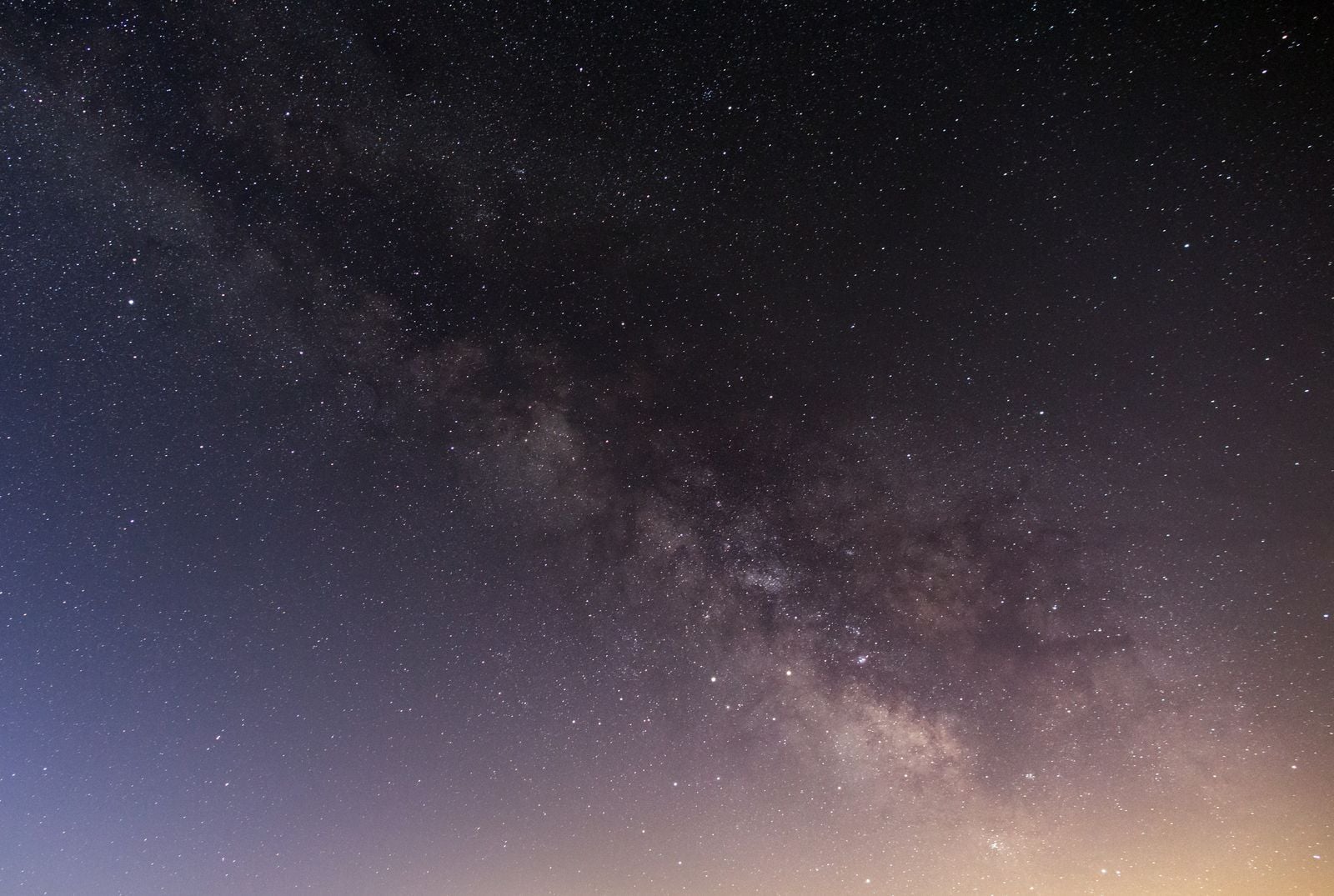
The new Euclid mosaic, assembled from nine separate pointings taken over 26 hours of observation, covers a swath of the galactic bulge larger than nine full moons laid edge to edge. The region overlaps directly with one of Roman’s planned core survey fields, giving astronomers an advance baseline of stellar positions and brightnesses before Roman begins its own decade-defining work.
A telescope doing science it was never designed for
Euclid launched in 2023 with a specific job: build the most accurate three-dimensional map of the cosmos and probe the dark energy and dark matter that together account for roughly 95% of the universe. Staring into the dense, dust-choked heart of our own galaxy was not on the original mission plan.
It turned out to be very good at it anyway. Euclid’s visible-light camera has the angular resolution to pick apart individual stars in a region where many telescopes see only a smear of mingled light.
That capability matters because the galactic bulge is one of the richest hunting grounds in astronomy. It contains billions of stars packed into a relatively small volume, which means it offers more chances per square degree to catch the rare alignments that betray the presence of planets around other stars.
The microlensing handoff to Roman
Astronomers find exoplanets in several ways. Roman’s headline technique for the bulge will be gravitational microlensing, an effect first predicted by Albert Einstein. When a foreground star drifts in front of a more distant background star, its gravity bends and magnifies the background light. If the foreground star happens to host a planet, the planet adds a brief, sharp spike to the brightening curve.
Roman is expected to detect thousands of microlensing exoplanets through this method, including small, cold worlds in the outer reaches of their solar systems that are essentially invisible to other techniques. Combined with its transit survey, the mission could significantly expand the known planet count.
The technique is already proven from the ground. Over the past two decades, astronomers have found close to 300 exoplanets this way, almost all of them toward the galactic center. The single Euclid frame released in June already contains 51 known planetary systems, and Roman’s dedicated bulge survey is expected to add more than 2,600 more by microlensing alone.
Here is where Euclid earns its keep. Microlensing events are fleeting and ambiguous. To confirm a planet and measure its mass, astronomers need to know how the foreground star and background star are moving relative to one another. That requires a clean “before” image, taken when the two stars are still cleanly separated on the sky.
The Euclid mosaic is that before image. Because Euclid can cleanly separate individual stars in the crush of the bulge, anyone who later catches a microlensing event in the same field can reach back to this snapshot, measure how the stars were moving beforehand, and pin down a planet’s mass — a measurement no single later observation can deliver on its own.
Roman’s clock is ticking
Roman itself is now in Florida. The 18,000-pound observatory arrived at Kennedy Space Center on June 21 after a barge trip down the Atlantic coast from NASA’s Goddard Space Flight Center in Maryland. Technicians are now fueling the spacecraft with about 290 gallons of hydrazine and checking its solar panels and thermal blankets in the Payload Hazardous Servicing Facility.
Launch is targeted for no earlier than Sunday, August 30, aboard a SpaceX Falcon Heavy from Launch Complex 39A. That schedule puts the mission eight months ahead of its formal launch-readiness date of May 2027, an unusual reversal for a flagship astrophysics observatory that for years was synonymous with cost growth and delay.
The $4.3 billion telescope will then travel to the Sun-Earth L2 Lagrange point, the same gravitational parking spot occupied by the James Webb Space Telescope. From there, its 300-megapixel infrared camera will image patches of sky roughly 50 times larger than Webb can capture in a single pointing.
Why overlapping surveys matter
The Euclid–Roman coordination is a small example of something larger happening in space science: missions are being designed, or at least operated, with the assumption that their data will be combined with someone else’s.
That logic is partly economic. Flagship observatories cost billions of dollars and decades of work. Squeezing every possible science return out of them means stitching their outputs together with other instruments — ground-based surveys, ESA missions, NASA missions, and increasingly commercial sensors. It is also partly scientific. Some questions, like measuring how fast individual stars move through the galactic bulge, simply cannot be answered by one telescope alone.
Euclid’s bulge image was not part of the mission’s primary dark-universe survey, but the data will feed directly into Roman’s exoplanet hunt and into broader studies of how the Milky Way’s central regions formed. Space Daily has previously covered the Roman infrared survey’s plan to chart hidden structure in the Milky Way, and the role of the galactic center’s magnetic field in shaping stellar evolution.
What the bulge can tell us
The galactic bulge is, in a sense, the Milky Way’s biography. It contains some of the oldest stars in the galaxy, mixed with younger populations that have churned through the region over billions of years. Studying it offers clues to how spiral galaxies like ours assembled in the early universe and how the supermassive black hole at the center — Sagittarius A* — influenced the surrounding stellar population.
Resolving individual stars in this crowded zone is hard from the ground because Earth’s atmosphere blurs the light. Space telescopes have to contend with a different problem: small fields of view that make it slow to survey large regions. Euclid’s combination of sharp optics and wide field — the same features that make it good at mapping dark matter — make it unusually well suited to bulge work.
The new image also marks a milestone for the European telescope itself. When Euclid first opened its eyes in late 2023, engineers had to work through a problem with stray ice forming on its optics. Space Daily covered the commissioning campaign to recover the telescope’s full sensitivity. The bulge mosaic is evidence that those fixes held.
A division of labor in the sky
What emerges from this is something like a coordinated observing strategy across two space agencies. Euclid provides the wide visible-light baseline. Roman, with its infrared eyes and rapid cadence, will return to the same fields again and again over its planned mission to catch transient brightening events and confirm them as planets, not stellar imposters such as eclipsing binaries.
Roman is also designed to address dark energy from a different angle than Euclid, by measuring how galaxies cluster across cosmic time. The two missions will produce complementary pieces of the same puzzle about why the expansion of the universe is accelerating.
For now, the Euclid bulge image stands on its own as one of the densest single views of our galaxy ever recorded. More than 60 million stars, captured in a little over a day of observing. The harder work — turning those points of light into a catalog of new worlds — starts when Roman lifts off from Florida at the end of August.