Space, science, and the human mind. Since 1995.
Deep Field
A Space Daily column

Deep Field

Astronomy and cosmology

Deep Field covers astronomy and cosmology. Telescopes and what they find, planets near and far, and the strange physics of the deep universe, traced back to the journal papers and observatory data behind the headlines.

Constellations

344 steps stood between the James Webb Space Telescope and total failure — any one could have ended it — and the telescope that survived them all now runs on less power than a household kettle, a million miles from Earth

Webb launched with 344 single points of failure, most tied to a deployment that could not be repaired at L2. It cleared them all. Today it runs on about one kilowatt, less than many kettles, kept cold passively by its sunshield, a million miles from Earth.

Constellations

In June 2026, Relativity Space — the rocket company Eric Schmidt took over in 2025, whose one rocket has never reached orbit — said it would privately build and fly a Mars orbiter in 2028, carrying NASA’s Aeolus atmospheric instruments and doubling as a communications relay, paid for by a philanthropic backer it has not named

Relativity Space has reached orbit exactly zero times. Its only rocket flew once, in March 2023, climbed cleanly through the hardest part of the atmosphere, and then a second-stage engine quit and the vehicle fell into the Atlantic a few minutes after liftoff.

Constellations

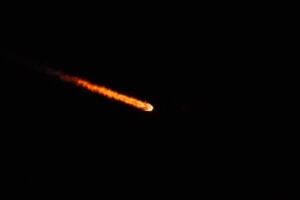
The oldest solid material ever found on Earth didn’t come from Earth at all — it was locked inside a meteorite that landed near Murchison, Victoria in 1969, and the stardust grains inside formed roughly 7 billion years ago, before the Sun existed.

The Murchison meteorite, which fell in Victoria in 1969, holds presolar silicon carbide grains. A 2020 study dated them by cosmic-ray exposure: most formed shortly before the Sun, the oldest about 7 billion years ago. How the dating works, and why 7 billion is the extreme, not the average.