Science Right now, without moving a muscle, you are aboard a planet orbiting the Sun at 107,000 kilometres per hour, inside a solar system orbiting the galaxy at 720,000 kilometres per hour, while the Milky Way and Andromeda close on each other at roughly 400,000 kilometres per hour — and you cannot feel any of it. By Deep Field · Aug 21, 2026
Flora And Fauna A drone caught Maserati the dolphin lifting a football-sized shell to trap a fish, then her calf picking it up and trying the same By Life Signs · Aug 21, 2026
Aerospace A 250-seat jet is being built with four aisles instead of one. The reason is the shape: when you blend wings directly into a body wide enough to hold a small apartment, a single corridor down the middle no longer makes any sense By Brendan Brown · Aug 21, 2026
Marsdaily In April 2026, scientists reported that Curiosity had detected the first nitrogen heterocycle on the Martian surface — a class of organic molecule that on Earth forms part of the chemical pathway toward RNA and DNA. It isn't evidence of life, but it shows that ancient Mars possessed surprisingly complex prebiotic chemistry. By Life Signs · Aug 21, 2026
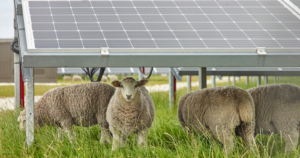
Flora And Fauna A sheep separated from a flock member for over two years will still recognise that face — and researchers measuring brain activity found the neural circuits held a selective encoding of the individual By Life Signs · Aug 21, 2026
Science A moon does not need sunlight to keep its interior warm. Io is ablaze with volcanoes, Europa hides an ocean, and Enceladus leaks heat and water from its south pole into space — worlds kept active by the gravitational grip of planets that never lets go. By Deep Field · Aug 21, 2026
Flora And Fauna Biosphere 2 was built to test whether eight people could survive completely sealed off from the rest of Earth for two years — but inside its glass walls, cockroaches and stowaway ants boomed while most of the birds and pollinators died. By Life Signs · Aug 21, 2026
Marsdaily Mars may hold enough liquid water to cover the entire planet to a depth of 1 to 2 kilometres — trapped in tiny cracks and pores in rock roughly 11.5 to 20 kilometres underground, far beyond anything we've ever been capable of drilling on Mars. By Deep Field · Aug 21, 2026
Flora And Fauna The smell of a freshly mown lawn is one of the most loved scents there is, and it is also the grass releasing an emergency chemical within seconds of being cut — some of it aimed at insects. By Life Signs · Aug 21, 2026
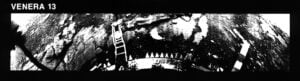
Venusian Heat Scientists reported phosphine in Venus's clouds in 2020, then watched the finding come under fierce attack. But years of follow-up observations have repeatedly recovered the signal with far more data, while no known non-biological process has yet been shown to produce the claimed amounts. By Life Signs · Aug 21, 2026
Tech Space SpaceX spent $15.8 billion building AI compute infrastructure in just three months — more than four times what its entire Space division spent on capital projects throughout 2025. And Elon Musk is already warning that global chip production isn't scaling fast enough to meet AI demand. By The Daily Orbit · Aug 20, 2026
Flora And Fauna We tend to think complex planning is a primate specialty, but a 2017 study found ravens outplanned chimpanzees, orangutans and bonobos at a trading task. By Life Signs · Aug 20, 2026
Mind & Meaning Thought of the day from Stoic philosopher Marcus Aurelius: "Men exist for the sake of one another; teach them then, or bear with them." By Space Daily Editorial Team · Aug 20, 2026
Science In the 1970s, the CIA helped fund a classified psychic-research programme at Stanford Research Institute that later became STARGATE, spending roughly $20 million over two decades to test remote viewing — and ending with results too strange to dismiss cleanly, but too weak to prove psychic perception was real By Space Daily Editorial Team · Aug 20, 2026
Flora And Fauna Tardigrades can survive being frozen, dried out, and blasted with radiation that would kill almost anything else, and when scientists spliced the protein responsible into human cells in a lab, those cells suffered significantly less DNA damage from X-rays. By Ainura Kalau · Aug 20, 2026
Psychology Retirement can feel less like freedom than disappearance: researchers who study life after work have found that losing a job role can shake a person’s identity as deeply as any major life loss, even when leaving was their choice By Space Daily Editorial Team · Aug 20, 2026