Space Travel On July 18, 2026, Skyroot Aerospace's Vikram-1 became the first privately developed Indian rocket to reach orbit from Sriharikota after a 35-minute hold — the visible result of six years of reforms that opened orbital launch to private builders alongside ISRO By The Daily Orbit · Jul 20, 2026
Space Travel In 1977, NASA launched two probes designed to last five years. Voyager 1 and 2 are now the only human-made objects in interstellar space, still operating, still transmitting, funded by a team of engineers some of whom have worked on the mission for nearly 50 years By The Daily Orbit · Jul 20, 2026
Human Behaviour John Bowlby, the British psychiatrist who built attachment theory in the 1950s, argued that a child's need for closeness is as basic as hunger, and that the calm, undemanding child is often the one who learned asking for less kept the peace By Human Element · Jul 20, 2026
Space Medicine A NASA crew study found that tidiness and everyday consideration are strongly linked to cohesion when missions last from 45 to 240 days By Space Daily Editorial Team · Jul 20, 2026

Space Travel In early 1962, weeks before John Glenn's orbital flight, a NASA mathematician named Katherine Johnson was asked to recompute by hand what the new IBM 7090 had already calculated, because Glenn had told mission planners he would not fly unless she personally verified the machine's numbers on paper By The Daily Orbit · Jul 20, 2026
Human Behaviour The Dunning-Kruger effect, mapped by two Cornell psychologists in 1999, found that the least skilled people often vastly overrate their ability, while top performers tend to judge themselves more accurately By Human Element · Jul 20, 2026
Human Behaviour The human gut contains roughly 500 million neurons wired directly to the brain via the vagus nerve — and it registers signals before conscious thought catches up By Human Element · Jul 20, 2026
Outer Planets In March 1982, the Soviet Venera 13 lander survived 127 minutes on the surface of Venus at roughly 457 degrees Celsius and 89 atmospheres of pressure, drilling and analysing a soil sample while transmitting the first colour photographs ever taken from the surface of another planet By Deep Field · Jul 20, 2026
Human Behaviour We treat daydreaming as a lapse in focus, but neuroscientists tracking the brain's default mode network found that a wandering mind lights up the same circuits used for planning the future and solving problems left unattended By Human Element · Jul 20, 2026
Human Behaviour The basal ganglia, buried deep beneath the cortex, help turn a studied city map into a route you can follow on autopilot — and help keep a habit intact long after the conscious memory of forming it has faded By Human Element · Jul 20, 2026
Aerospace A full-time airline crew member flying heavy North Atlantic routes can absorb between 2,000 and 5,000 microsieverts of cosmic radiation a year, picking up four to six microsieverts every single hour aloft By Space Daily Editorial Team · Jul 20, 2026

Human Behaviour In a 2013 University of Minnesota experiment, people seated at a messy desk generated more inventive uses for a ping-pong ball than those at a tidy one — clutter, it turned out, nudged the mind toward the unconventional By Human Element · Jul 20, 2026
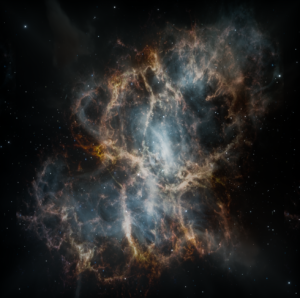
Science A detector buried a kilometre underground in Japan may have caught the faintest signal ever recorded: the combined whisper of every supernova that has ever exploded across the entire universe, a background hum of stellar death that scientists have been straining to hear for decades By Space Daily Editorial Team · Jul 20, 2026

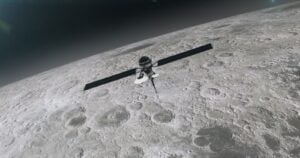
Space Scopes In July 1969, Michael Collins orbited alone on the far side of the Moon while Armstrong and Aldrin walked below, and for 48 minutes of every 2-hour loop he was cut off from radio contact — the most physically isolated human in history, and by his own account not lonely but quietly content in the dark. By Deep Field · Jul 20, 2026
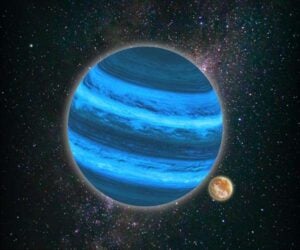
Exo Worlds We assume life needs a sun, but a team at Ludwig Maximilian University of Munich calculated in 2026 that moons orbiting starless rogue planets could sustain liquid oceans for up to 4.3 billion years — roughly as long as Earth has existed — without a single ray of starlight By Deep Field · Jul 20, 2026
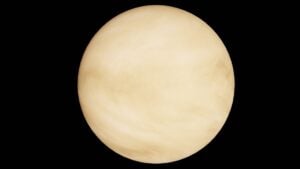
Venusian Heat In 1970, Venera 7 appeared to fall silent when it hit Venus, but engineers later found 23 minutes of faint radio data buried in the recording — the first transmission ever received from the surface of another planet By Deep Field · Jul 20, 2026