

Edgar Mitchell, riding home aboard Apollo 14 in February 1971 after walking on the Fra Mauro highlands, watched Earth, Moon and Sun rotate through the capsule window every two minutes and later said the sight produced a jolt of recognition he could not explain in the language of a Navy test pilot. He described experiencing a profound shift in perspective, a sense that the countries he could see were bound together in ways political maps had never shown. The author Frank White, interviewing Mitchell and other astronauts through the 1980s, gave the reaction a name in his 1987 book: the overview effect.
Nearly four decades later, the phrase still turns up almost every time a returning crew faces a microphone.
When the Artemis II astronauts looped around the far side of the Moon in April 2026, pilot Victor Glover described the view of the illuminated lunar farside and the receding blue marble as profoundly transformative and difficult to put into words, a reaction reported by CNN in the days after their return. The crew had flown far from Earth, and came back describing the same optical and emotional shift Mitchell had tried to put into words a lifetime earlier.
What the astronauts actually see
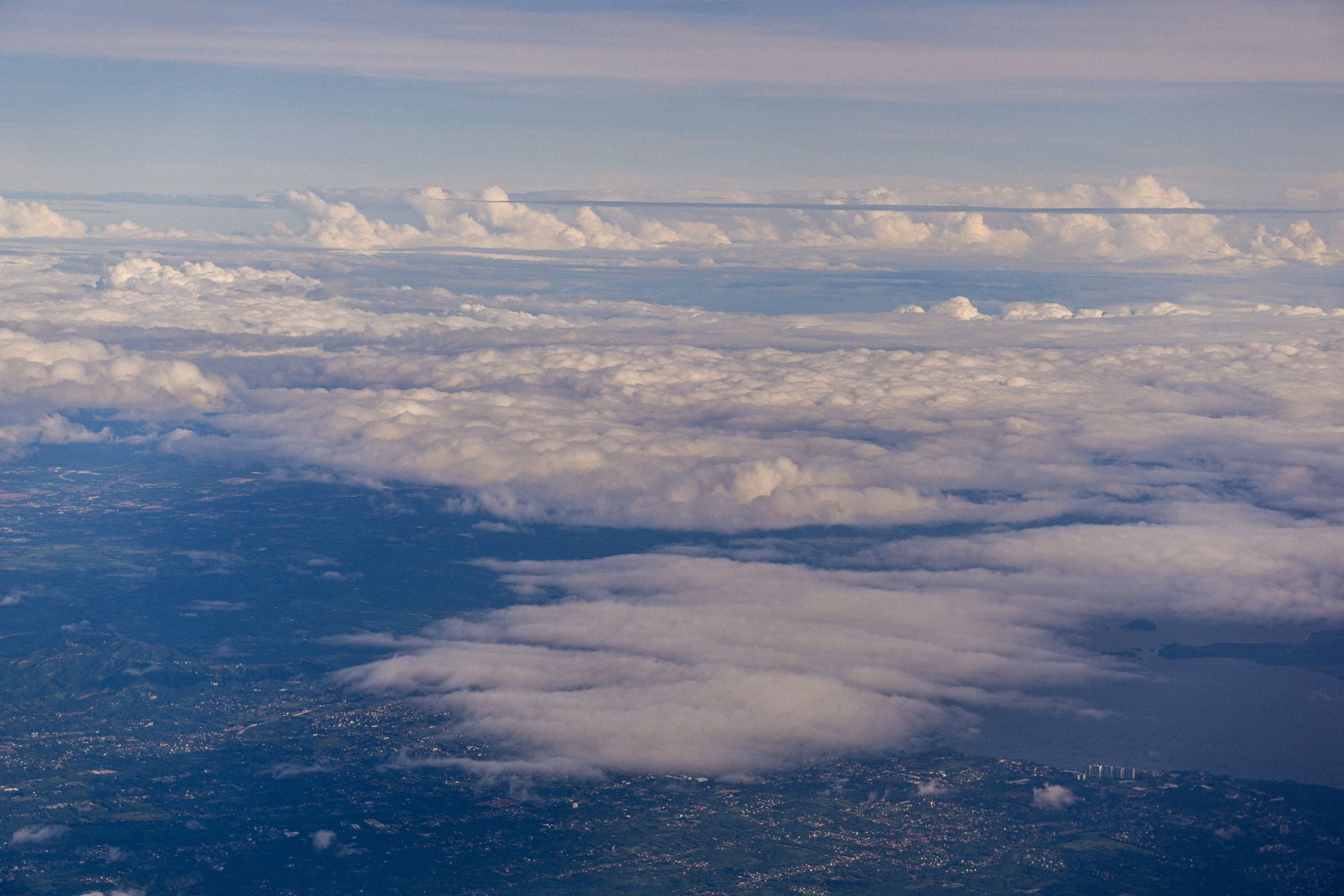
From the cupola of the International Space Station, roughly 400 kilometres up, Earth fills the window. Continents slide past in 90 minutes. A crew member watches sixteen sunrises a day. Weather systems that dominate a week of news on the ground are visible as single spiral shapes that pass beneath the boots in under an hour.
Farther out, the geometry changes. From lunar distance Earth is a disc you can cover with an outstretched thumb. There are no visible borders. The lights of cities on the night side blur into faint clusters. Oceans dominate. The atmosphere, edge-on, is a thin blue rim maybe as thick, in proportion, as the skin on an apple.
Astronauts describe two things happening at once. The first is optical: the planet is suddenly a single object, not a place they live inside. The second is emotional: every argument they have ever had, every headline, every border dispute is happening on that object, and it is silent, and it is small.

A name coined by a philosopher, not a pilot
Frank White was not an astronaut. He was a writer trained in philosophy who noticed, while flying commercially at 30,000 feet, that his own thinking shifted with altitude. He wondered what happened at 400 kilometres, or at 400,000. He began interviewing the small pool of people who knew, and in 1987 he published The Overview Effect: Space Exploration and Human Evolution. The book collected accounts from Apollo, Skylab and Shuttle crews and argued that the shift they described was consistent enough to deserve a technical name.
The pattern White documented was specific. Astronauts reported a heightened sense of Earth as a living system, a diminished attachment to national identity, an unexpected fragility of the atmosphere, and often a lingering emotional residue that outlasted the mission by years. Rusty Schweickart, after Apollo 9, spoke about it in almost religious terms. Michael Collins, orbiting alone in the command module while Armstrong and Aldrin walked below, later wrote that Earth from lunar distance looked “fragile,” a word that recurs in almost every account.
Why the effect appears to be real
The overview effect is not a diagnosis in any clinical manual, and the population of people who have experienced spaceflight is small. But the astronaut interviews describe a coherent cluster of responses that show up across cultures, decades, agencies and mission profiles.
Writing for Psychology Today, researchers have noted that astronaut reports share features with self-transcendent psychological states — experiences in which the sense of a separate self quiets and the person feels merged with something larger. The same cluster of features shows up in deep meditation, in psychedelic sessions, and, as one researcher argues in a separate Psychology Today piece, in near-death experiences reported by cardiac arrest survivors. What sets the astronaut version apart is the trigger: a physical view, not a chemical or physiological one.
The returning home problem
The other thing astronauts describe, less often quoted, is what happens after the parade. Traffic feels strange. Dinner-party small talk feels muffled, as if the room is behind glass. Political arguments that once mattered viscerally feel like watching two ants fight over a crumb from three metres up.
Ron Garan, who spent extended time on the ISS, has written about coming home and finding the everyday urgency of American life almost incomprehensible for months. Nicole Stott, who painted watercolours of Earth from the cupola, described the reintegration as the hardest part of her career. Chris Hadfield, in interviews after his 2013 command of the ISS, has been more matter-of-fact — he trained himself to expect the disorientation and let it settle — but he still describes a shift in what he takes seriously.
The consistency of the return experience is part of what makes researchers take the effect seriously. If it were only a peak moment during flight, it could be dismissed as awe, or novelty, or hypoxia. The fact that it changes behaviour on the ground, sometimes permanently, is what suggests something is actually rewiring.

Mitchell, and the founding of a strange institute
Edgar Mitchell went further than most. After returning from the Moon he left NASA and founded the Institute of Noetic Sciences in Petaluma, California, dedicated to studying consciousness and, in his framing, the experience he could not stop thinking about. He spent the rest of his life arguing that the view from Apollo 14 had permanently changed his sense of what a human being is embedded in. He died in 2016.
The Institute still exists. Its work is contested inside mainstream science, but Mitchell’s core observation — that the sight of a whole Earth from lunar distance produces a durable psychological shift in the viewer — has been echoed too many times, by too many pilots and engineers and physicians with no interest in mysticism, to be dismissed.
Artemis, and the return of the far view
For most of the last five decades the overview effect has been a low-Earth-orbit phenomenon. Space Station astronauts see Earth as a curved horizon, not a full disc. The last humans to see the whole planet at once were the Apollo 17 crew in December 1972.
That changed in April 2026. When the Artemis II crew flew around the Moon, they became the first crew in more than half a century to see the whole planet at once, framed against the black. Astronauts have described such views as profoundly transformative and difficult to put into words, but Glover’s comments are among the most-quoted from their post-flight interviews. Christina Koch spoke about seeing Earth as a single object and losing the sense that the borders below her had any physical reality.
The Artemis II crew came back describing exactly what Mitchell had described in 1971. Same words, same silences, same difficulty with the microphone.
Whether it lasts
The open scientific question is durability. Do astronauts stay changed? A body of qualitative work suggests many do — that they gravitate towards environmental causes, that they speak about Earth differently for the rest of their lives, that a striking number leave test-pilot or engineering careers for teaching, writing or advocacy. Others reintegrate smoothly and describe the flight as a great job well done. A recent Psychology Today essay on the future of astronaut psychology argued that as flight durations extend and commercial crews expand the sample size, the longitudinal picture will finally become tractable.
What is already clear is that the effect does not require a lunar distance to appear. Suborbital passengers on Blue Origin and Virgin Galactic flights, aloft for less than fifteen minutes and topping out around 100 kilometres, have reported milder versions of the same shift. William Shatner, after his October 2021 flight at age 90, gave an unusually raw account: he described looking down not at wonder but at grief, an overwhelming sense of the thinness of the atmosphere and the ordinariness of the life it protects.
The thing that lingers
What every account shares is a strange doubling. Astronauts come home to the same houses, the same partners, the same commutes. The traffic still runs. The small talk continues. And yet a portion of the mind is still 400 kilometres up, or 400,000, watching a blue disc turn without seams.
Mitchell, near the end of his life, said the memory had not faded. The view from the Apollo 14 window in February 1971, Earth and Moon and Sun cycling every two minutes, was still, fifty years on, the clearest image he owned. He described it the way people describe a face they loved. He never quite came back.