Deep Space Somewhere in the dried bed of an ancient Martian river, the Perseverance rover has been drilling into rocks for more than four years — and last June, NASA scientists announced that two of them contain the same complex carbon-based molecules that form the building blocks of life on Earth By Deep Field · Jul 24, 2026
Mind & Meaning When Singapore became independent in 1965 it had no natural resources, no hinterland, and fewer than 2 million people. Sixty years later its GDP per capita is higher than that of the United States, the United Kingdom, or Australia By Human Element · Jul 24, 2026
Mind & Meaning Ireland spent most of the 20th century watching its young people leave for work in London and Boston — and 40 years later, their descendants started coming home to work at the European operations of Apple, Google, and Pfizer, in a country whose GDP per capita now ranks higher than Germany's By Human Element · Jul 24, 2026
Mind & Meaning Saudi Arabia knows the day is coming when the world stops needing oil — and its Public Investment Fund is a bet placed by one generation on behalf of the next, spending the last decades of oil revenue on hotels, football leagues, and entire cities in the empty desert, so the grandchildren of today's leaders inherit a country worth having By Human Element · Jul 24, 2026
Flora And Fauna Elephants appear to call each other by name: a 2024 study found they summon particular herd-mates with specific, invented rumbles — and an elephant reacts when it hears the call meant for it, but not the ones meant for others By Life Signs · Jul 24, 2026
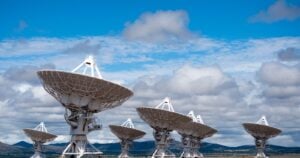
Science The search for alien radio signals from K2-18b, one of the most closely watched possible ocean worlds, came up empty after two of the most powerful arrays on Earth scanned it for a full orbit By Space Daily Editorial Team · Jul 24, 2026
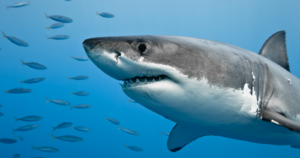
Flora And Fauna Sharks have no bones at all - their entire skeleton, jaws included, is built from lightweight, flexible cartilage, the same material that shapes the tip of your nose By Mal James · Jul 24, 2026
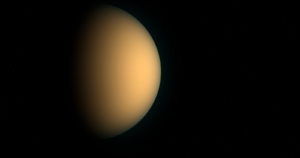
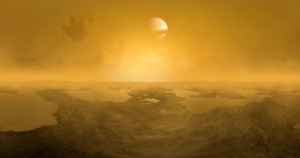
Saturn Daily Saturn's moon Titan is so large it outsizes the planet Mercury, making it the second-biggest moon in the solar system after Jupiter's Ganymede By Mal James · Jul 24, 2026
Aerospace To prove a jet can survive a bird strike, engineers load dead chickens into a cannon and fire them at the cockpit at full flight speed. By Space Daily Editorial Team · Jul 24, 2026
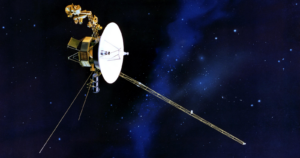
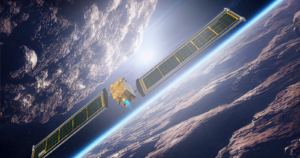
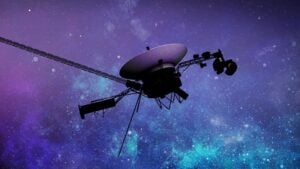
Constellations How does a spacecraft with less computing power than a modern car key still send back science from beyond the Sun's reach, almost 50 years after launch? By Deep Field · Jul 24, 2026
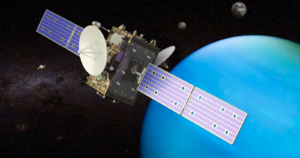
Science Why did NASA deliberately crash a spacecraft into an asteroid 11 million kilometres away, and what happened when it hit? By Space Daily Editorial Team · Jul 24, 2026
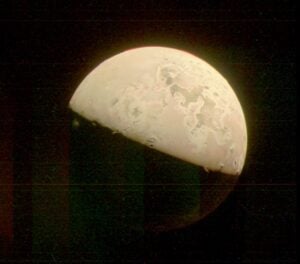
Moon Daily Jupiter's moon Io is the most volcanically active body in the solar system, with hundreds of active volcanoes that can shoot sulphur plumes more than 500 kilometres above its surface — a landscape so extreme that early Voyager scientists initially mistook the plume images for camera errors By Space Daily Editorial Team · Jul 24, 2026
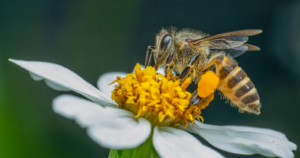
Flora And Fauna To make a single pound of honey, the bees in a hive may visit around two million flowers and can fly more than 50,000 miles between them — equivalent to more than twice around the planet By Mal James · Jul 24, 2026
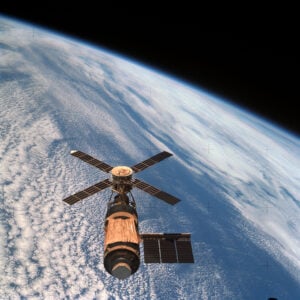
Space Travel Skylab cost roughly $2.2 billion, hosted nine astronauts across three missions and remained in orbit for just over six years — before breaking apart over Western Australia, where its remains became museum exhibits, Lucite-encased souvenirs and, according to local accounts, even a cattle trough. By The Daily Orbit · Jul 24, 2026
Saturn Daily Later this decade NASA plans to launch Dragonfly, a car-sized nuclear-powered drone that will fly from site to site across Saturn's moon Titan - the only world besides Earth with rivers, lakes and rain, though there the rain is liquid methane By Mal James · Jul 24, 2026
Space Travel The computers guiding Voyager 1 through interstellar space process roughly 8,000 instructions per second; a modern smartphone processes more than 14 billion — yet that 1970s machine has operated for nearly half a century, farther from Earth than any spacecraft in history. By The Daily Orbit · Jul 23, 2026