Psychology Radioactive iron from an ancient stellar explosion has been found in 80,000-year-old Antarctic ice, confirming that the Solar System is passing through the remnant debris of a supernova By Space Daily Editorial Team · May 20, 2026
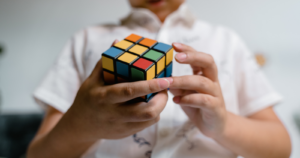
Human Behaviour Technology spent 15 years removing every small resistance from your day — and a growing body of research suggests that was not as good for your brain as it was for their engagement metrics By Space Daily Editorial Team · May 20, 2026
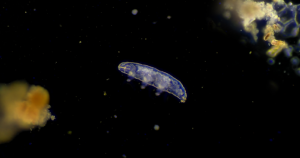
Science In 2007 the European Space Agency exposed dried tardigrades to the open vacuum of space for 10 days aboard the FOTON-M3 mission, and most survived the combination of vacuum and cosmic radiation, with some even surviving direct solar UV — then revived back on Earth and produced viable offspring. By Space Daily Editorial Team · May 20, 2026
Cosmology Japan sits on the intersection of four tectonic plates and experiences roughly 1,500 earthquakes a year, which is why the country's building codes are the strictest on Earth — and why the Tokyo Skytree, the second-tallest structure in the world, is designed to sway rather than resist By Space Daily Editorial Team · May 20, 2026
Psychology People who are truly pleasant and kind but have no close friends often spent decades being the one everyone called during a crisis — and somewhere along the way noticed almost none of those calls had reversed direction By Daniel Moran · May 20, 2026
Science Astronauts on the ISS lose about 1-2% of their bone density per month in microgravity — meaning a six-month mission costs them as much bone mass as a postmenopausal woman loses in a year — and the countermeasures NASA developed to slow that loss are now being studied as treatments for osteoporosis patients on the ground By Daniel Moran · May 19, 2026
Science The Antikythera mechanism was recovered from a Roman-era shipwreck in 1901 with at least 30 hand-cut bronze gears inside, and no comparable machine survives for centuries after it, as if a whole engineering tradition dropped out of history By Space Daily Editorial Team · May 19, 2026

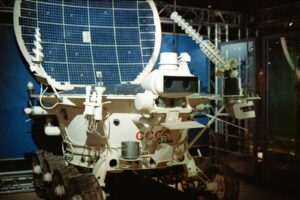
Cosmology China's Chang'e 5 mission returned lunar rocks dated to 2 billion years old — 800 million years younger than anything Apollo brought back — which means the Moon was geologically active hundreds of millions of years later than every textbook had assumed, and most of those textbooks haven't been updated yet By Space Daily Editorial Team · May 19, 2026

Science About 60 percent of the human body's mass is water, but a much more interesting figure is that roughly half of the cells in our bodies aren't human at all — they're bacteria, fungi, and other microorganisms whose collective genetic material vastly outnumbers our own, and emerging research suggests they're influencing mood, sleep, and certain kinds of decision-making in ways we're only beginning to map. By Space Daily Editorial Team · May 19, 2026
Science The Mariana Trench, the deepest known point on Earth's surface, sits about 36,000 feet below sea level — and yet there are living organisms thriving down there, including small white shrimp-like amphipods that have been found with traces of plastic in their digestive systems, in a habitat that almost no human has ever physically reached By Space Daily Editorial Team · May 19, 2026

Mind & Meaning Psychology explains why nearly all intelligent people change their minds in front of others more often than the rest of us are willing to — and the reason isn't that they care less about being right, it's that they've stopped needing to look right while they're working out what's true By Space Daily Editorial Team · May 19, 2026

Psychology Quote by Robin Williams: "Everyone you meet is fighting a battle you know nothing about. Be kind. Always." By Daniel Moran · May 19, 2026
Psychology Cognitive scientists have a name for the experience of suddenly realizing you've been reading a book for several minutes without absorbing any of the words — "mind-wandering" — and recent research suggests humans spend roughly 47 percent of waking life in some version of this state, which means the default condition of consciousness is mostly somewhere other than the present By Space Daily Editorial Team · May 19, 2026
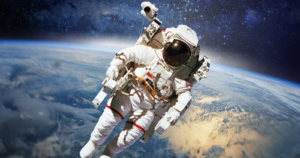
Constellations A European-Chinese spacecraft just launched to photograph something nobody has ever actually seen — the invisible shield that keeps the solar wind from sterilizing Earth By Space Daily Editorial Team · May 19, 2026

Science Sunsets are red for the same reason the sky is blue, and the reason has nothing to do with the sun changing colour — it's about how far the light has to travel through the atmosphere to reach you By Space Daily Editorial Team · May 19, 2026
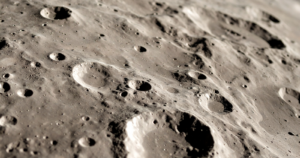
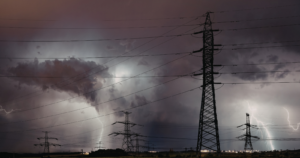
Science The Carrington Event of 1859 was a solar storm so intense that telegraph operators kept sending messages after disconnecting their batteries because the storm itself was powering the lines — and a Lloyd's of London risk model estimates a comparable event today could cost the U.S. up to 2.6 trillion dollars By Space Daily Editorial Team · May 19, 2026