
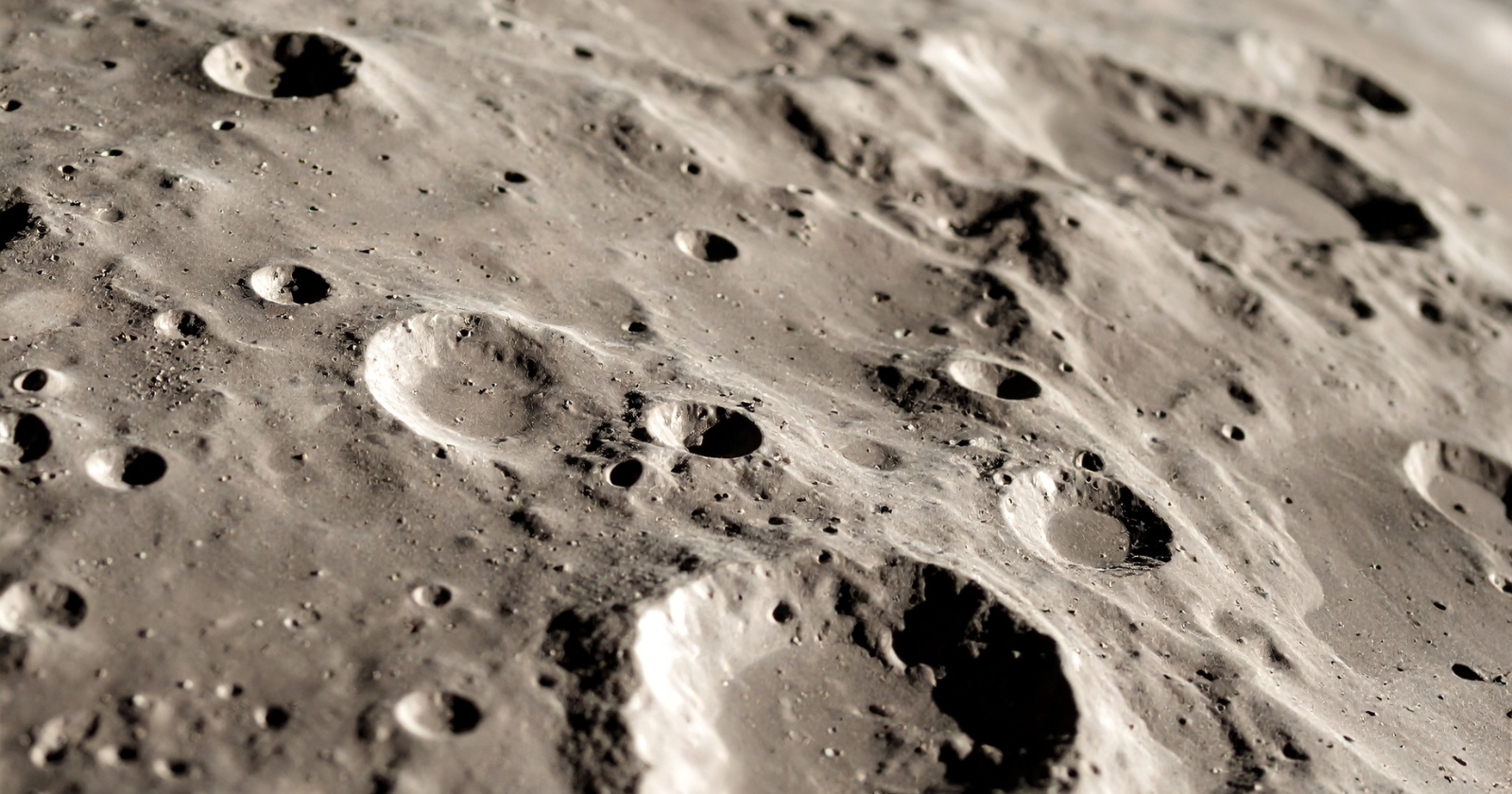
On December 17, 2020, a small Chinese spacecraft called Chang’e 5 landed in the Pacific Ocean carrying approximately 1.731 kilograms of lunar material. The material had been collected, several days earlier, from a region of the Moon called Oceanus Procellarum, on the near side of the lunar surface, at approximately 43 degrees north latitude. The collection was the first return of lunar samples to Earth since 1976, when the Soviet Luna 24 mission had brought back a small quantity of material from the Sea of Crises. The intervening 44 years had been, by every available measure, a notable gap in the species’ direct sampling of the Moon.
The Chang’e 5 samples were, in some real way, the first opportunity in nearly half a century to test, against new physical material, the various assumptions about lunar history that the wider scientific community had built up on the basis of the Apollo and Luna samples returned in the 1960s and 1970s. The Apollo and Luna samples had, across the intervening decades, been the empirical foundation for almost everything the textbooks claimed about how the Moon had evolved over its 4.5-billion-year history. The Chang’e 5 samples were, accordingly, going to either confirm the existing picture or revise it.
The samples, when analyzed, revised it. The revision was specific, well-documented, and considerably more substantial than the wider cultural register has, on the available evidence, yet absorbed.
What the samples actually showed
The wider Apollo and Luna sample collection, accumulated across the period 1969 to 1976, had been radiometrically dated by methods that the planetary science community had refined into one of the more reliable absolute chronologies in the wider field. The youngest basaltic samples returned by Apollo and Luna had dated to approximately 2.8 to 2.9 billion years old. The textbook conclusion, on the basis of these dates, was that lunar volcanic activity had effectively ceased by about 2.8 billion years ago. The Moon was, in this picture, a small body that had cooled relatively quickly, and that had been essentially geologically dead for the most recent third of its history.
This picture was, in some real way, internally inconsistent with another line of evidence the wider field had access to. The lunar surface contains regions with relatively few impact craters, suggesting that the surfaces are younger than the heavily cratered regions and that volcanic resurfacing had continued past the Apollo-and-Luna 2.8-billion-year cutoff. The crater-counting evidence suggested that lunar volcanism might have continued until as recently as 1 to 2 billion years ago in some regions. The crater-counting evidence, however, depended on calibration against the Apollo and Luna samples, and could not, by itself, establish the absolute ages of the younger regions.
The Chang’e 5 landing site had been chosen specifically with this discrepancy in mind. The Oceanus Procellarum region had been identified, from crater-counting analysis, as one of the youngest mare basalt regions on the lunar surface, with an estimated age somewhere between 1 and 3 billion years. The Chang’e 5 mission, by returning samples from this region, would allow the absolute age of the surface to be determined directly.
The results were published in October 2021 in a series of papers in Nature and Science. The Nature paper reported a precise lead-lead age of 2,030 ± 4 million years for basalt clasts in the Chang’e 5 sample. The samples were approximately 800 million years younger than the youngest previously dated lunar basalts. The result was unambiguous. Lunar volcanic activity had continued for at least 800 million years longer than the textbook picture had assumed.
Why this is a bigger deal than it sounds
The implication of the finding is, on close examination, more substantial than the 800-million-year figure suggests in isolation. The implication is that the wider model of how the Moon evolved thermally is, in some real way, wrong, or at minimum incomplete in ways that the existing framework does not adequately accommodate.
The standard thermal model of the Moon, developed across decades on the basis of the Apollo and Luna samples, suggested that the Moon had retained enough internal heat to sustain volcanic activity for the first 1.6 billion years of its existence and then, by approximately 2.8 billion years ago, had cooled enough that the interior could no longer produce melt. The cessation of volcanism, in this picture, was a relatively clean event driven by the Moon’s small size and its consequent limited heat retention.
The Chang’e 5 finding requires this picture to be revised. The Moon was, by the available evidence, still producing volcanic basalts 2 billion years ago, which means it had retained considerably more internal heat for considerably longer than the standard model predicted. The mechanism by which this heat retention was sustained is, on the available evidence, not yet fully understood.
The Chinese research teams that conducted the analysis proposed several candidate explanations. The Nature paper and subsequent work explored the possibility that the source region of the Chang’e 5 basalts contained elevated concentrations of heat-producing radioactive elements such as uranium, thorium, and potassium, which would have sustained the local melting for longer than the wider lunar interior. The follow-up analysis found, however, that the source region of the Chang’e 5 basalts actually contained lower than expected levels of these heat-producing elements, which made the persistent volcanism more rather than less puzzling.
The wider implication is that the Moon’s thermal evolution was more complex than the standard model had assumed, that some mechanism other than radioactive heating was sustaining the late-stage volcanism, and that the existing models will need to be revised to accommodate the new evidence. The revision is, on the available scientific record, currently underway. The revision has not, on the available cultural record, made its way into most of the textbooks the wider population would encounter.
What this implies about how science actually updates
The fact worth noticing here, on close examination, is that the Chang’e 5 finding was published in October 2021. The finding has been in the peer-reviewed literature for nearly five years. The finding is not, in any sense, contested within the wider planetary science community. The finding has been independently verified by multiple research teams using multiple radiometric methods.
The finding has also, on the available evidence, not yet been adequately incorporated into the wider educational infrastructure. The textbooks used in undergraduate planetary science courses, the popular-science accounts of lunar history, the various museum exhibits that describe the Moon’s evolution, are mostly still operating on the pre-2021 picture in which lunar volcanism ceased by approximately 2.8 billion years ago. The 800-million-year extension has, in most cases, not yet been added to the standard accounts.
This is, on close examination, a feature rather than a bug of how scientific knowledge updates at the population level. Scientific findings, even well-established ones, take time to propagate through the various layers of educational infrastructure. The peer-reviewed literature updates within months. The graduate-level textbooks update within a few years. The undergraduate textbooks update within five to ten years. The popular-science accounts update on a similar timescale. The wider cultural absorption can take a generation or longer.
The Chang’e 5 finding is, accordingly, currently in the awkward intermediate stage in which the specialist community has fully absorbed it but the wider population has not yet been informed. The wider population is still, in most cases, operating on the textbook picture from a decade ago. The textbook picture, on the available evidence, is now known to be wrong. The not-yet-updated condition will, in time, be corrected. The correction will, in time, propagate. The Moon’s geological activity will, eventually, be widely understood to have continued for considerably longer than the previous picture had allowed.
Final words
The Chang’e 5 mission returned approximately 1.731 kilograms of lunar material in December 2020. The material, when analyzed, established that the Moon was geologically active until at least 2 billion years ago, which is approximately 800 million years later than the previous picture, based on Apollo and Luna samples, had assumed.
The finding has been published in peer-reviewed journals, independently verified by multiple research teams, and incorporated into the working scientific consensus on lunar evolution. The finding has not, on the available evidence, been adequately propagated into the textbooks, popular accounts, and museum exhibits that constitute the wider population’s exposure to lunar science. The propagation is, by every available measure, lagging the science by several years.
This is, on close examination, a small but real example of how the scientific picture of the world is currently more current than the cultural picture of the world. The structural lag between the two is, in most cases, several years, sometimes longer. The lag means that anyone whose understanding of lunar history is based on the textbook account they encountered in school, or on the popular-science accounts they have read in the last decade, is operating on a picture that, in this particular respect, is known to be wrong. The corrected picture is available. The corrected picture has been available since October 2021. The corrected picture has not, on the available evidence, yet displaced the previous one in most of the venues that the wider population actually encounters.
The displacement will, in time, occur. The Moon will, in time, be widely understood to have been geologically active hundreds of millions of years later than the textbooks had assumed. The textbooks will, eventually, be updated. In the meantime, the Chang’e 5 samples are sitting in laboratories in China, being analyzed by various research teams, continuing to produce findings that will, in their own time, also have to make the same slow propagation through the various layers of cultural infrastructure that the original 2021 finding is still working its way through.
