
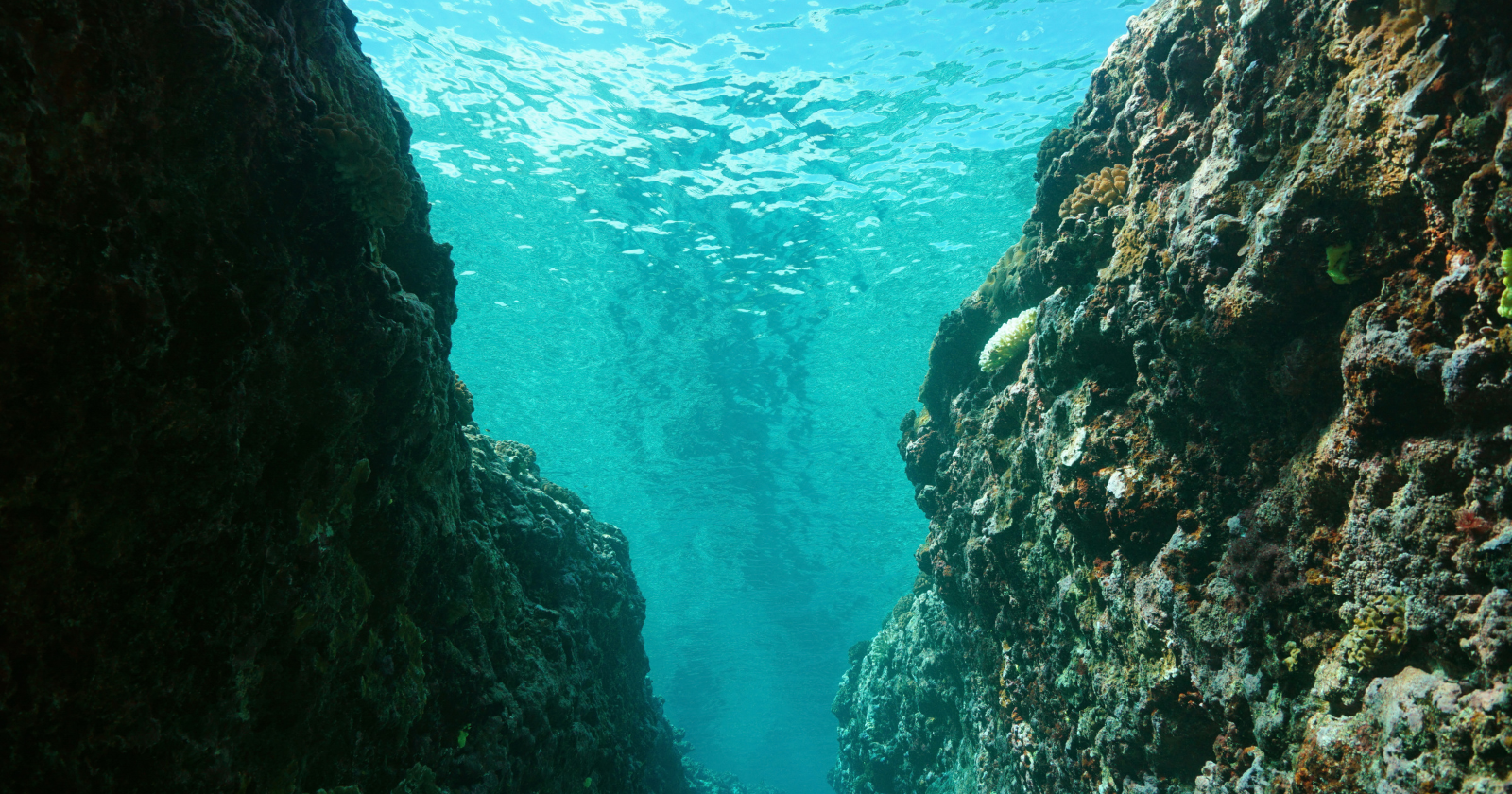
The Mariana Trench is, by every available measurement, the deepest point on the surface of the Earth. The deepest part of the trench, called Challenger Deep, sits approximately 10,890 meters below sea level, which translates to roughly 35,730 feet, or close enough to 36,000 feet that the popular accounts have settled on the rounded figure as the standard reference. The depth is, in absolute terms, almost difficult to credit. If Mount Everest were placed at the bottom of Challenger Deep, the summit of the mountain would still be more than two kilometers underwater.
The pressure at this depth is approximately one thousand times the atmospheric pressure at sea level. The temperature is just above freezing. The darkness is total. No sunlight has, in any meaningful sense, ever reached this part of the ocean. The conditions are, by every reasonable measure, among the most hostile any environment on the planet’s surface produces.
And yet, in this environment, living organisms thrive. The most studied of these are small white shrimp-like creatures called amphipods. The amphipods have, on the available scientific evidence, been living in the trench for as long as the trench has existed in something like its current form. The amphipods are, in some real way, the example of how thoroughly life has colonized this planet, including the places where the conditions appear to make colonization impossible.
The amphipods have also been found, in recent research, to contain microplastics in their digestive systems. The microplastics are, on every available measurement, the example of how thoroughly the human species has, in turn, colonized the amphipods’ habitat, even though almost no human has ever physically reached it.
What the amphipods actually are
It is worth being precise about what the amphipods are, biologically, because the wider cultural register has tended to absorb them as generic “deep-sea creatures” without engaging with what they actually are.
The amphipods that have been most studied at hadal depths are members of the family Lysianassoidea, with the most commonly encountered species being Hirondellea gigas and Eurythenes gryllus. The amphipods are small crustaceans, generally between one and three centimeters in length, white or pale in color, with the segmented bodies and multiple pairs of legs characteristic of the wider amphipod order. They look, to a casual observer, somewhat like small shrimp.
The amphipods occupy a particular ecological role in the trench. They are scavengers. Most of what reaches the bottom of the trench from the surface above is, by the time it gets there, organic material that has died in the upper ocean and slowly descended through several thousand meters of water column. The amphipods consume this material when it arrives, breaking it down and incorporating it into the wider food web that the trench supports. They are, in some real way, the cleanup crew of the deepest ecosystem on the planet.
What is striking about the amphipods, on close examination, is the adaptations they have evolved to operate in conditions that would, in any other context, be considered hostile to life. Their cell membranes are calibrated to function under enormous pressure. Their enzymes have been adapted to operate at temperatures just above freezing. Their metabolisms run at rates considerably slower than their surface-dwelling relatives, calibrated to the rare and unpredictable food supply the depth provides. The amphipods are, in some real way, the evolutionary result of millions of years of natural selection operating in the specific conditions of the hadal zone.
What the plastic findings actually showed
The plastic findings emerged from a research program conducted by Alan Jamieson and his colleagues at Newcastle University in the United Kingdom. The team’s 2019 paper in Royal Society Open Science documented the results of examining the hindguts of 90 amphipods collected from six of the deepest trenches around the Pacific Rim, including the Mariana, Japan, Izu-Bonin, Kermadec, New Hebrides, and Peru-Chile trenches.
The findings were unambiguous. Over 72 percent of the amphipods examined, 65 out of 90, contained at least one microplastic particle in their digestive systems. The microplastics included nylon, polyethylene, polyamide, polyvinyl alcohol, and polyvinyl chloride, among others. The materials are, by every available identification method, of human industrial origin. The materials had, by some sequence of mechanisms involving ocean currents, gradual fragmentation, and the slow descent of debris through the water column, reached the bottom of the deepest trenches on the planet and been consumed by organisms living there.
The Mariana Trench findings were the most striking. In the Mariana Trench samples, 100 percent of the amphipods examined contained plastic in their guts. Every single individual collected from Challenger Deep had ingested human-produced synthetic material. The 100 percent figure is, on close examination, one of the more sobering individual data points in the wider literature on global plastic pollution.
The implication of this is clear. The microplastics had reached the deepest point on the planet’s surface, in a habitat that almost no human being has ever physically visited, and had been so thoroughly incorporated into the local ecosystem that every individual organism the researchers sampled had eaten some.
How the plastic got there
The mechanism by which plastic reaches the bottom of the trench is, on close examination, worth attending to, because the mechanism reveals something about how thoroughly the wider environment is connected.
The plastic does not, in most cases, originate near the trench. The plastic originates in human-populated areas, often thousands of kilometers away. The plastic enters the ocean through various pathways, including river systems, coastal runoff, direct dumping, and the disintegration of larger plastic items that have been floating on the ocean surface for years or decades. The plastic, in its various forms, is then transported by ocean currents.
The currents distribute the plastic across the wider ocean. Most of the plastic that enters the ocean remains, for considerable periods, in the upper layers of the water column. Some of it, however, fragments into smaller and smaller pieces through the action of ultraviolet light, mechanical abrasion, and biological degradation. The smaller pieces become, eventually, the microplastics that are the subject of the Jamieson research.
The microplastics, being denser than seawater in many cases, eventually sink. The sinking is slow. The sinking takes, in some cases, decades. The microplastics that have reached the bottom of the Mariana Trench by 2026 entered the ocean, in many cases, in the 1970s, 1980s, or 1990s. The trench is, in some real way, the long-term accumulator of plastic pollution that began as ordinary human consumer waste decades ago.
The 2018 discovery of a plastic shopping bag at a depth of 10,898 meters in the Mariana Trench, documented in the Deep-Sea Debris Database, is the illustration of where the larger plastic items end up. The bag is, by some accounting, the deepest known piece of plastic ever documented. The bag is also, on close examination, just the most photogenic example of a wider phenomenon that the microplastic findings have established is far more pervasive than any single visible piece of debris would suggest.
Final words
The Mariana Trench is, by every available measurement, one of the most physically remote environments on the planet’s surface. The trench has been physically visited by humans on fewer occasions than one can count on two hands. The vast majority of the trench, and the vast majority of the species that live in it, have never been observed directly by anyone.
The trench is, however, no longer pristine. The small white amphipods that thrive at depths the rest of the species cannot reach are, on the available scientific evidence, all eating plastic that was produced and discarded by people who, in most cases, would never have imagined that their consumer waste would end up at the bottom of the deepest place on Earth. The plastic got there anyway. The amphipods, having no way of distinguishing synthetic material from the organic material they are calibrated to consume, ate it.
The implication, on close examination, is that there is no longer any environment on the planet’s surface that the human species has not, in some way, reached. The reaching has happened without anyone deliberately reaching. The reaching has happened through the slow accumulation of consumer decisions made by billions of people across decades, each of which seemed too small to matter, and the cumulative effect of which has been to deposit plastic into the digestive systems of organisms living in a place that almost no human has ever, in any literal sense, been to. The amphipods are, in some real way, eating us. The eating is what the wider cultural register has not, on the available evidence, yet fully absorbed as the fact it is.
