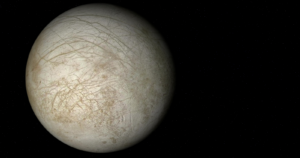
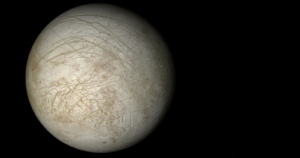
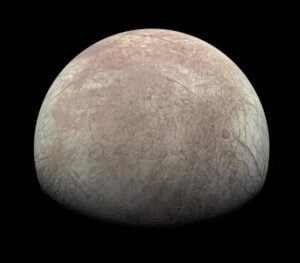
Outer Planets Jupiter's moon Europa hides a saltwater ocean that may contain more than twice the water of all Earth's oceans combined, yet a new measurement puts 29 kilometres of solid ice above it, a barrier taller than three Mount Everests stacked end to end By Lachlan Brown · Jul 26, 2026
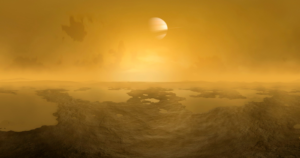
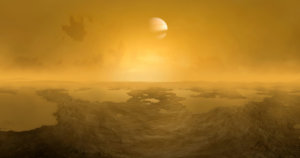
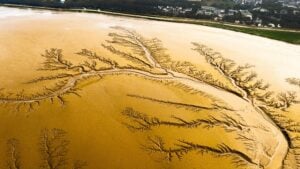
Outer Planets How does a moon 1.4 billion kilometres from the Sun end up with rivers, rain and lakes, but not a single drop of water in any of them? By Lachlan Brown · Jul 25, 2026
Outer Planets We tend to imagine the habitable zone as a narrow ring around a star, but icy moons have transformed that picture. Far beyond the reach of life-sustaining sunlight, vast oceans may remain liquid beneath their frozen surfaces—warmed by the constant gravitational flexing of the giant planets they orbit. By Lachlan Brown · Jul 25, 2026
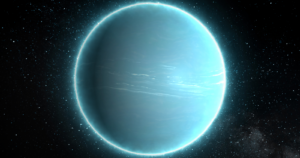
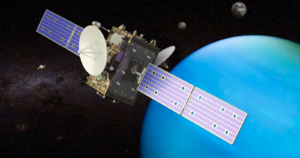
Outer Planets Scientists think at least two of Uranus's moons — Titania and Oberon — may harbour liquid water oceans beneath their icy crusts, kept warm not by the sun but by radioactive decay deep in their interiors. If true, they join a growing list of ocean worlds in the solar system By Deep Field · Jul 23, 2026
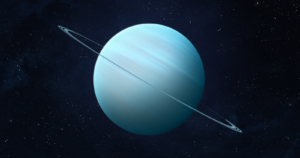
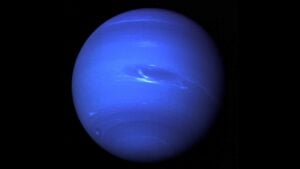
Outer Planets How does a planet 4.5 billion kilometres from the Sun, where daylight is roughly 900 times dimmer than on Earth, whip up the fastest winds in the entire solar system? By Deep Field · Jul 23, 2026
Outer Planets In March 1982, the Soviet Venera 13 lander survived 127 minutes on the surface of Venus at roughly 457 degrees Celsius and 89 atmospheres of pressure, drilling and analysing a soil sample while transmitting the first colour photographs ever taken from the surface of another planet By Deep Field · Jul 20, 2026
Outer Planets Beneath Europa’s fractured ice may be an ocean containing more liquid water than all of Earth’s oceans combined, kept warm in complete darkness by the gravitational pull of Jupiter By Deep Field · Jul 15, 2026
Outer Planets Juno survives repeated dives through Jupiter’s lethal radiation belts by hiding its electronic brain inside a 180-kilogram titanium vault — because an ordinary spacecraft computer would quickly fail in the storm of high-energy particles By Deep Field · Jul 14, 2026
Outer Planets Europa, one of Jupiter’s moons, is sealed beneath a shell of ice, but the ocean hidden below may contain twice as much liquid water as every ocean on Earth combined — and Jupiter’s gravity may have kept it liquid for billions of years By Deep Field · Jul 13, 2026
Outer Planets The discovery at the Solar System's frozen edge that deepened a long-running astronomical puzzle, casting new doubt on 'Planet Nine' — the giant, unseen world some astronomers believe is quietly tugging at the most distant orbits By Deep Field · Jul 12, 2026
Outer Planets Astronomers at Cambridge have proposed that the galaxy may contain a vast and previously unrecognised population of habitable planets, characterised by a global liquid water ocean beneath a hydrogen atmosphere, that exist across a far wider range of stellar conditions than Earth-like worlds and that may be substantially easier to detect signs of life on than the Earth analogues that astronomers have been searching for over the past three decades By Deep Field · Jun 25, 2026
Outer Planets There is a planet 63 light-years from Earth where the rain is made of molten glass, the winds blow at 7,000 kilometres per hour, the daytime temperature is over 1,000 degrees Celsius, and the planet itself, viewed from space, is the same deep blue as Earth. By Space Daily Editorial Team · Jun 2, 2026
Outer Planets Simple collapse may build cosmic snowman worlds By Space Daily Editorial Team · Feb 5, 2026
Outer Planets Study links Europa's quiet seafloor to hidden potential for life By Space Daily Editorial Team · Jan 21, 2026
Outer Planets Europa ice delamination may deliver nutrients to hidden ocean By Space Daily Editorial Team · Jan 21, 2026