
Space, science, and the human mind. Since 1995.
Space Daily Editorial Team
Editorial Team

Space Daily Editorial Team

Editorial Team

The Space Daily Editorial Team produces content across our two editorial pillars: space industry news and Mind & Meaning. We cover launches, missions, satellites, defense, and the technology of getting humans to space, alongside the psychology of ambition, isolation, and meaning under extremes. Articles reflect our team's collective editorial process, source verification, drafting, technical review, and editing, rather than a single writer's work. Space Daily takes editorial responsibility for content under this byline. For more on how we work, see our editorial policy.

Mind & Meaning

The Great Pyramid of Giza is described as one of the world’s oldest landmarks, but it was already more than a thousand years old by the time Stonehenge was completed — and it was older to Cleopatra than Cleopatra is to us, with the gap between her reign and the pyramid’s construction larger than the gap between her reign and the present day

The Great Pyramid of Giza is one of those structures whose age has been repeated so often that the number no longer registers.

Human Behaviour

Frances Glessner Lee, a wealthy heiress in the 1940s, built 20 dollhouse-sized crime scenes with hand-stitched curtains and working light bulbs to train homicide detectives, and 18 of her tiny dioramas are still used in forensic training in Baltimore today

Frances Glessner Lee, heir to the International Harvester fortune, built twenty miniature crime scenes in the 1940s to train homicide detectives. Eighteen of her Nutshell Studies of Unexplained Death are still used by the FBI and Harvard forensic seminars today.

Science

The Antikythera mechanism, pulled from a Greek shipwreck in 1901, was a hand-cranked bronze computer that predicted eclipses and tracked the Olympic Games calendar around 100 BC, and nothing of comparable complexity would appear again on Earth for the next 1,400 years

In 1901 sponge divers off the Greek island of Antikythera recovered a corroded lump of bronze that turned out to be a 2,000-year-old hand-cranked computer. It predicted eclipses, tracked the Moon's irregular orbit, and marked the Olympic Games, with no comparable machine appearing for the next 1,400 years.

Asia News

There is a Japanese word, mottainai, that carries the sense of regret over discarding something still useful, and a small mountain town of 1,500 people in southern Japan has spent the past twenty years building a municipal system around it, requiring residents to sort their household waste into 45 separate categories and achieving an 81 per cent recycling rate against a national average of 20 per cent.

The town is called Kamikatsu. It sits in the mountains of Shikoku, the smallest and least populated of the four main Japanese islands, about an hour's drive inland from the prefectural capital of Tokushima.

Science

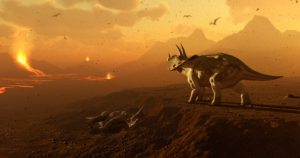
The asteroid that wiped out the dinosaurs may have struck a planet that was already in serious trouble — a new Johns Hopkins study has found evidence of a separate ecological crisis that began about 30,000 years before the impact, coincident with a high-volume pulse of volcanic eruptions in what is now India

A study published in May 2026 in the Proceedings of the National Academy of Sciences reports a finding that complicates the standard one-line version of the dinosaur extinction.

Science

For 70 years, two large fossil bones sat in a University of Alaska museum drawer labeled as woolly mammoth — until radiocarbon dating, isotope analysis, and DNA testing revealed they came from two whales of two different species that somehow ended up 250 miles inland from the nearest coast, in a mystery the researchers say may never be fully solved

In 1951, gold miners at Dome Creek, a small settlement north of Fairbanks, donated a pile of fossil bones from their excavations to the explorer and naturalist…