
Culture
One of the oldest known written 'recipes' in the world is a nearly 4,000-year-old…
Around 1800 BCE, the Hymn to Ninkasi was written down in cuneiform. It was addressed to Ninkasi, the Sumerian goddess of beer.

Around 1800 BCE, the Hymn to Ninkasi was written down in cuneiform. It was addressed to Ninkasi, the Sumerian goddess of beer.
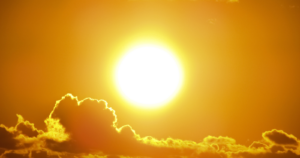
Ask almost anyone to draw the Sun and the yellow crayon comes out. It is one of the most consistent images in human culture, and it is also wrong.
For most of the space age, Earth's magnetic field has been described as a shield.
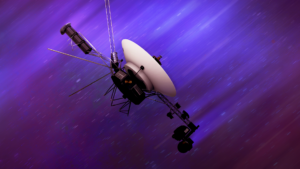
In November 2026, Voyager 1 will cross a boundary that is not marked by dust, plasma, gravity or any visible edge.

The odds were never the most interesting part, though they were sharp enough to make the point.
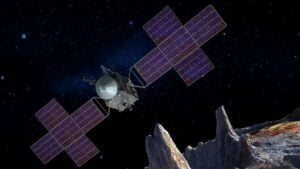
The number attached to asteroid 16 Psyche is so large that it almost stops being a number.

Artemis II broke a human spaceflight record in a way that looks almost modest until the geometry is understood.
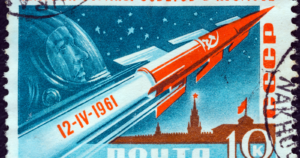
On 12 April 1961, Yuri Gagarin lifted off, circled the Earth once, and came home a legend.
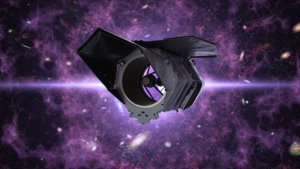
NASA's Nancy Grace Roman Space Telescope is now listed by NASA for launch on August 30, 2026, a little earlier than the September 2026 timing that has appeared in some recent coverage.
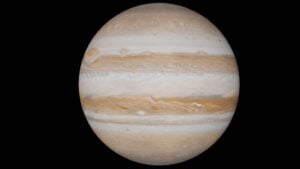
Jupiter was roughly twice its current size, and by some estimates as much as two and a half times, around 3.8 million years after the solar system's first solid material formed.
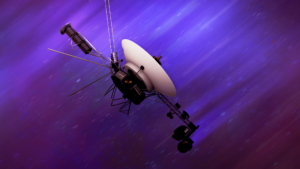
For most spacecraft, a failed thruster is an engineering problem. For Voyager 1, it is a problem stretched across interstellar space, handled by commands that take more than 23 hours to arrive and another 23 hours to report back.

The Sturtian glaciation is difficult to hold in the mind because its scale is so out of proportion to human history.
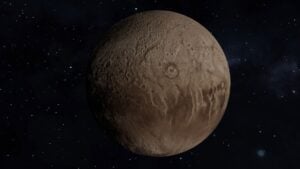
When astronomers first weighed the planet GJ 3378 b, they got a figure of about 5.3 times the mass of Earth.
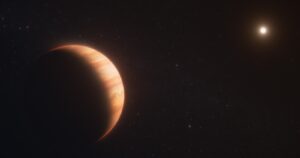
The gas giant WD 1856 b should have been swallowed when its star ballooned into a red giant. Webb found methane, haze, and a faint leftover heat in its air, and that heat became the clue to how the planet survived.
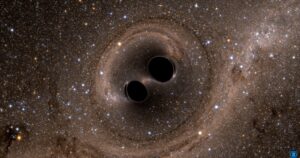
The LIGO–Virgo–KAGRA network released its fifth catalog on May 26, and the tally of collisions detected since 2015 now stands at 390. Most are black holes finding each other in the dark. A few are stranger than that.
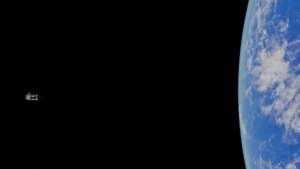
On 13 April 2029, an asteroid the size of a large skyscraper, roughly 375 metres across and named Apophis, will sweep past Earth closer than many telecommunications satellites orbit.