
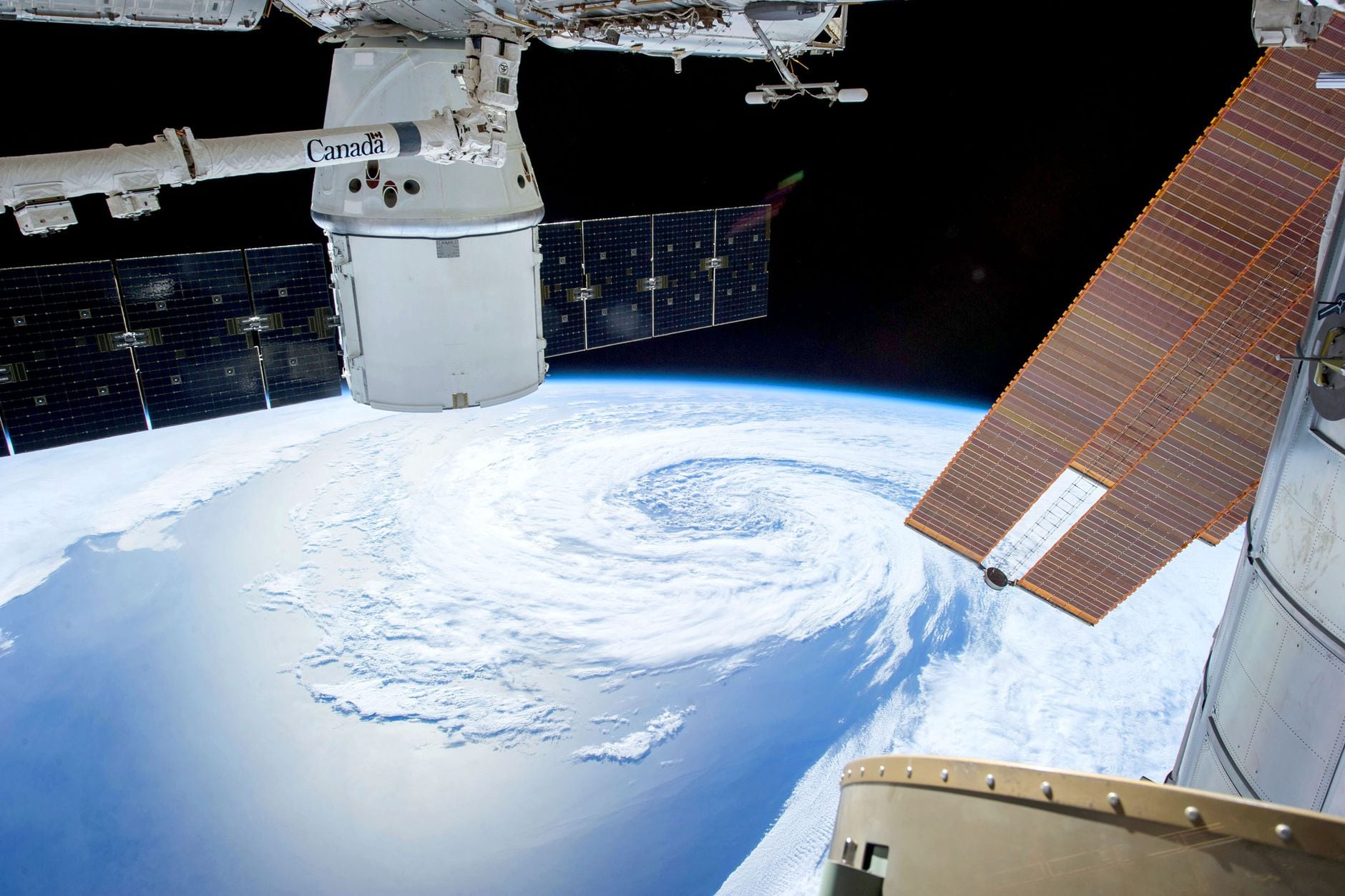
The International Space Station is still the larger and more international laboratory in orbit. Tiangong is smaller, newer, and controlled by one country. But the political meaning of the two stations is starting to change.
If the ISS reaches the end of its planned operational life around 2030, and if no commercial successor is ready to host crews by then, China’s Tiangong station could become the only permanently crewed outpost in Earth orbit. That is not the same as saying it will happen. It is the consequence of two timelines now running close together: the planned retirement of the ISS and the still-unfinished transition to commercial low Earth orbit stations.
The story is usually shortened into a simple line: China was shut out of the ISS, so it built its own. The sharper version is more useful. China was never an ISS partner, and US objections to Chinese participation predated 2011. But the Wolf Amendment, passed that year, made direct bilateral cooperation between NASA and China legally difficult, hardening a separation that had already been forming.
What the Wolf Amendment actually did
The relevant language is in Public Law 112-10, Section 1340, part of the Department of Defense and Full-Year Continuing Appropriations Act, 2011. It barred NASA and the White House Office of Science and Technology Policy from using funds to develop or execute bilateral programmes with China or Chinese-owned companies unless specifically authorised by a later law.
It also applied to the hosting of official Chinese visitors at NASA facilities. The result was not an absolute ban on every contact in every setting, but it made normal agency-to-agency cooperation with China a legal and political problem. For a programme like the ISS, where NASA is the central partner and the station is built around interdependent hardware, that mattered.
The ISS partnership has always been political as well as technical. NASA’s 2024 announcement on the station’s deorbit vehicle describes the ISS as operated by five agencies: NASA, Roscosmos, ESA, JAXA and the Canadian Space Agency. China is outside that structure. The Wolf Amendment did not cause Tiangong by itself, but it removed any realistic near-term path by which China’s human spaceflight programme would be folded into the ISS framework.
Tiangong made the parallel track real
Tiangong is no longer a proposed answer to exclusion. It is an operating station. Its core module, Tianhe, launched in 2021, followed by the Wentian and Mengtian laboratory modules in 2022. Since the crew handover period around Shenzhou 14 and Shenzhou 15, China has treated the station as a continuously occupied platform rather than a short-duration orbital laboratory.
That continuity is the important point. Tiangong is much smaller than the ISS, but it has a regular crew rotation model, cargo support through Tianzhou spacecraft, and a Shenzhou crew vehicle system that has continued through successive missions. Space.com reported that China launched the Shenzhou 23 crew to Tiangong on May 24, 2026, another expedition in the station’s operating rhythm.
The station also became a test of resilience in 2025 and 2026 after problems with a return spacecraft forced China to adjust its rotation and rescue planning. Chinese mission decision-making remains less transparent than NASA’s public operations, but the broader fact is plain enough: Tiangong kept operating through a serious spacecraft contingency.
That makes it a different kind of asset from a flag-planting mission. It is infrastructure.
The ISS retirement plan is still the hinge
NASA’s present plan is to operate the ISS through the end of the decade and then deorbit it in a controlled manner. In June 2024, NASA selected SpaceX to develop and deliver the US Deorbit Vehicle, saying the station would need to be safely brought down after the end of its operational life in 2030. In the same announcement, NASA said the United States, Japan, Canada and participating ESA countries had committed to operations through 2030, while Russia had committed through at least 2028.
The wording matters. The ISS does not simply switch off at midnight on January 1, 2030. Its end depends on partner commitments, station health, political decisions, the deorbit vehicle, and the availability of alternatives. There has already been discussion in Washington about extending operations if the transition requires more time.
Still, 2030 is the planning line. The station is ageing. Keeping it flying indefinitely would require money, risk acceptance and continued partner alignment.
The commercial bridge is not built yet
NASA’s intended answer is not another government-owned ISS. It is a market in which NASA buys services from privately owned stations. On its commercial space station page, NASA says it is supporting the development of commercially owned and operated space stations, using a phased approach through design, development, demonstration, certification and service procurement.
That approach may work. Axiom Space, Starlab, Orbital Reef and Vast have all put forward station concepts or development paths, with different levels of NASA support and private backing. But as of mid-2026, no commercial replacement is already operating as a crewed free-flying station. The distinction between a funded development programme and a certified orbital destination is the whole issue.
Commercial crew and cargo services show that NASA can shift major human spaceflight functions to private providers over time. They also show that certification, hardware development, launch cadence and safety culture take time. A station is not only a module. It is life support, power, docking, crew transport, cargo logistics, emergency return, ground operations, user demand and a business case that survives beyond NASA as anchor customer.
This is the gap in which Tiangong becomes strategically interesting. If one or more commercial stations are crew-ready before ISS retirement, the US-led low Earth orbit presence continues with a different ownership model. If they are late, Tiangong’s political weight rises even if its physical scale remains smaller.
What an orbital gap would mean
The most immediate consequence would be symbolic. Since November 2000, there has been an unbroken human presence on the ISS. If the post-ISS platform is Chinese rather than international or commercial, the centre of gravity in low Earth orbit would look different.
There would also be practical consequences. Access to a crewed orbital laboratory shapes research schedules, astronaut training, diplomatic partnerships, visiting-vehicle standards, and the commercial ecosystem around microgravity work. If Tiangong were the only permanently crewed station, countries and companies that wanted human-tended experiments in orbit would have fewer options.
That does not mean China would automatically inherit the role the ISS has played. Tiangong is smaller. Its governance is different. Its openness to foreign users is mediated through Chinese institutions and agreements, not through the ISS intergovernmental structure. The ISS was built as a shared programme among former rivals and close allies. Tiangong is a national platform with selective international openings.
But the possibility itself is a measure of how much the orbital map has changed. A policy meant to restrict cooperation helped preserve distance between the US and Chinese human spaceflight programmes. China then built the capability to operate without that cooperation. The question now is whether the United States and its partners can complete their own transition before the old station is gone.
The next few years will be less about slogans than schedules. Watch the ISS deorbit vehicle, any move to extend station operations, the first real commercial station hardware in orbit, and China’s next crew rotations. The outcome will not be decided by one law or one launch. It will be decided by which system is still inhabited when the ISS era finally ends.
