
Earth & Life
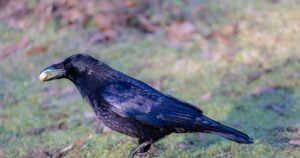
Japanese crows have learned to use traffic lights to crack open walnuts
These Japanese crows have turned traffic lights into a reliable tool—and researchers spent two decades watching them perfect the strategy.

These Japanese crows have turned traffic lights into a reliable tool—and researchers spent two decades watching them perfect the strategy.
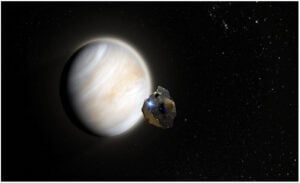
The five-minute Venus Life Finder probe has an instrument and heat shield, but no confirmed launch date. Its fluorescence test could find organics, not prove life.
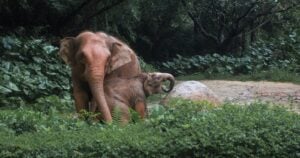
Elephants don't just use branches to swat flies—they reshape them first, suggesting a level of problem-solving that blurs the line between instinct and innovation.
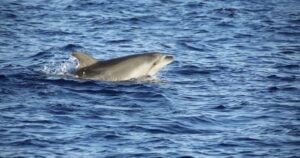
The moment a dolphin mother taught her calf to hunt with a shell suggests animals may pass down survival skills far more deliberately than science has recognized.

Curiosity's first possible nitrogen heterocycle is chemically relevant to pathways toward RNA and DNA, but the instrument's imperfect match and reactive reagent keep the result well short of evidence for life.
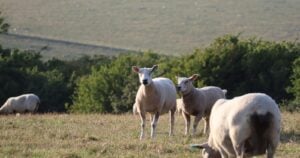
The ovine brain treats each flock member as a distinct individual, preserving those memories in specialized neural circuits that outlast years of separation.

When scientists sealed eight people inside a artificial Earth, they discovered that the creatures they didn't want thrived while the ones they needed to survive mysteriously vanished.
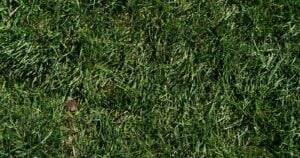
What you experience as nature's most comforting aroma is actually a distress signal—plants screaming for help in the language of chemistry.
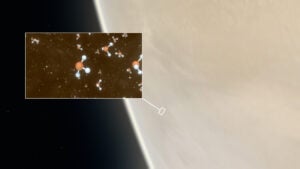
New JCMT-Venus observations have recovered the candidate phosphine signal with far more data, but overlapping teams, instrumental systematics and unknown chemistry keep the result contested.
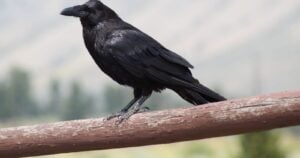
A raven's brain is walnut-sized, yet these birds outthink our closest relatives at planning for future rewards.
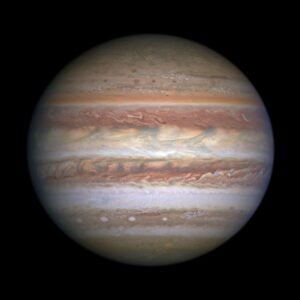
Sagan and Salpeter's 1976 Jovian ecology was a calculation, not a claim of discovery: could airborne organisms grow, reproduce and control buoyancy before fatal descent?
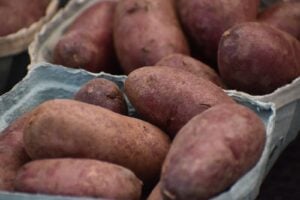
A 1949 survey found that sweet potatoes of several varieties supplied about 69% of calories in Okinawa. Later longevity research is observational and points to multiple dietary, social and cohort factors.
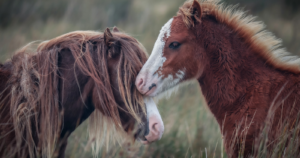
A wild horse's survival may depend less on its genes than on the microbes it inherits from its herd.
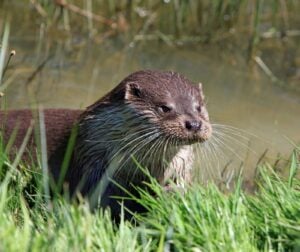
Sea otters carry up to one million hairs per square inch — the densest fur of any mammal on Earth — because they have no blubber and would die in North Pacific water without a coat that traps a permanent layer of air against their skin.

The coldest temperature ever measured on Earth — minus 98 degrees Celsius, detected by satellite over the East Antarctic Plateau — is so far below biological tolerance that a single unprotected breath would freeze moisture inside the human lung.
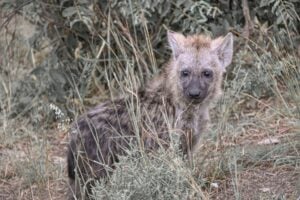
Spotted hyenas combine expanded frontal brain regions with monkey-like skills for tracking rank, kin, alliances and numerical odds, a striking but carefully bounded case of convergent evolution.