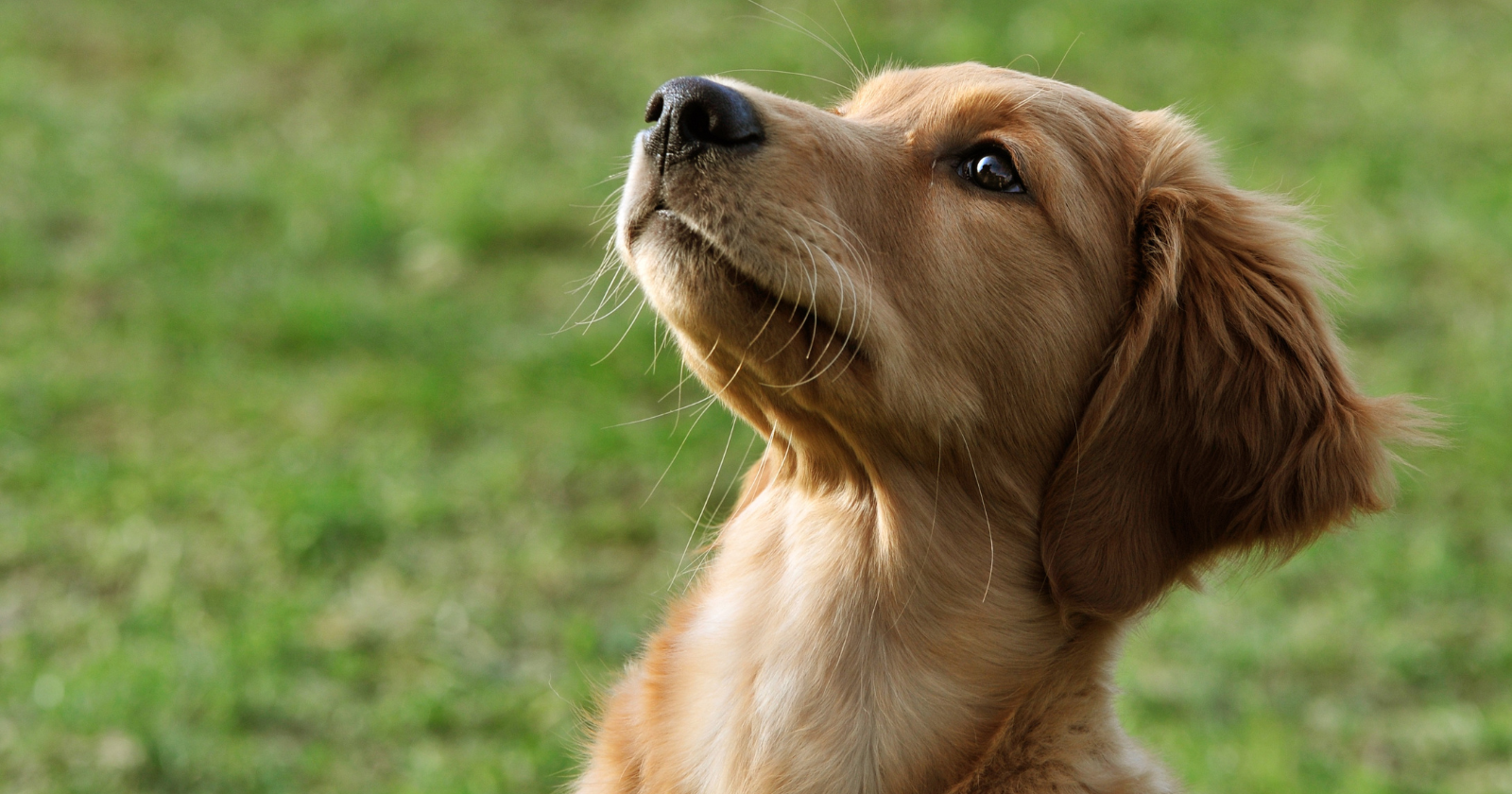
Dogs do not see the world in black and white: they see much as a red-green colourblind person does, in blues and yellows — reds and greens simply fade to murky browns and grey, but colour is very much there
Dogs do not see only in black and white. That is one of the most stubborn myths in popular biology, and it is wrong.
Dogs do not see only in black and white. That is one of the most stubborn myths in popular biology, and it is wrong. Dogs see colour. Their world is narrower than ours, leaning toward blues and yellows, with reds and greens washing out into dull browns and greys. But colour is there, and scientists have mapped the parts of the eye that produce it.
Where the black-and-white myth came from
The idea did not appear from nowhere. For decades people assumed colour vision was a human luxury that most animals lacked. The shorthand “dogs see in black and white” settled into common knowledge without much scrutiny.
Studies of the eye and of dog behaviour over the past few decades have taken that idea apart. Dogs’ eyes are simpler than ours. The real question was what that simpler system actually delivers. The answer is not grey.
Two colour cells, not three
Colour vision starts with cones, the light-sensing cells in the eye that respond to different wavelengths of light. Humans usually have three types, which is why we see the full range from red through violet. Dogs have two.
One of a dog’s two cones handles blue, the other handles yellow. Everything a dog tells apart by colour is built from those two channels. As Live Science explains, those two cone types “enable their brains to distinguish blue from yellow, but not red from green.”
Dr. Kristin Fischer, a veterinary ophthalmologist, sums up the result. The two cone types, she told Chewy, are “sensitive to short-wavelength and medium- to long-wavelength light, resulting in perception of the world in shades of blue and yellow, with limited ability to differentiate between red and green.”
Like a red-green colourblind person
The closest human comparison is a familiar one. A dog’s colour vision resembles that of a person with red-green colour blindness, the most common form, affecting about 8 percent of men and 0.5 percent of women.
As Live Science also puts it, dogs’ eyes are “structured in a similar way to those of people with red-green color blindness.” It is an analogy, not an exact match, but a close one.
Jay Neitz, a University of Washington colour vision scientist, describes the gap in human terms. Compared with a normal-sighted person, he told Live Science, “A human would be missing the sensations of red and green.” Neitz is careful here: whether a dog’s brain is truly missing those sensations, or simply sorting colours differently, is not something the experiments can settle. The analogy describes what dogs can tell apart, not what they experience when they see it.
Life Signs is where Space Daily looks down instead of up. Animals, ecosystems, and Earth science, with a bias for peer-reviewed studies over press-release hype. The living world turns out to be at least as strange as anything in orbit.