
Space, science, and the human mind. Since 1995.
Ainura Kalau
Writer at Space Daily

Ainura Kalau

Contributor

Ainura was born in Central Asia, spent over a decade in Malaysia, and studied at an Australian university before settling in São Paulo, where she’s now raising her family. Her life blends cultures and perspectives, something that naturally shapes her writing. When she’s not working, she’s usually trying new recipes while binging true crime shows, soaking up sunny Brazilian days at the park or beach, or crafting something with her hands.

Profile on Brown Brothers Media →

Psychology

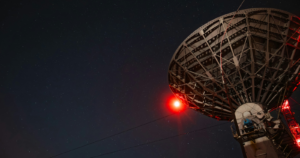
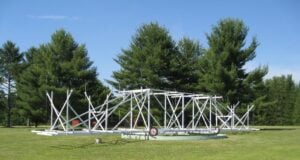
In 1977, an Ohio State radio telescope called Big Ear recorded a 72-second burst of radio noise from deep space so much stronger than the background static that an astronomer circled it on the printout and wrote ‘Wow!’ in red pen, and nobody has ever detected it again despite decades of listening.

The most tantalizing unexplained signal in the search for extraterrestrial life remains unmatched after fifty years, leaving scientists suspended between possibility and doubt.

Deep Space

Every galaxy in our neighborhood, including our own, is being pulled toward a single point in space hidden directly behind the crowded disk of the Milky Way, and when astronomers finally looked through the dust, they found a large, previously hidden cluster of thousands of galaxies sitting almost exactly where the pull was coming from

Astronomers spent decades chasing an invisible force pulling our galaxy through space, only to discover it was hidden in plain sight behind cosmic dust.

Science

In 1967, a Cambridge graduate student found a radio signal ticking with such mechanical precision that she and her supervisor briefly nicknamed it ‘LGM-1,’ for little green men, before realizing they had found the first pulsar ever detected — a dead star spinning many times every second

The serendipitous discovery that upended astronomy began with what looked like interference—until a graduate student realized the universe was sending a message no one had thought to listen for.

Asia News

South Korea has recorded one of the highest relative poverty rates among older adults of any country in the OECD for years running, with a large share of citizens over 65 living on incomes far below the national median even as the country built one of the most technologically advanced economies on the planet — a gap researchers link to a pension system introduced only in 1988, too late to protect a generation that had already spent its working life rebuilding a country from war.

A nation that engineered one of history's most dramatic economic transformations locked an entire generation out of its gains—and now grapples with whether it's too late to fix the bill.