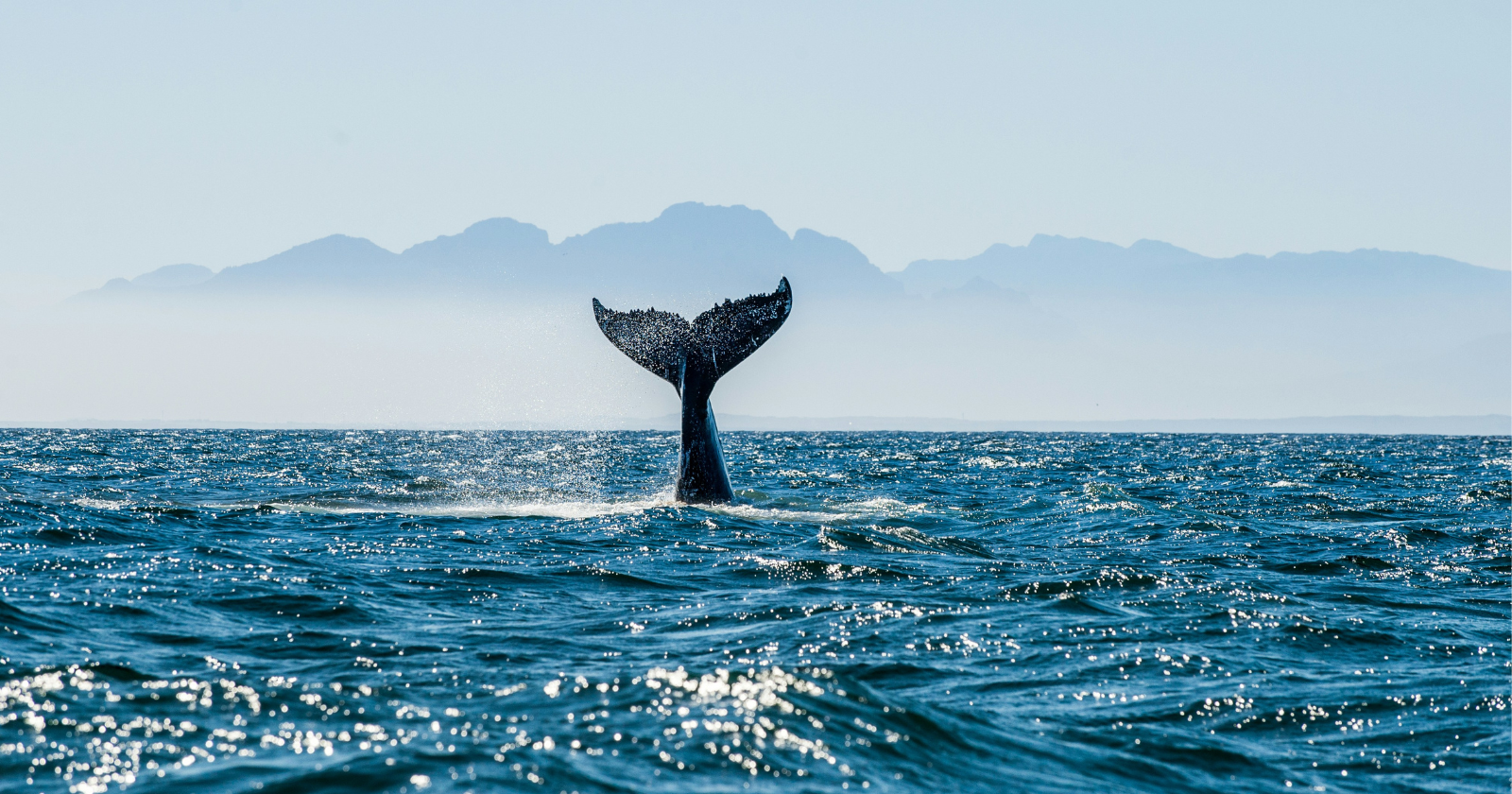
Christopher Clark, the marine mammal scientist who ended up running the civilian side of this network, has said it plainly: “I could show you the evidence today. I can listen in Puerto Rico to a whale way up on the Grand Banks.”
That is not a metaphor. It’s a description of hardware built during the 1950s for an entirely different war, still doing its job decades after the enemy it was designed for stopped being the point.
What it was built to hear
The system is called SOSUS, the Sound Surveillance System, and the Navy’s Office of Naval Research built it during the Cold War to solve one specific problem: a Soviet submarine crossing an ocean basin makes noise, and if you plant enough hydrophones on the seafloor and wire them back to a listening station on land, you can hear that noise from a very long way off.
The result, according to the same MIT Press Reader account, was “a complex array of hydrophones fixed on the ocean floor and connected by cables to secret listening stations set up along coasts all over the world.”
Entire ocean basins were wired this way, quietly, for a purpose that had nothing to do with biology. The whole point was finding a machine that didn’t want to be found.
What it hears now
In the spring of 1991, under the first Bush administration, the network was opened up for scientific use, and marine biologists suddenly had access to a listening system no research budget could have ever built from nothing. According to a detailed account in the MIT Press Reader, Clark used that access to track a single blue whale for 43 days, following it 2,200 miles across the ocean from a listening post a thousand miles away.
A whale makes a very different kind of noise than a submarine, but a hydrophone built to catch one turns out to be extremely good at catching the other too.
Two very different reasons to care about a sound
A submarine captain wants to be quiet and a whale wants to be heard, which is most of the contrast right there. The Navy’s version of this network existed to detect an unwanted signal.
The version marine scientists inherited exists to follow a signal on purpose, at a scale that used to be physically impossible. Clark has described why the range matters so much for an animal like a bowhead whale: “From a bowhead’s point of view, migrating under the spring pack ice in the Arctic, vision is reduced down to several hundred feet, and hearing is everything.” For a whale, sound isn’t a nice-to-have sense.
Under ice, in open ocean, in water too dark or too vast for eyesight to matter, it’s close to the only sense that works at range. A submarine trying to stay invisible and a whale trying to be heard for a thousand miles are, in a strange way, solving the same underwater physics problem from opposite ends, and the same grid of microphones happens to answer both.
Why the distance itself is the discovery
Before this network existed for civilian use, tracking one whale across an ocean basin for over a month would have required a research vessel following it in real time, an approach that is expensive, slow, and limited to whatever a single boat happens to be near. A fixed network of undersea microphones removes the boat from the equation entirely. The whale doesn’t need to be near anyone. It just needs to call, and something built decades earlier for a different purpose happens to already be listening.
One of the clearer examples from that same account involves a fin whale recorded near Stellwagen Bank, off Cape Cod. A researcher heard the loud calls close by, but also picked up faint, unplaced echoes underneath them. A phone call to colleagues monitoring hydrophones near Spain confirmed it: whales off the European coast were making the same low, subsonic calls about an hour earlier. Two whales, on opposite sides of an ocean, showing up on the same listening system within the hour. No boat could have caught both ends of that at once. A network that was never supposed to care about biology did, because it was built to notice exactly this kind of thing crossing an ocean basin, just aimed at a different kind of noise.
I don’t have any background in acoustics or marine biology, and I’m not going to pretend I understand the physics of how sound travels that far underwater. What I do understand, from running content strategy across a handful of very different publications, is how rare it is for something built for one exact job to turn out to be this good at a completely unrelated one, without anybody redesigning it first. Most tools I use in my own work were built for one narrow purpose and quietly outgrow it, and the good ones don’t need to be replaced when that happens. They just need someone to point them somewhere new.
The part I keep coming back to
I’ve said before that I think the whole “constantly reinvent yourself” trend gets more credit than it deserves. Most of the time, the thing you already built, if it was built well, doesn’t need to be torn down and started over to be useful again. It needs someone to notice it’s pointed at the right ocean. Nobody had to invent a new machine to listen to whales across a thousand miles of open water. The machine already existed. It just needed the Cold War to end, and someone willing to ask what else all that quiet, patient listening could be good for.
The submarines it was built to find aren’t the reason it still runs. The whales are, and nobody had to reinvent a single hydrophone to make that true.