Psychology A 2012 University of Westminster study measured horror-film viewers burning about 113 calories on average, roughly a short walk, as fear and jump scares pushed their heart rates higher By Human Element · Jul 13, 2026
Space Travel In 1957, the Soviet Union launched a metal sphere the size of a beach ball into orbit — and the panic it triggered across the country was so severe that within a year Congress poured federal money into science, maths, and foreign-language education By The Daily Orbit · Jul 13, 2026
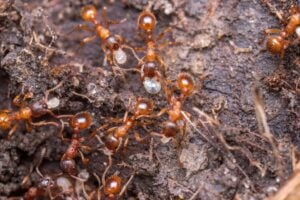
Science The trails of ants marching along your skirting board are drawn in scent, not sight — each ant lays a chemical line the next follows, and the path only fades when the food runs out and no one refreshes it By Life Signs · Jul 13, 2026
Human Behaviour Nearly every atom in your body is swapped out over the years, so in a real sense you aren't made of the same material you were a decade ago — yet you feel like the same person By Human Element · Jul 13, 2026
Edible Roughly 90% of hard cheese made in the United States is now set with an enzyme grown in a vat, not pulled from a calf's stomach By Space Daily Editorial Team · Jul 13, 2026
Science A single teaspoon of neutron star material would weigh about four billion tonnes on Earth — roughly the mass of a mountain — because the star has crushed the equivalent of the Sun into a sphere the width of a city By Space Daily Editorial Team · Jul 13, 2026
Political Economy In 1960, South Korea was poorer per person than Ghana and depended heavily on agriculture — within one lifetime it was building the world’s most advanced ships and electronics, while exporting music and television across the planet By Space Daily Editorial Team · Jul 13, 2026
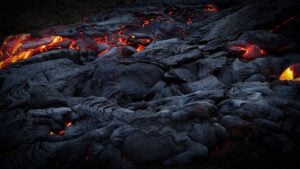
Climate Science Around 252 million years ago, volcanoes across what is now Siberia erupted repeatedly for more than a million years, releasing perhaps 100,000 billion tonnes of carbon dioxide and helping wipe out roughly 90 per cent of marine species in the deadliest mass extinction Earth has ever known By Life Signs · Jul 13, 2026
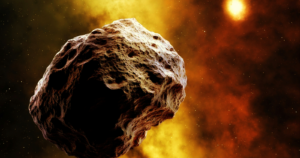
Early Earth A rare meteorite examined in 2026 revealed evidence of a Moon-sized world that orbited the young Sun more than 4.5 billion years ago, then vanished — possibly shattered in a catastrophic collision while Earth was still being assembled By Space Daily Editorial Team · Jul 13, 2026
Stellar Chemistry Scientists examining samples returned from asteroid Bennu found ribose and glucose inside — and with phosphate and every RNA nucleobase already detected in the same asteroid material, every chemical component needed to build RNA was present in the early solar system, long before life existed on Earth. By Deep Field · Jul 13, 2026
Human Behaviour In 2012, researchers mapping census data across England found that communities closer to the coast reported slightly better general health, with the strongest pattern appearing in more deprived areas. Later studies found similarly modest associations with mental health, including better scores among some urban adults living within one kilometre of the sea. By Human Element · Jul 13, 2026
Early Earth Earth’s inner core is not rock but a sphere of solid iron-rich metal, smaller than the Moon yet probably more massive. As the planet gradually loses heat, liquid metal freezes onto its surface, expanding it by roughly a millimetre each year. By Space Daily Editorial Team · Jul 13, 2026
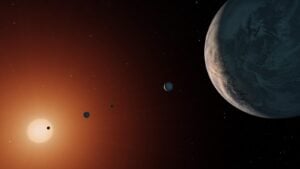
Exo Worlds A red dwarf star called TRAPPIST-1, just 40 light-years from Earth, hosts seven Earth-sized planets — including three orbiting in the narrow zone where liquid water could potentially survive By Deep Field · Jul 12, 2026
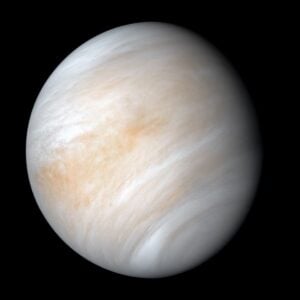
Venusian Heat Venus turns so slowly that a single day there lasts longer than its entire year, and it spins backwards, so from its surface the Sun would rise in the west. By Deep Field · Jul 12, 2026
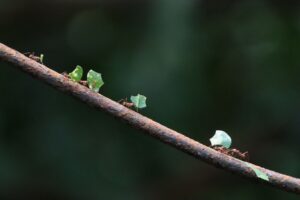
Science Leafcutter ants don't eat the leaves they carry home in long green columns — they feed the clippings to an underground fungus, and it is the fungus they farm and eat, a practice that predates human agriculture by around 50 million years By Space Daily Editorial Team · Jul 12, 2026

Human Behaviour Japan created a national ministerial post for loneliness in 2021, becoming only the second country after Britain to appoint such a minister, after data linked prolonged social isolation to a measurable rise in suicides during the pandemic. By Human Element · Jul 12, 2026