

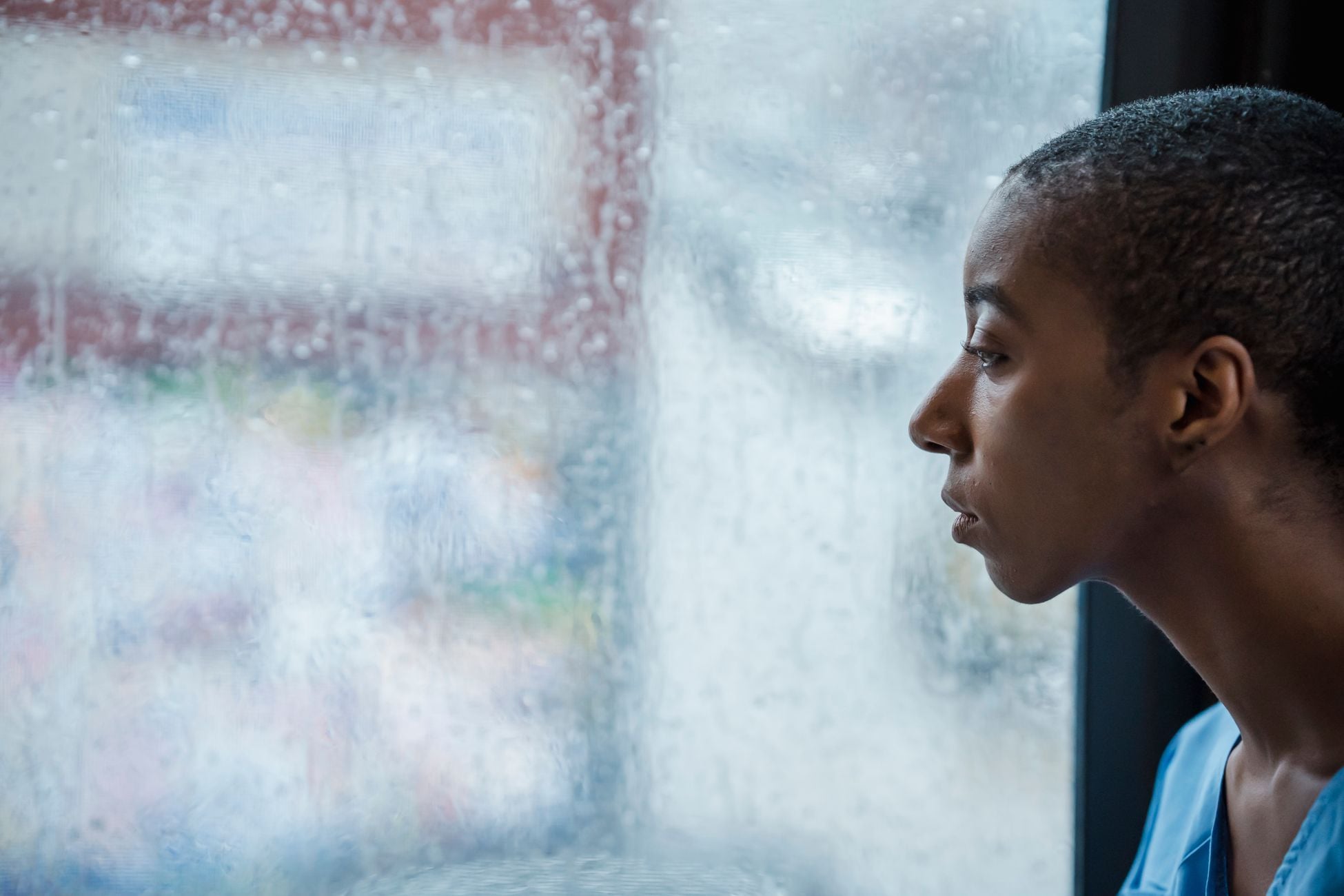
In February 2021, Japanese Prime Minister Yoshihide Suga appointed Tetsushi Sakamoto as minister in charge of loneliness and isolation, a portfolio no cabinet in Tokyo had ever held before. The country had recorded its first annual rise in suicides in over a decade, with women accounting for most of the increase, and government data tied the trend directly to the social severing of the pandemic. Japan became only the second nation on Earth to formalise loneliness as a matter of state, following Britain, which appointed Tracey Crouch to a similar role in 2018.
The move was less symbolic than it sounded. Within weeks Sakamoto had convened an emergency forum, launched a nationwide survey, and begun coordinating across ministries that had never spoken to each other about the problem before.
The numbers that forced the appointment were stark. Japan recorded over 20,000 suicides in 2020, an increase over the previous year, and the rise among women was substantial. Among schoolchildren, the figure reached unprecedented levels.
A ministry born from a spreadsheet
The Japanese decision did not emerge from a philosophical debate about modern life. It emerged from a monthly release of preliminary suicide statistics by the National Police Agency, which unlike most countries publishes the data almost in real time. By October 2020, the curves were bending in the wrong direction, and the demographic pattern was unusual: young women, part-time workers, single mothers.
Sakamoto, who kept his existing roles overseeing regional revitalisation and declining birth rates, described the brief in plain terms during his first press conference. The task was to prevent social bonds from fraying further and to build a system of connection across government.
Britain had reached the same conclusion a few years earlier, though through a different door. The Jo Cox Commission on Loneliness, established after the Labour MP’s murder, spent eighteen months documenting what it described as a widespread but underrecognized crisis, and its final report pushed Theresa May’s government to create the world’s first loneliness ministry.
What the data actually showed
The epidemiological case for treating loneliness as a public health concern had been building for more than a decade before either government acted. Research published in Japan tracking loneliness scores from 1983 to 2023 shows a steady climb across four decades, with the sharpest jump arriving in the years around COVID-19. The longitudinal study found the shift was not confined to the elderly, as often assumed, but reached deep into working-age adults and adolescents.
The physical consequences are not hypothetical. A large US analysis using causal modelling published in late 2025 identified social isolation as an independent driver of cognitive decline, separate from the subjective feeling of loneliness itself. Isolation, in other words, damages the brain even when the person does not report feeling lonely.
Among cancer patients, the effect on survival is measurable. A 2025 study of nearly 4,000 adults with cancer found that social isolation carried a 34 percent higher risk of death from any cause during follow-up, with loneliness adding a further increment on top.
The Suga cabinet’s specific worry
Officials in Tokyo were watching one indicator in particular: the surge in suicides among women in their twenties and thirties. Japan’s female suicide rate rose significantly in 2020, and the government’s own analysis linked the pattern to the collapse of service-sector employment, the intensification of domestic labour under lockdown, and the erosion of the informal social contact that many single women relied on.
The country had spent the 2010s bringing overall suicide numbers down through a coordinated plan that combined workplace mental health rules, gatekeeper training for community leaders, and restrictions on lethal means. The 2020 reversal wiped out several years of progress in a matter of months.
What Sakamoto’s office actually did
The new minister was given a small secretariat inside the Cabinet Office rather than a full ministry with its own budget. That structure was deliberate. The problem cut across health, education, labour, gender equality, and regional policy, and no single ministry could own it.
The office commissioned a national loneliness survey, the first of its kind in Japan, sampling thousands of people aged 16 and over. Results showed that a substantial portion of respondents reported feeling lonely to some degree, with elevated rates among people in their thirties.
Funding flowed to NPOs running food banks, telephone counselling lines, and outreach programmes for young people who had withdrawn from school or work. The government also expanded the roster of trained listeners at Yorisoi Hotline, a free 24-hour counselling service that received a surge of calls during the pandemic.
The British precedent
When Tracey Crouch took the British loneliness brief, she inherited a body of research the Jo Cox Commission had already assembled: millions of adults in the UK reporting they often or always felt lonely, GPs regularly seeing patients whose primary complaint was social rather than medical, and government estimates that loneliness cost employers billions in lost productivity.
Crouch’s strategy, published in 2018, embedded loneliness measurement into the Office for National Statistics, funded social prescribing so that GPs could refer isolated patients to community activities, and required government departments to consider social connection in policy design.
Japan borrowed several of these tools directly, including the idea of social prescribing, though it adapted the model to the country’s stronger tradition of neighbourhood associations and community centres.
Why the response spread beyond two countries
By the middle of the 2020s, the framing of loneliness as a public health matter had moved into mainstream policy discussion in Europe, North America, and parts of East Asia. The World Health Organization launched a Commission on Social Connection in 2023, chaired by US Surgeon General Vivek Murthy and African Union Youth Envoy Chido Mpemba, treating isolation as a determinant of health on par with tobacco and obesity.
Urban planning research has fed into the same conversation. Work summarised by the European Public Health Association points to how city design shapes both isolation and mental health, with dense but poorly connected neighbourhoods producing measurably higher rates of loneliness than either rural areas or well-designed urban ones.
Recent physiological research, meanwhile, has begun mapping how prolonged isolation alters inflammation markers, cortisol rhythms, and immune function. A 2025 review of the field described how scientists are rethinking what loneliness does to the body, finding effects that show up in bloodwork long before they appear in behaviour.
The quiet part of the Japanese story
Japan had a specific vocabulary for social withdrawal long before the pandemic. Hikikomori describes people who withdraw from social life for six months or more, often confining themselves to a single room. Government surveys have estimated that over a million people between 15 and 64 fit this description.
Another term, kodokushi, describes lonely deaths that go undiscovered for days or weeks. Tokyo’s 23 wards have recorded thousands of such deaths annually among people aged 65 and over.
The loneliness ministry did not invent these categories. It gave them a single administrative address for the first time.
What has changed since 2021
Sakamoto was succeeded by other ministers as cabinets reshuffled, but the portfolio survived each transition. In 2023 the Diet passed the Loneliness and Isolation Countermeasures Act, giving the office a statutory basis rather than leaving it as an ad hoc arrangement, and requiring local governments to develop their own loneliness plans.
Japan’s annual suicide numbers have drifted downward again since the 2020 spike, though not to pre-pandemic lows. The female rate has stabilised without falling back to 2019 levels.
The clinical literature on community as a health intervention has continued to accumulate, and by 2026 several other governments, including South Korea, Denmark, and Australia, had adopted variations on the British-Japanese model, sometimes as standalone offices and sometimes as units inside health ministries.
The oddness of the whole thing
A cabinet minister for loneliness is, by any historical standard, a strange office. It sits alongside portfolios for defence, finance, and foreign affairs, dealing with a condition that has no borders, no treaty, and no clear budget line. It exists because two governments, working from separate national traditions, arrived at the same conclusion within three years of each other: that the erosion of social bonds had reached a scale where markets and families could no longer be expected to absorb the damage on their own.
The Japanese office is small. Its staff numbers in the dozens, its budget is a rounding error next to health or education, and its authority is largely persuasive. And yet every month, when the National Police Agency releases the preliminary suicide figures, someone in that office reads them first.