

The most revealing moment in SpaceX’s 2017 presentation came after the Moon and Mars.
On 29 September, at the International Astronautical Congress in Adelaide, an animation brought the company’s new interplanetary vehicle back to Earth. Passengers left New York by boat, reached an offshore launch platform, climbed into a rocket then called BFR and rose almost vertically away from the city. The booster turned back. The ship continued through space, entered the atmosphere over Asia and landed upright on another marine platform near Shanghai.
The number on the screen was 39 minutes.
It was audacious enough to survive independently of the presentation that produced it. Nine years later, however, there is no SpaceX passenger timetable, fare or announced pair of New York and Shanghai spaceports. The 39-minute figure remains a modeled flight time, not a booked service.
Yet something important has changed. The rocket family behind the animation is no longer wholly imaginary. An evolved Starship has flown through space, endured atmospheric entry and guided itself to a distant landing zone. The company has demonstrated the middle of the proposed journey while leaving nearly everything that would turn it into transport unfinished.
The 39 minutes began and ended at a rocket pad
The first boundary is simple but often lost when the claim is repeated. Thirty-nine minutes was the rocket flight, not the passenger’s complete trip from one city address to another.
SpaceX’s animation began with a boat leaving a dock near Manhattan. The launch vehicle was already fuelled and waiting offshore. At the far end, passengers still had to leave the landing platform and travel into Shanghai. Security, safety briefing, boarding, launch holds, unloading, immigration and both marine transfers sat outside the number shown for flight.
That does not make 39 minutes deceptive. Airlines likewise publish scheduled airport-to-airport times rather than the duration from a traveller’s front door. It does mean the comparison with a long-haul flight needs equal boundaries. The rocket would compress the high-speed crossing more dramatically than it necessarily compresses the whole journey.
SpaceX’s current Earth-to-Earth page still presents the idea. It lists Los Angeles to New York in 25 minutes, London to New York in 29 and several other routes, while saying most long international trips could take 30 minutes or less. The page offers comparisons and a concept video. It does not offer departure dates, terminals or tickets.
BFR became Starship, but the design did not stand still
The vehicle shown in Adelaide was called BFR. It was a reusable booster and ship with a nine-metre diameter, carbon-composite structure and a design that existed mainly in engineering work, engine tests and renderings. Calling it Starship retrospectively is understandable because it is the clear ancestor of the present system, but it can conceal years of substantial redesign.
SpaceX abandoned carbon composite for welded stainless steel. It changed tank construction, engine layouts, flaps, thermal protection, stage separation and the proposed recovery method. The rocket also grew through successive versions.
The current Starship technical overview describes a 124-metre, nine-metre-wide system designed to place more than 100 tonnes into orbit in a fully reusable configuration. Super Heavy carries 33 methane-and-oxygen Raptor engines. The upper stage has three sea-level Raptors and three vacuum engines. SpaceX continues to name point-to-point Earth travel as a possible future use, alongside satellites, the Moon and Mars.
This continuity is real, but architectural rather than literal. The 2017 proposal supplied the basic grammar: a very large methane-fuelled booster, a reusable ship, vertical launch, atmospheric entry and propulsive landing. The hardware that has now flown speaks that grammar in a different design.
That distinction also keeps the historical record honest. The claim is not that SpaceX built the exact BFR from the animation. It is that the successor built around the same reusable two-stage logic has now performed several of the physical events the trip requires.
The spaceport problem was visible in the first animation
SpaceX did not draw its terminal beside an airport runway. It moved the rocket out to sea.
A Starship launch involves millions of kilograms of methane and liquid oxygen, 33 booster engines and exhaust powerful enough to damage its own ground system when the first integrated test flew in 2023. Blast, noise, debris exposure, overpressure and the possibility of a failed vehicle create an operating environment unlike an airliner gate. A launch site serving a major city would need distance, exclusion areas and protected routes through airspace and shipping lanes.
SpaceDaily reported in 2020 on SpaceX recruiting for offshore spaceports. At the time, Elon Musk said frequent point-to-point flights would probably need platforms roughly 20 miles offshore for acceptable noise levels. The idea addressed one of the proposal’s clearest conflicts: the customers need proximity to a city, while the rocket needs separation from it.
Offshore operation does not remove complexity. It relocates it. Platforms must receive, store or be supplied with cryogenic propellants; support a launch and vertical landing; survive salt, wind and waves; evacuate people; and connect reliably with the shore. Marine weather that barely affects an airport may prevent a transfer boat from operating safely. The time saved in space could be spent reaching the pad.
There is also a network problem. One platform near New York and one near Shanghai create one route. The global system imagined in 2017 requires many coastal cities to permit and support launch infrastructure, or requires passengers to travel long distances to a small number of spaceports. Either outcome changes the convenience comparison with aviation.
Flight 13 demonstrated the middle of the journey
On 24 July 2026, Flight 13 gave the point-to-point idea its strongest piece of physical evidence. Starship left Starbase, Texas, and sent its upper stage on a suborbital, orbital-class trajectory towards the Indian Ocean.
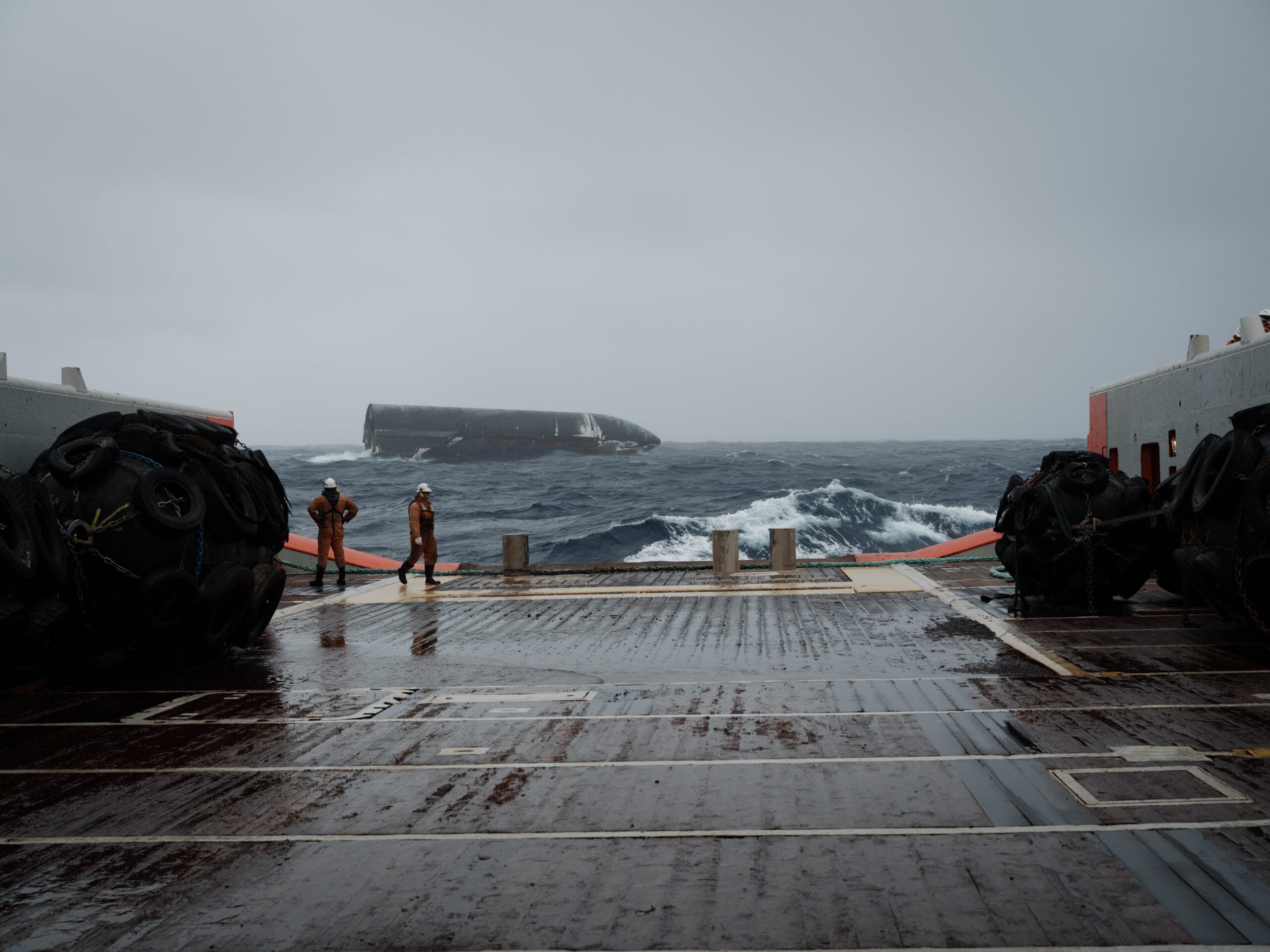
According to SpaceX’s mission record, Ship 40 completed its ascent burn, deployed 20 next-generation Starlink V3 satellites and communicated with all of them. It later relit a Raptor engine in space. During descent, the ship made a dynamic banking manoeuvre intended to imitate part of a future return to Starbase, survived atmospheric heating, steered with its four flaps, flipped upright and completed a landing burn.
It reached the ocean about 65 minutes after launch and remained intact and afloat. The mission was not an Earth-to-Earth passenger test, but its shape was relevant. A point-to-point service would likewise climb through the atmosphere, coast through space without completing a full orbit, re-enter far from its origin and remove the last of its speed near the destination.
SpaceDaily’s recent reconstruction of the first and thirteenth integrated tests showed how much control that sequence represents. Ship 40 finished more than 16,000 kilometres from Texas, farther than the roughly 11,800-kilometre great-circle distance between New York and Shanghai. The geographic comparison does not make the trajectories identical, but it establishes that Starship has crossed a sufficient planetary scale.
Several limits matter. Flight 13 did not enter a stable orbit or complete a circuit of Earth. It carried satellites, not people. The booster’s landing attempt ended hard in the Gulf, so the whole two-stage system did not finish in reusable condition. Ship 40 landed in water rather than vertically on a platform, and surviving as an inspectable vehicle is not the same as being ready to fly again.
The flight therefore proved an arc, not a service. That is still more than the programme could prove in 2017.
A landing zone is easier than a passenger terminal
The Indian Ocean supplied room. A test vehicle could target a remote patch of water with little infrastructure nearby and with contingency plans that kept it away from people. A destination platform changes the acceptable error.
Starship’s upper stage has no landing legs. SpaceX plans to bring it back beside a tower and capture reinforced points on the vehicle with two large arms. Our recent examination of the proposed Starship tower catch explained the bargain: removing legs saves flying mass and can deliver the ship directly into ground handling, but it makes the vehicle dependent on one healthy structure and an extremely accurate approach.
The company has caught Super Heavy boosters. It has not caught a Starship upper stage after re-entry. Nor has it recovered one on land, inspected it, reloaded it and flown the same ship again. Flight 13’s intact splashdown made the catch more plausible by demonstrating terminal guidance and a controlled flip. It did not demonstrate the final approach beside a platform holding expensive hardware and, eventually, arriving passengers.
A transport system also needs an abort logic that extends beyond saving the vehicle. If weather changes at Shanghai after launch, if the platform is unavailable or if the ship detects a fault, it needs somewhere safe to go. Aircraft carry reserve fuel and can divert among many runways. A ballistic rocket crossing has fewer opportunities to reshape its destination, and Starship has no conventional runway or landing gear.
SpaceX has not published an operational diversion architecture for Earth-to-Earth passengers. Ocean contingency areas may protect the public, but a safe splashdown that sacrifices the ship is not automatically a survivable plan for everyone inside it.
Speed cannot substitute for cadence and safety
A single 39-minute flight can be spectacular and commercially useless. Transport depends on repetition: departures people can plan around, vehicles that return on time, maintenance that does not absorb weeks and enough routes to reach useful destinations.
SpaceX’s June 2026 prospectus describes the unfinished industrial work behind high Starship cadence. It identifies additional launch sites, Raptor and vehicle production, propellant plants, power supplies, regulatory approvals and further reuse as important requirements. That list is written around SpaceX’s space business before a global passenger terminal network is added.
The economics depend on the same missing proof. A fully reusable booster and ship, flown often with modest servicing, could spread hardware cost across many trips. A ship that needs extensive tile replacement, engine work or structural inspection after every entry produces a very different fare. The programme has not yet reflown any Starship upper stage, so no public operational record can establish the maintenance burden.
Passenger safety raises a separate threshold. The Federal Aviation Administration’s current human-spaceflight guidance says US commercial spacecraft are not certified safe for their occupants in the way airliners are. Operators work within an informed-consent regime that requires participants to be told of known and unknown hazards. The agency verifies that a vehicle intended to carry humans performs as intended on an operational test before a participant boards, while its licensing role chiefly protects the uninvolved public.
That model has grown around infrequent spaceflight accepted as hazardous. A mass transport service invites the expectations of aviation. Passengers would want more than awareness of unknown risk. They would expect a cabin, restraint system, life support, emergency procedure and reliability record designed for routine travel.
No integrated Starship has carried a crew cabin or passengers. SpaceX has not publicly demonstrated a point-to-point life-support installation, loading procedure, evacuation method or passenger abort system. The forces and experience of launch and entry would also require evidence about who can fly and how much training they need. These are transport questions, not objections to the physics of a 39-minute crossing.
The rocket has caught up with part of the animation
The weakest interpretation of the 2017 idea is that New York-to-Shanghai service is almost here because Starship survived re-entry. Flight 13 does not support that conclusion. It supplied no passenger data, no landing-platform test, no upper-stage reuse and no evidence of airline-like scheduling or economics.
The opposite dismissal is now incomplete too. SpaceX did build a full-scale successor to BFR. It flies on methane and oxygen, separates into reusable stages, sends its ship through space and controls that ship deep into atmospheric return. The latest upper stage travelled a greater geographic distance than the proposed city pair and ended its flight intact.
The honest position sits between those claims. The physics of crossing Earth through space was never the most speculative part; ballistic missiles have demonstrated global-scale trajectories for decades. SpaceX’s achievement is moving a reusable transport-shaped vehicle much closer to performing that arc under control.
What remains speculative is everything that must surround it. A passenger service needs offshore or remote terminals, reliable transfers, licensed routes, safe alternatives, repeatable upper-stage recovery, rapid maintenance, human-rated systems and enough flights to make the cost credible.
Thirty-nine minutes is the bright, clean centre of the proposal. Flight 13 made that centre materially less hypothetical. Whether it can ever be surrounded by a practical journey from New York to Shanghai remains a question for engineering, regulation and operations rather than animation.