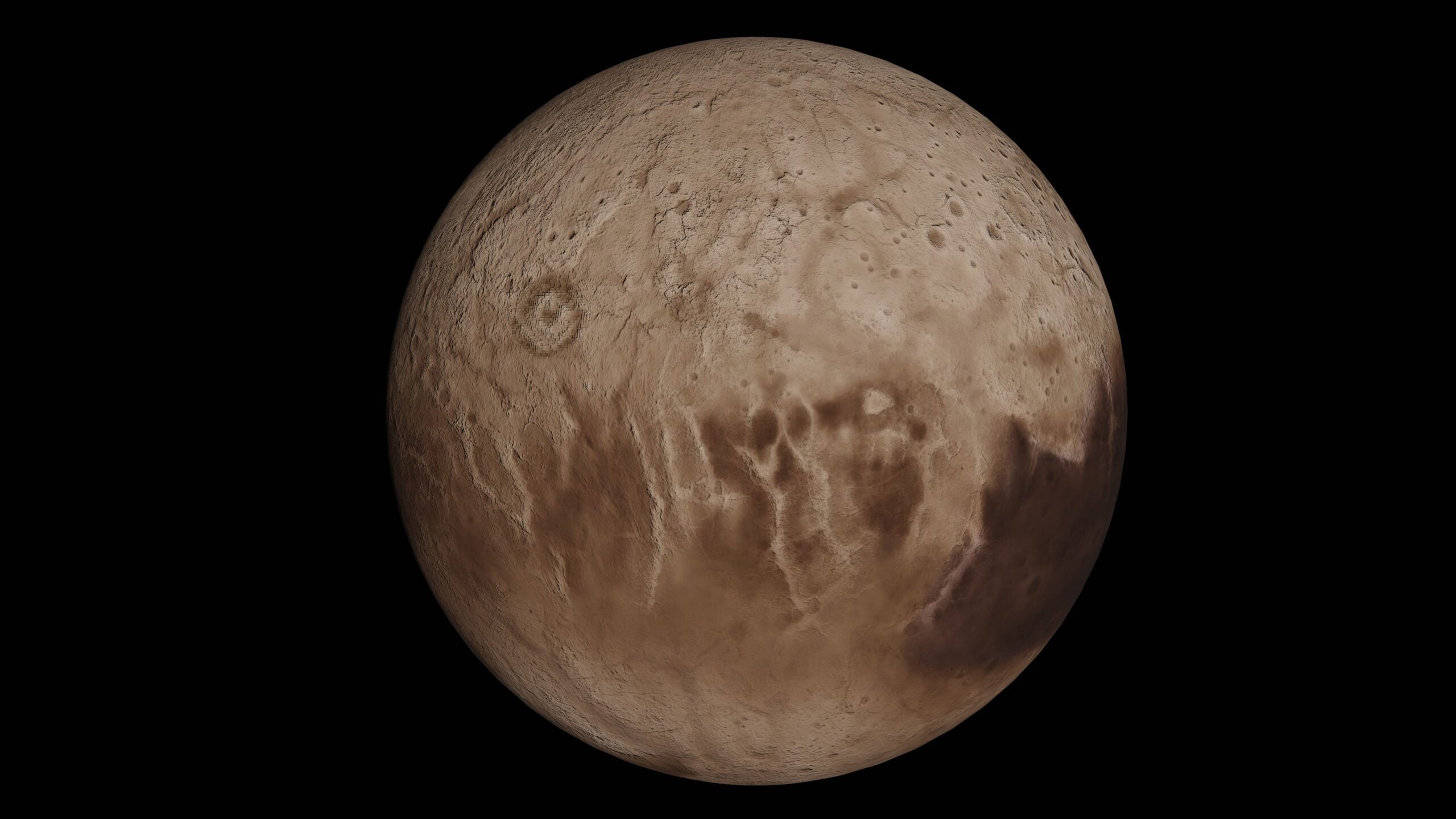
I wrote last week about the strange fact that Titan is the one place beyond Earth where a person could stand outside without a pressure suit, even though the surface sits at roughly minus 179 degrees Celsius. I left that fact sitting there at the time, mostly as a curiosity. It’s worth actually following where it leads, because it turns out a real group of scientists and engineers spent two days in Boulder, Colorado this June doing exactly that.
What makes Titan genuinely unusual as a destination
The case for Titan starts with the same detail I keep coming back to: its atmosphere is denser than Earth’s, made mostly of nitrogen, and that thickness does real protective work. It shields the surface from a meaningful amount of cosmic radiation, which is one of the harder problems for any long duration human mission. That’s a genuinely different profile from the one I wrote about for Mars, where a NASA-funded study concluded the planet cannot be terraformed with current technology, leaving anyone there sealed against near vacuum, deep cold and steady radiation. Titan swaps one set of problems for another. No pressure suit, but serious insulation against the cold. Less radiation exposure, but an atmosphere thick enough that flying through it, by aircraft or hovercraft, becomes remarkably efficient compared with the thin air on Mars.
Titan also has abundant local chemistry to work with. Its methane, ethane and nitrogen aren’t just scenery, they’re potential feedstock for fuel production, which matters enormously for a destination this far from home.
The summit’s agenda went well beyond atmosphere and fuel. Sessions covered spacesuit design suited to Titan’s specific cold and chemistry, habitat concepts, power generation, and how people might actually move around once they got there, alongside the environmental hazards particular to the place, things like tholins, the organic compounds that give Titan’s atmosphere its orange haze. Titan’s weather runs on hydrocarbons rather than water: methane rain, rivers and lakes, seasonal flooding, and winds that behave differently than anything in a water based climate. Every one of those is an operational headache for a future mission and, at the same time, a reason scientists find the place worth the trouble.
The actual case made in Boulder this June
The event was called the Humans to Titan Summit, held on 11 and 12 June at the Southwest Research Institute, and it was the first meeting built entirely around the question of what it would take to send people there. Amanda Hendrix, president of the nonprofit Explore Titan and director of the Planetary Science Institute, told Space.com that the point wasn’t to pretend a mission was imminent. It was to normalise the idea early enough that it could sustain momentum across generations of researchers. “The top reason in my mind that Titan is such a good spot for humans is the dense atmosphere,” she said, which tracks with everything I’d already found interesting about the place.
Scot Rafkin, who directs the Department of Space Studies at the Southwest Research Institute, offered a more measured framing of the challenge. In his view, sending people to Titan doesn’t run up against any law of physics. What stands in the way is simply the scale of engineering effort required, and how long it will take, and how much anyone is willing to invest in it. He added that the major science and technical gaps are already reasonably well mapped out, even if closing them will still take decades.
What has to happen before any of this
Every serious version of this plan runs through robotic missions first, and the nearest one is the mission I wrote about a few days ago: Dragonfly, the nuclear powered rotorcraft NASA approved to fly from site to site across Titan’s surface. It’s currently planned to launch no earlier than 2028, and given what I found when I looked into just how far Titan actually is and how much that distance varies depending on where Earth and Saturn sit in their orbits, it isn’t hard to see why the cruise alone takes roughly six years. Once Dragonfly arrives, it’s expected to spend more than three years hopping between sites, and whatever it finds about surface composition, weather, and chemistry will feed directly into any future habitat and landing system design, long before a human crew is a realistic conversation.
What I’d take from this
I don’t think anyone at that summit believes a crewed Titan mission is close, and none of what I’ve read suggests they were pretending otherwise. What struck me is the specific shape of the optimism. It wasn’t “we could do this soon.” It was closer to Rafkin’s framing: most of the hard problems are at least legible now, and legible problems are the kind that get solved eventually, on a timeline nobody currently knows. That’s a fairly humble thing to build a two-day conference around, and I found I liked it more for that reason, not less.