
Space, science, and the human mind. Since 1995.
Space Daily Editorial Team
Editorial Team

Space Daily Editorial Team

Editorial Team

The Space Daily Editorial Team produces content across our two editorial pillars: space industry news and Mind & Meaning. We cover launches, missions, satellites, defense, and the technology of getting humans to space, alongside the psychology of ambition, isolation, and meaning under extremes. Articles reflect our team's collective editorial process, source verification, drafting, technical review, and editing, rather than a single writer's work. Space Daily takes editorial responsibility for content under this byline. For more on how we work, see our editorial policy.

Mind & Meaning

The number of people living past the age of 80 worldwide is projected to triple by 2050 — from approximately 145 million today to roughly 426 million — making the over-80 cohort the fastest-growing demographic on the planet, in a civilizational shift now widely referred to as “the silver tsunami” and that researchers expect to redefine almost everything we associate with the structure of human society

The 80-year-old is, in historical terms, an unusual phenomenon. For most of recorded human existence, the average life expectancy at birth sat somewhere between 25 and 35 years, primarily because of childhood mortality.

Human Behaviour

By 2050, more than half of the world’s population is projected to be myopic — needing glasses or contacts to see clearly at a distance — according to a series of international vision studies, in a shift driven not by genetics but by the amount of time children now spend indoors and the relative absence of time spent focusing on the horizon during the years when the eye is still forming

The story begins in Taiwan in the early 1980s, where roughly 10 to 15 percent of school-age children were nearsighted.

Human Behaviour

Within the lifetime of children being born today, the global human population is projected to begin shrinking for the first time since the Black Death — no country on Earth currently has a fertility rate above 7 children per woman, and dozens of high-income nations have fallen below 1.5 — in a civilizational shift that demographers now expect to end the era of sustained population growth that has defined humanity for the past several thousand years

A child born this year will, by the time they reach late middle age, almost certainly live in a world where the human population is no longer growing.

Mind & Meaning

A small spongy artifact found in 2021 in the corner of a Neolithic oven in central Turkey was identified in 2024 as a piece of fermented bread roughly 8,600 years old — placed by someone in the doorway of a mud-brick house at Çatalhöyük around 6600 BCE, in what archaeologists believe is the oldest fermented bread ever discovered, and the oldest direct evidence of the human relationship with yeast

Someone in central Turkey, approximately 8,600 years ago, kneaded a small lump of dough, pressed their finger into the top of it, set it down next to a…

Constellations

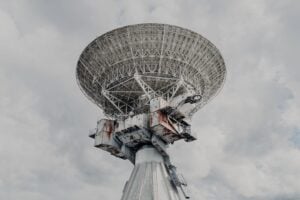
When Luna 9 bounced to a stop in the Ocean of Storms in February 1966, Britain’s Jodrell Bank observatory intercepted its picture transmission, recognised the newspaper-fax format, and helped the Daily Express publish the first photographs from the Moon’s surface before the Soviets released them

In February 1966, the Soviet Luna 9 became the first spacecraft to survive a Moon landing — and Britain's Jodrell Bank intercepted its picture signal, decoded it with a newspaper fax receiver, and printed the photographs in the Daily Express before Moscow could release them.

Mind & Meaning

The map of a lost Mayan megacity, with more than 6,000 buildings and a peak population of 50,000 people, had been hiding in plain sight for ten years inside a government survey of the Mexican rainforest — until a PhD student at Tulane University scrolled past page 16 of a Google search in 2024 and recognized what was in the scan

The most striking discovery in recent Maya archaeology was not made by an expedition cutting through jungle with machetes, was not made by a satellite team…

Constellations

In 1966, Soviet chief designer Sergei Korolev died on an operating table in Moscow at the age of 59, and two days later the newspaper Pravda printed his name and face for the first time — until that obituary, the man who launched Sputnik and put Gagarin in orbit was known publicly only as the Chief Designer

For nearly a decade, the architect of every Soviet space first — Sputnik, Gagarin, Luna, Venera — was known to the public only as the Chief Designer. His name and face appeared in Pravda for the first time the morning after he died on a Moscow operating table in January 1966.

Constellations

Near the Milky Way’s core, NASA’s Chandra spotted an X-ray blob too bright to easily explain — over ten times brighter than massive young star clusters — and astronomers think it may be the still-expanding wreckage of a supernova that exploded around 300 AD.

NASA's Chandra and ESA's XMM-Newton point to a possible supernova remnant in Sagittarius C, near the galactic centre. New analysis of archival data, published in The Astrophysical Journal, suggests an explosion at least 1,700 years ago, though it remains a candidate.

Science

In 1999, the Post Office began rolling out Fujitsu’s Horizon accounting system across thousands of branches, and within years more than 700 subpostmasters were prosecuted over shortfalls generated by a screen before a High Court judge found the software itself could create phantom losses

In 1999, Fujitsu's Horizon accounting system was deployed across 14,000 UK Post Office branches. Within months it was producing phantom shortfalls — and within years more than 700 subpostmasters had been prosecuted on its evidence, in what is now recognised as the largest miscarriage of justice in British legal history.

Deep Space

In November 2026, NASA’s Voyager 1 spacecraft will cross a milestone no human-made object has ever reached — the point at which a radio signal traveling at the speed of light takes a full 24 hours to arrive — meaning the engineers on Earth who say “good morning, Voyager” on a Monday will not hear its response until Wednesday, in a probe still operating roughly 49 years after it launched from Cape Canaveral in 1977

Voyager 1 is, by every available measure, the longest-running and most successful piece of deep-space hardware in the history of the species.

Deep Space

Five uncrewed Starship rockets are projected to launch toward Mars during the brief window in late 2026 when the two planets align for the closest possible journey — and depending on whether they arrive intact, the first crewed missions could follow within five to seven years, in what would be the first time human beings have traveled to another planet in the roughly 200,000-year history of our species

Every 26 months, the orbits of Earth and Mars align in a particular geometric configuration that allows spacecraft to travel between them with the lowest possible fuel expenditure.