
On the morning of January 16, 1966, readers of Pravda opened the state newspaper to find a name they had never seen in print before: Sergei Pavlovich Korolev. Below it ran an obituary, and a photograph of a broad-faced, heavy-jawed man in a dark suit covered in medals. He had died two days earlier, on January 14, on an operating table at a Moscow hospital, age 59. For nearly a decade, the man who had launched Sputnik, who had put Yuri Gagarin into orbit, who had aimed probes at the Moon and Venus and Mars, had been referred to in Soviet communiqués only as Glavny Konstruktor — the Chief Designer. The world learned who he was after he was already in a coffin.
The secrecy had been deliberate. The Kremlin worried about Western assassination. It also disapproved, officially, of what it called the cult of personalities. So the architect of every Soviet space first remained an unnamed bureaucratic title, even as Khrushchev waved his rockets at the world.
The man behind the title
Korolev was born on January 12, 1907, in Zhitomir, in what is now Ukraine. He trained under the aircraft designer Andrei Tupolev in Moscow, qualified as a pilot, and by 1933 had launched the first liquid-fuelled rocket in the USSR, according to a Guardian profile drawing on James Harford’s biography.
Then, in 1938, secret service agents arrested him as a spy. He was beaten. He confessed, under torture, to crimes of treason and sabotage he had not committed, and was sentenced to ten years’ hard labour at Kolyma, the most notorious of the Gulag camps.
He lost all his teeth there. His jaw was broken. He may have suffered a heart attack. He survived months at the gold mine before being transferred to a prison design bureau in Moscow, where he spent the rest of the war building aircraft and rockets from behind bars.
From Kolyma to the R-7
In 1945, the Red Army made him a colonel and sent him to Germany. The Soviets had seized stores of V-2 components from the Nazis, and they needed someone who could understand them. Wernher von Braun and most of his team had already defected to the Americans with several complete rockets — a head start that would shape the entire Cold War in space.
Korolev studied what was left. He slept a few hours a night. He shouted at engineers and forgave them an hour later. In 1957, he launched the Soviet R-7, the world’s first intercontinental ballistic missile, on a flight from Baikonur to the Kamchatka peninsula. He had beaten the United States to an operational ICBM.
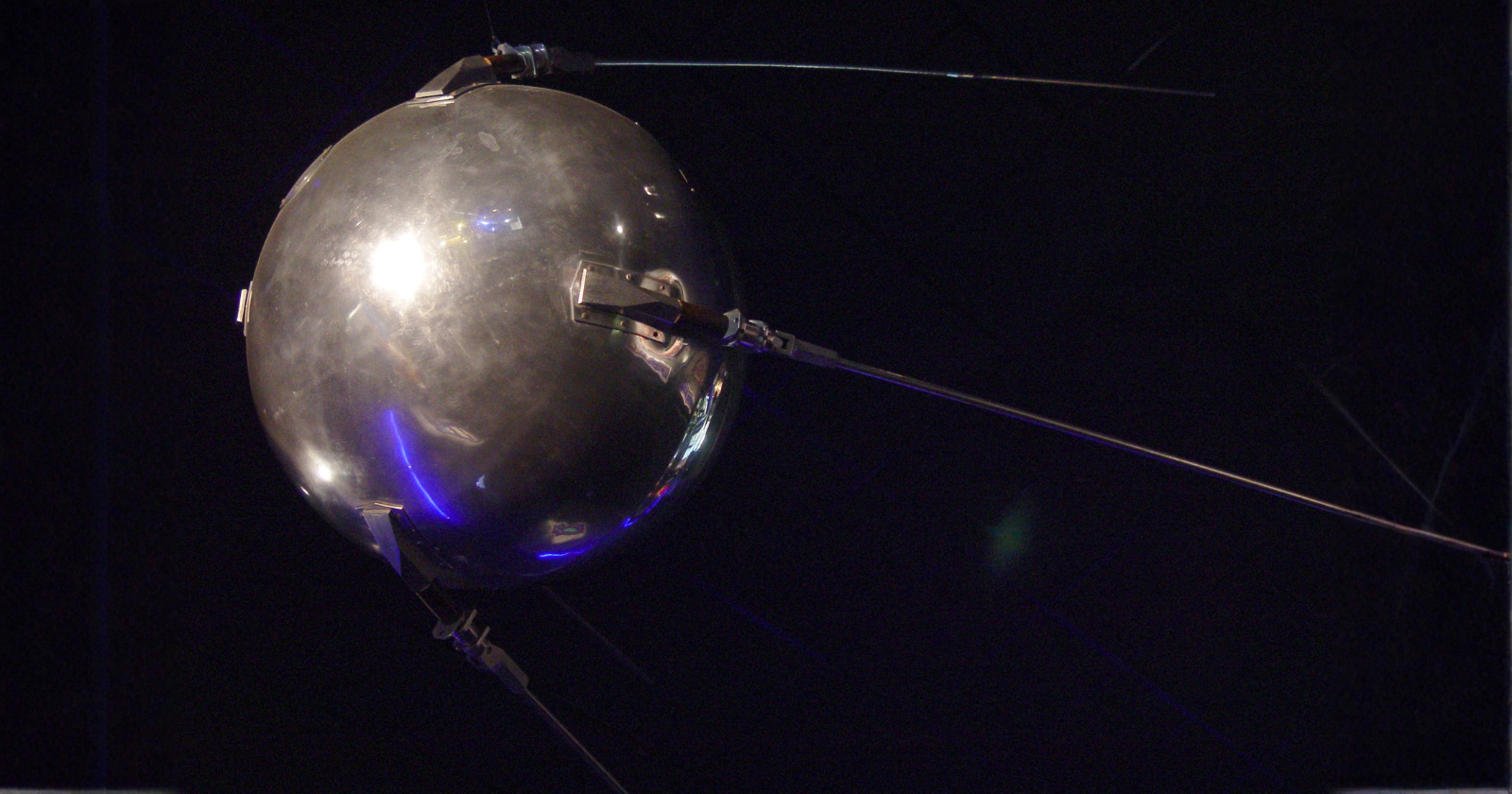
Weeks later, on October 4, 1957, a modified R-7 placed Sputnik 1 in orbit. Korolev had insisted on the satellite being audible — the engineers bolted on transmitters loud enough that ham radio operators around the world could pick up the beep on cheap shortwave receivers, a deliberate choice we’ve written about in the story of Sputnik’s transmitter. The point was for ordinary people to hear it. They did.
The team that built Sputnik, as NPR documented on the satellite’s 50th anniversary, did not fully grasp what they had done. The political shockwave in Washington was larger than anything they had planned for. The Chief Designer kept working.
A name held back on purpose
What followed was the most concentrated run of firsts in the history of spaceflight, all directed by a man whose existence was a state secret. Korolev’s bureau put the first dog in orbit, the first woman, the first multi-person crew. It directed the first spacewalk. It built the first Soviet spy satellite and the first Soviet communications satellite. It flew probes at the Moon, Venus, and Mars — all on a budget that Western analysts would later describe as a shoestring.
Each triumph was announced in the name of Soviet science, the Soviet people, the Soviet system. The man responsible was referred to, when referred to at all, as the Chief Designer. As National Review noted in a 2016 retrospective, the achievement was considered to belong to the collective.
The Kremlin had practical reasons too. A named chief designer was a target. He could be approached by Western intelligence. He could be assassinated. He could be poached. Anonymity was protection, even if it cost him every form of public recognition a scientist could earn.
The morning of April 12, 1961
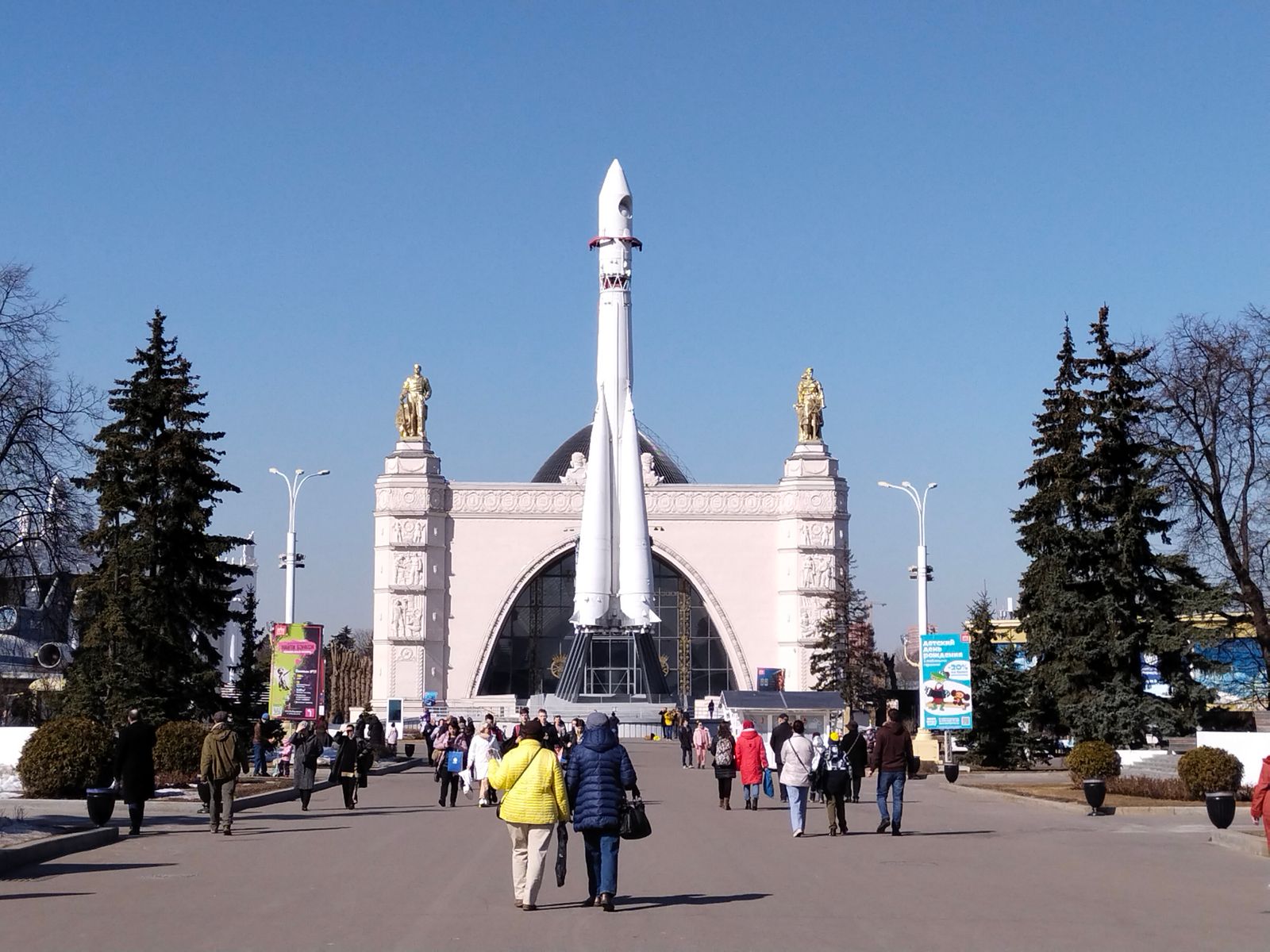
On the dawn of April 12, 1961, at Baikonur, a peasant farmer’s son named Yuri Gagarin rose on a 20-storey rocket into low Earth orbit. The capsule was small. The pilot was one of the few selected cosmonauts who actually fit inside it.
One orbit. One hundred and eight minutes. Gagarin shouted Poyekhali! — let’s go — and a few minutes later was looking down at clouds and oceans no human eye had ever seen from that altitude. From orbit he radioed back what he saw — the Earth, the clouds, the curve of the horizon — and called the view beautiful.
Gagarin became an instant global celebrity. He toured capitals around the world. The Soviet system had its perfect ambassador, a short, smiling peasant’s son who could disarm hostile crowds in any capital.
Korolev, meanwhile, watched it all from behind the curtain. The cosmonaut he affectionately called his little eagle was a household name on six continents. The man who had designed the rocket, selected the pilot, and directed the mission was, officially, no one.
A body that wouldn’t hold
Five years of relentless work followed Gagarin’s flight. Korolev was already a damaged man — Kolyma had left him with a broken jaw, missing teeth, a weak heart, and what colleagues described as periodic bouts of exhaustion he refused to treat. He slept little. He lived frugally. He carried the entire human spaceflight program in his head and his shouted directives.
In January 1966, he checked into a Moscow hospital for what was meant to be routine surgery. During the procedure, complications arose. Korolev, whose jaw had been broken in the Gulag, could not be properly intubated. His weakened heart failed on the table. He died on January 14, 1966, at the age of 59.
The Politburo decided, this time, that the man should be named.
The Pravda of January 16 carried the announcement. The text identified Sergei Pavlovich Korolev as the academician who had led the design of Sputnik, of Vostok, of Voskhod, of the lunar and planetary probes. His photograph appeared above the fold. For most Soviet citizens, and for everyone outside the USSR, it was the first time they had ever seen his face or read his name in connection with the program.
His ashes were interred in the Kremlin wall, the highest honour the Soviet state could give. He received, in death, the public identity the system had denied him in life. Cosmonauts who had trained under him for years were finally permitted to acknowledge, on the record, who had run their program.
Wernher von Braun, his American counterpart, would learn the name along with the rest of the world. The two men had been racing each other for nearly two decades without von Braun knowing who he was racing.
What the anonymity cost
Some historians argue the secrecy may have cost the Soviet Union the Moon. Korolev had been working on the N-1, a massive lunar rocket meant to carry cosmonauts to the surface, when he died. His successor, Vasily Mishin, was a capable engineer but lacked Korolev’s authority with the political leadership and the rival design bureaus. The N-1 failed in all four of its test launches between 1969 and 1972, each time spectacularly. The program was quietly cancelled.
By then, Armstrong and Aldrin had already walked on the Moon, atop a Saturn V designed by a publicly celebrated Wernher von Braun, who had spent the 1960s on the cover of magazines and as a fixture on American television. Whether a named, internationally lionised Korolev could have held the Soviet lunar program together is one of the great counterfactuals of the space age.
Gagarin, the face the system had built up to the world, did not outlive his mentor by long. He died on March 27, 1968, in a MiG-15 training crash near the village of Novosyolovo, age 34. He had been grounded from spaceflight after the Soyuz 1 disaster killed his friend Vladimir Komarov in 1967 — the state had decided it could not risk its biggest legend. The legend of Gagarin, as Space Daily has reported on the cosmonaut’s enduring grip on Russian memory, only grew after his death.
Both men ended up in the Kremlin wall, urns of ashes set into the brick on Red Square. The peasant’s son who had become the most photographed man in the world, and the engineer whose first photograph in any newspaper was the one printed with his obituary. They lie within a few metres of each other.
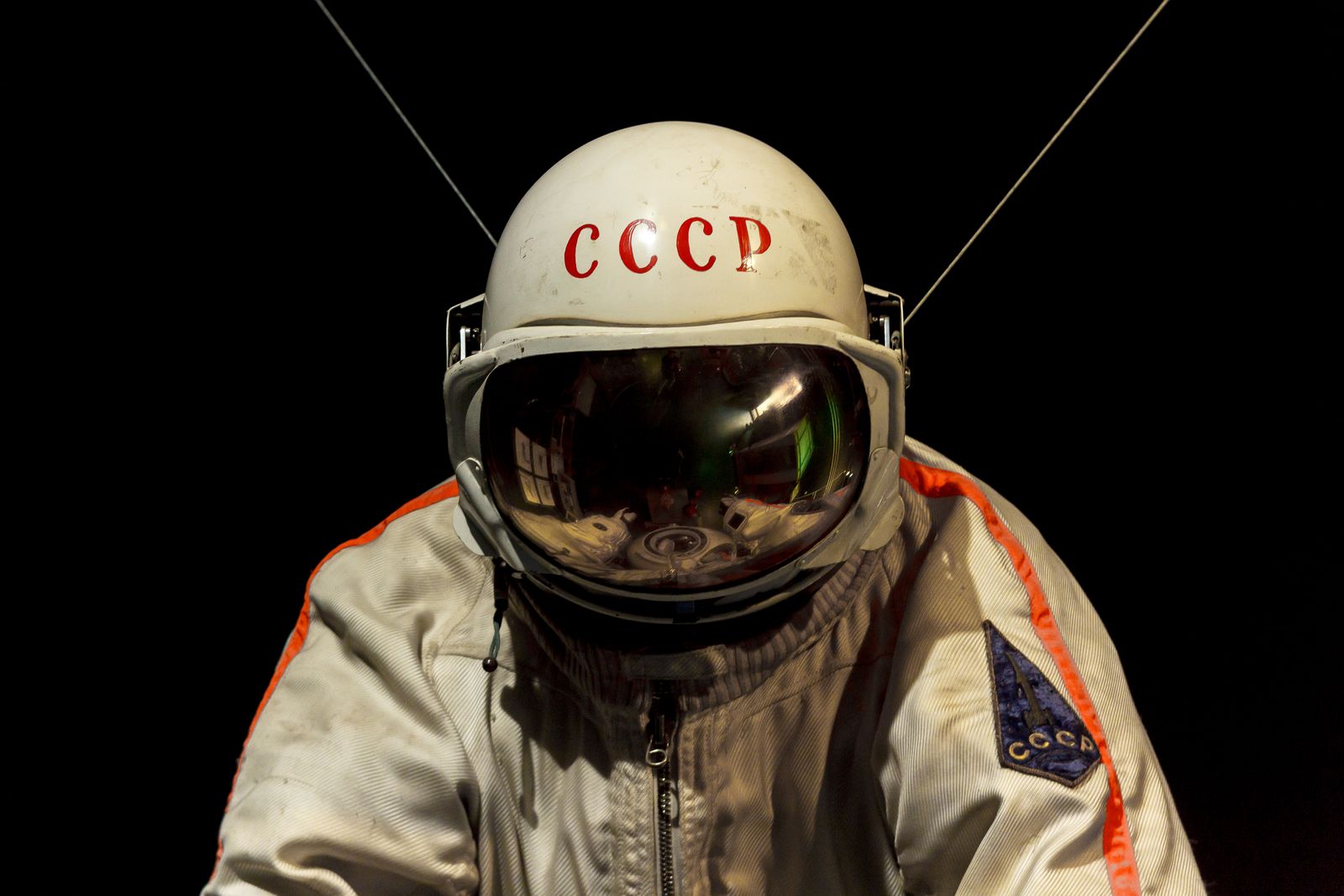
The story of how the Soviet system organised its space program — secrets, hidden designers, named cosmonauts, suppressed parachute details, invented Gagarin quotes about not seeing God in orbit — has been the subject of decades of declassification and revision, including museum exhibitions that brought Soviet space artefacts to Western audiences for the first time. Pieces of Korolev’s machines now sit behind glass in cities he was never allowed to visit while alive.
His name today is on a city — Korolyov, just outside Moscow, home to the mission control centre that still flies Russian crews to the International Space Station. It is on craters, on streets, on schools. The Chief Designer has, in the end, become one of the most recognised names in Russian science.
He has been dead for sixty years. He spent fewer than nine of his 59 years as a publicly named man, and all of those nine years he was in prison, in a design bureau, or in a Kolyma mine. The face on the front page of Pravda on January 16, 1966, belonged to someone the world had been watching for a decade without knowing it. The beeps from Sputnik. The voice from Vostok. The probes drifting toward Venus. All of it had a single signature on it, and the signature was a job title.
The world finally learned the name on a winter morning in Moscow, and by then the man it belonged to was already cooling in a hospital room.
