

Universe
Astronomers have found a super-Earth just 25 light-years away
Imagine standing on a shoreline where the sea is calm, the light is the deep red of a dying ember, and the sky feels close enough to touch.
Imagine standing on a shoreline where the sea is calm, the light is the deep red of a dying ember, and the sky feels close enough to touch.

Europa looks, at first, like a frozen world that should be finished. It orbits far from the Sun, locked in the cold outer Solar System, its surface crossed by long reddish fractures and pale plains of ice.
The Solar System gives us a familiar catalogue of planets: small rocky worlds close to the Sun, then gas and ice giants farther out.

Sunlight takes 8 minutes and 20 seconds to reach Earth from the solar surface. But the energy inside each photon spent tens of thousands of years pinballing through the Sun's core before it ever got out — a random walk through matter thirteen times denser than lead.
The Bennu sample is becoming less like a single asteroid story and more like a chemistry inventory from the early solar system.
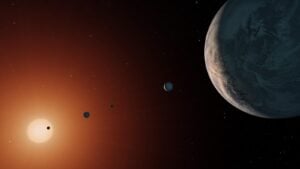
TRAPPIST-1 is not impressive by the usual standards of stargazing. It is too faint to see with the naked eye, far cooler and smaller than the Sun, and located about 40 light-years away in the direction of Aquarius.
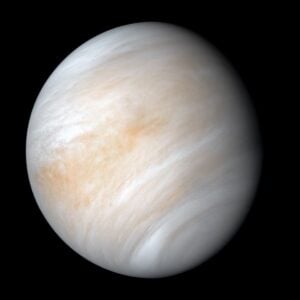
The simplest way to make Venus feel strange is not to begin with its heat, its pressure, or its acid clouds.
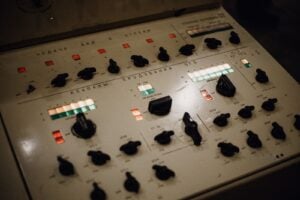
How a 24-year-old NASA engineer's handwritten alarm-code cheat sheet, taped to a Mission Control console three days before Apollo 11 launched, kept the first lunar landing from being aborted at 1,800 metres.
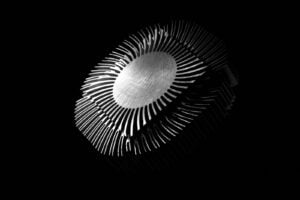
When Italian and German researchers modeled a square-meter array of 1,482 neodymium magnets, the simulation showed roughly a fifth of incoming low-energy solar protons being deflected — without any power supply, cryogenic cooling, or moving parts.
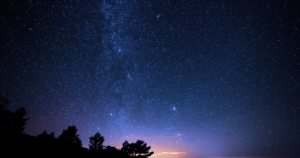
A small icy world found far beyond Pluto has made the case for some proposed versions of Planet Nine look weaker, not stronger.
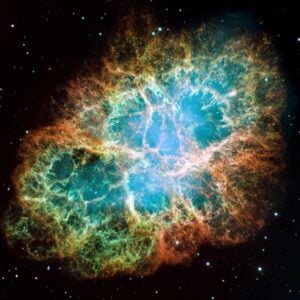
In July 1054, court astronomers in China recorded a new "guest star" near Tianguan, the star we now call Zeta Tauri.

For the first time, astronomers have found compelling evidence of a magnetar being born inside a supernova.

A galaxy merger found by the James Webb Space Telescope has made the early universe look less orderly than the standard picture suggests.
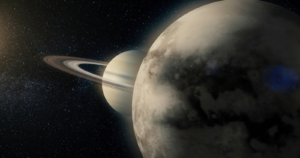
Saturn's sixth-largest moon leaks. Through a set of fractures near its south pole, nicknamed the tiger stripes, Enceladus vents a steady plume of water vapour and ice grains into space, feeding one of Saturn's faint outer rings.

Early Friday, over the South China Sea, the first stage of a Long March 10B rocket fell back through the sky, deployed four hooks, and let itself be caught by a net strung across the deck of a waiting ship.

A coronal mass ejection carries roughly a billion tons of magnetised plasma from the Sun to Earth in as little as 14 to 18 hours — and the same physics that lights the aurora can collapse a continental power grid in under two minutes.