

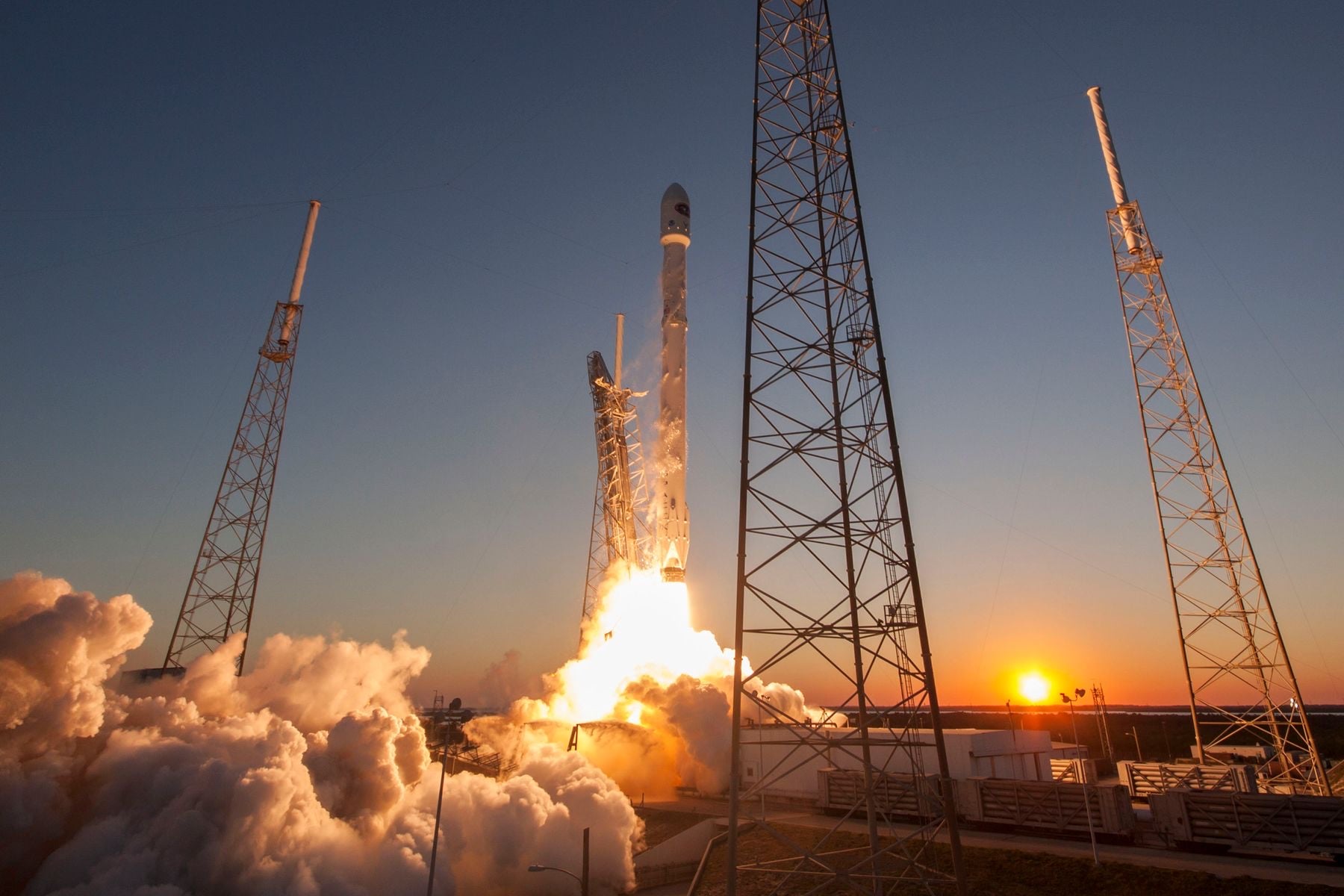
Louisiana has spent more than sixty years building enormous pieces of America’s space programme without becoming the place those vehicles leave Earth.
At NASA’s Michoud Assembly Facility in New Orleans, workers built the first stage of the Saturn V, the part whose five F-1 engines lifted the Moon rocket away from its Florida launch pad. Michoud later produced the external tanks used on every Space Shuttle mission. Today its factory floor is occupied by core stages for the Space Launch System.
The pattern has always been the same: Louisiana manufactures the large hardware, then waterborne transport carries it to a test or launch site in another state. No launch from Louisiana has placed a payload into orbit.
SpaceX’s newly announced Starbase, Louisiana is intended to end that distinction. The company and state say a 125,000-acre site in coastal Vermilion Parish could host its first Starship flight as early as 2029 and, at full buildout, support thousands of launches a year.
Those two timescales should not be collapsed. A first launch in 2029 is an aggressive project target. Thousands of annual flights describe the ultimate capacity SpaceX wants to construct, not a licensed cadence, an existing manifest or a promise that the demand and vehicle turnaround will be ready when the first pad is.
What SpaceX and Louisiana actually announced
Louisiana Economic Development announced the agreement on 25 August 2026, describing a planned $100 billion SpaceX investment and the largest launch facility in the company’s network. Construction is expected to begin in 2027, with the first launch targeted for “as soon as” 2029.
The site lies on former Exxon property near Pecan Island in Vermilion Parish, on the state’s southern coast. The state sold the land to SpaceX after years of discussion about the company’s need for more Starship launch capacity.
At full buildout, the plan calls for five launch complexes. Each would contain two launch pads and a propellant farm, producing ten pads across the campus. Supporting infrastructure would include on-site propellant production, power generation, vehicle processing and housing for workers and their families.
This is closer to an industrial campus with a spaceport inside it than a conventional launch pad. Starship stages would have to arrive or be manufactured, processed, fuelled, launched, recovered and prepared again. Power, methane, oxygen, water, shipping and internal transport therefore become as important to the claimed cadence as the launch towers.
The $100 billion figure is the announced investment for the project, but the public release does not provide a year-by-year spending schedule or define how much is committed before each development milestone. It is best read as a full-buildout plan, not money already spent or guaranteed to arrive in one construction phase.
A rocket state that was never a launch state
NASA calls Michoud “America’s rocket factory.” The main building contains 43 acres of manufacturing space under one roof. That scale made it suitable for structures too large to move easily by road or rail.
During Apollo, Michoud produced the S-IC first stage for Saturn V. The finished stages travelled by barge to Mississippi for testing and then onward to Kennedy Space Center in Florida. The launch belonged to Florida, but a large share of the machine below the astronauts came from Louisiana.
After Apollo, the same facility built the orange external tanks that supplied liquid hydrogen and liquid oxygen to the Space Shuttle’s main engines. Today workers assemble SLS core stages and major Orion structures. SpaceDaily’s archive has followed Michoud’s continuing role through those programme changes.
The proposed Vermilion Parish site would add the missing activity. Louisiana would no longer only weld, integrate and ship flight hardware. It would become the place a fully fuelled orbital vehicle fires its engines and crosses the coast.
Why a former industrial property on the Gulf matters
A very large rocket needs more than empty ground. SpaceX and Louisiana cite the parcel’s acreage, Gulf Coast position, access to natural gas and ability to support a wide range of launch trajectories.
Launching eastward over water is one of the basic advantages of American Gulf and Atlantic spaceports. Downrange hazard areas can be placed offshore rather than across populated land, though platforms, vessels, aircraft and communities still constrain individual trajectories. Every mission profile would need its own safety analysis.
Starship uses liquid methane and liquid oxygen. A site intended to fly frequently needs an industrial-scale stream of both cryogenic propellants, storage capable of replenishing pads quickly, and enough power to run production and ground systems. Louisiana’s existing energy workforce and infrastructure are part of the sales pitch.
The property’s former industrial use does not remove the difficulty of building on a low, wet coast. Foundations for towers, tanks and processing buildings would have to support immense loads in Gulf soils while the whole campus is designed around hurricanes, storm surge, corrosion and a coastline that is losing land.
What “thousands of launches a year” would require
SpaceX has already changed the scale of launch through Falcon 9 reuse. By 18 August 2026, the company had flown its 100th mission of the year, a rate SpaceDaily examined in its report on SpaceX reaching 100 launches two months earlier than in 2024.
Thousands of Starship launches from one site would still be a category change. Even the threshold of 1,000 a year averages about 2.7 launches every day. The plural “thousands” implies more, spread across ten proposed pads.
That is not merely a question of whether a tower can launch again. It requires vehicles that return intact, inspections that resemble transport operations rather than lengthy rocket refurbishment, engines with repeatable lives, rapid tanking and detanking, automated ground handling, weather tolerance and a large enough payload market.
Airspace and maritime integration would become a daily infrastructure problem. Hazard areas must be cleared of aircraft and vessels. Reentries and landings add their own corridors. Noise, overpressure, lighting, road use and propellant deliveries accumulate differently when launches are occasional than when they occur several times a day.
SpaceDaily recently noted that new US policy directs all American ranges together to support more than 1,000 launches and reentries annually by 2030. The Louisiana vision places comparable or greater eventual capacity at a single commercial campus. Capacity is not activity, but the comparison shows the scale of the claim.
Why a 2029 target is not yet launch permission
Land, money and state support cannot authorize an orbital flight. The Federal Aviation Administration licenses commercial launch and reentry operations and, where applicable, launch sites. Its review covers public safety, financial responsibility, national security and foreign-policy concerns, airspace integration and environmental effects.
The environmental process begins during pre-application work, and launch cadence is part of what regulators evaluate. At SpaceX’s Texas site, for example, the FAA completed an environmental review for up to 25 annual Starship launches. That does not set a limit for Louisiana, but it illustrates the difference between company ambition and an authorized number.
Other federal and state approvals will matter for wetlands, waterways, construction, air emissions, protected species, power and coastal work. Launch trajectories may involve coordination with the Coast Guard and aviation authorities beyond the immediate property.
SpaceX can pursue construction and licensing in parallel, but 2029 remains a target until the facility, vehicle and regulatory approvals converge. A delay in any one of those tracks can move the first flight.
Starship still has to become the vehicle the spaceport assumes
The Louisiana campus is designed around a future Starship that flies often and is fully reusable. The programme has made substantial progress, but test progress is not yet airline-like operation.
SpaceDaily’s comparison of Starship’s first integrated flight and Flight 13 captures the distance already travelled. The April 2023 debut broke apart its concrete pad and ended before stage separation. By July 2026, an upper stage crossed more than 16,000 kilometres and reached the Indian Ocean gently enough to remain intact and afloat.
That is a meaningful engineering trajectory. It is not thousands of flights a year. Rapid reuse requires repeated catches or landings, reliable thermal protection, routine payload deployment, safe orbital operations and turnaround demonstrated across many vehicles.
The site can be built while those capabilities mature. In fact, SpaceX needs new pads before high cadence is possible. But the investment case and the vehicle-development case depend on each other: the campus only needs ten pads if Starship can use them, while Starship can only reach extreme cadence if enough pads exist.
The economic bargain is large on both sides
Louisiana Economic Development projects 3,000 direct jobs over ten years at an average annual salary of $92,600. It estimates more than 8,100 additional indirect jobs, producing more than 11,100 opportunities across Acadiana. These are state economic-development projections, not positions already filled.
SpaceX is expected to participate in the state’s Aerospace Facilities and Activities Rebate, created in 2026, and its High Impact Jobs programme. Louisiana will also provide recruitment assistance and additional staff capacity for agencies handling the project.
A payment-in-lieu-of-taxes agreement requires SpaceX to pay Vermilion Parish $25 million annually for 25 years, with the amount rising under an agreed escalator, plus $20 million up front. The state says those direct local payments should exceed $820 million. The incentive package is conditioned on capital investment, job creation and a separate $25 million charitable donation to the Community Foundation of Acadiana.
Those terms give the public concrete numbers against which later performance can be measured. The unresolved question is timing: how spending, jobs and local payments scale if construction or launch operations grow more slowly than the full vision.
A coastal project needs more than a launch animation
The property sits in a region where wetland loss, erosion, subsidence and hurricanes are not background details. They shape what can be built, how it must be protected and which ecological costs may be shifted beyond the fence.
SpaceX says it plans to leave much of the property undeveloped, work with conservation organisations and coordinate with Louisiana wildlife and coastal agencies. Company president Gwynne Shotwell has also promised restoration and protection efforts.
Environmental advocates are asking for public hearings and time to examine the proposal. The Associated Press reported concern from the Louisiana Bucket Brigade that the state was moving too quickly in a fragile coastal landscape.
Both positions will meet in the permits and environmental record. The project’s industrial history does not make every new impact acceptable, and coastal restoration pledges do not substitute for analysis of noise, lighting, water use, emissions, wildlife disturbance and accident risk at the cadence being proposed.
The first orbital flight would complete a sixty-year arc
Construction beginning in 2027 would be economically important. A tower rising over Vermilion Parish would be visually dramatic. Neither would make Louisiana an orbital launch state.
The decisive event would be an FAA-authorized Starship leaving the new site and completing an orbital mission. If that happens in 2029, Louisiana will have moved from building the first stage of the machine that carried Apollo astronauts away from Earth to hosting the departure itself.
The thousands-per-year ambition lies much farther beyond that first flight. It assumes a reusable vehicle, a deep payload market, regulators and airspace systems capable of absorbing daily operations, and a coastal industrial site that can expand without losing the public consent on which long-lived infrastructure depends.
If those conditions are met, Starbase, Louisiana would not simply add another dot to the American spaceport map. It would test whether orbital launch can become continuous industrial infrastructure. For now, the announcement is the beginning of that test, not its result.