

On 14 January 1966, a 59-year-old man died on an operating table at a Moscow hospital during what had been scheduled as a routine procedure to remove a bleeding polyp from his intestine. Two days later, the Soviet newspaper Pravda ran an obituary with a photograph, and hundreds of millions of readers learned, for the first time, the name of the man who had built Sputnik, launched Yuri Gagarin, and beaten the United States to almost every early milestone of the space age.
His name was Sergei Pavlovich Korolev. Until that obituary, Soviet newspapers had only ever called him Glavny Konstruktor — the Chief Designer.
For roughly a decade, one of the most consequential engineers of the twentieth century had been, by state policy, an anonymous title. Gagarin knew him. Khrushchev knew him. The workers at the Baikonur Cosmodrome knew him. The Central Intelligence Agency did not.
The secrecy, and why Moscow kept it
The practice was not a rumour or a later embellishment. Fordham University historian Asif Siddiqi, whose NASA-published Challenge to Apollo: The Soviet Union and the Space Race, 1945–1974 remains the standard English-language account of the program, has said that a Soviet newspaper reader in the early 1960s would have encountered only Korolev’s title, never his name. The show Star City, a recent Apple TV series, dramatises the practice literally: a character is referred to throughout as the Chief Designer, and the production notes confirm the naming was drawn from the historical record rather than invented for effect.
The scale of the anonymity is easier to grasp by inversion. Wernher von Braun, Korolev’s American counterpart at Marshall Space Flight Center, appeared on the cover of Time and gave televised interviews explaining the Saturn rocket family. Von Braun’s face and voice were part of the American story. Korolev’s were state secrets.
When Gagarin flew on 12 April 1961, the world saw the cosmonaut. It did not see the man who had designed the R-7 rocket carrying him, chosen the launch window, and stood in the bunker at Baikonur listening to the countdown.
The official reasoning, as Soviet-era veterans of the program have described it since, was straightforward: a named Chief Designer was a targetable Chief Designer. The Soviets wanted him anonymous, on the view that if he became known, both his life and the space program would be at risk.
Whether the CIA would in fact have moved against Korolev is a claim that historians treat cautiously. What is documented is that Soviet security services behaved as if that risk were real, and that the anonymity was maintained with unusual discipline across state media, scientific publications, and Nobel Prize correspondence. The Nobel Committee reportedly asked, more than once, for the name of the person responsible for Sputnik so a prize could be awarded. Khrushchev is said to have replied that the achievement belonged to the entire Soviet people. No name was given. No prize followed.
The National Review obituary essay marking the fiftieth anniversary of his death notes that the same secrecy that shielded Korolev also denied him the international recognition his American rival received in life. Von Braun died in 1977 as a public figure. Korolev died in 1966 as a title.
Who Korolev actually was
He was born in 1907 in Zhytomyr, in what is now Ukraine — a fact that has become politically charged in recent years, with the Russian Foreign Ministry publicly disputing Ukrainian claims on his legacy as recently as 2023. He trained as an aeronautical engineer in Moscow and Kyiv, worked on early liquid-fuel rocket research in the 1930s, and in 1938 was arrested during Stalin’s Great Purge on fabricated charges of sabotage.
He was sent first to a gold-mining camp in Kolyma, one of the harshest sites in the Gulag system, where he lost most of his teeth to scurvy and nearly died. He was later transferred to a sharashka — a prison design bureau where technically skilled prisoners worked on military aviation projects under guard. He was not formally rehabilitated until 1957, the same year Sputnik went up.
The man who launched the space age had, twenty years earlier, been beaten by NKVD interrogators and left to freeze in a labour camp. Sputnik’s insistence on a 1-watt transmitter loud enough for ham operators worldwide to hear was Korolev’s doing — he wanted ordinary people, not just governments, to know the object was up there.
The R-7, Sputnik, and the run of firsts
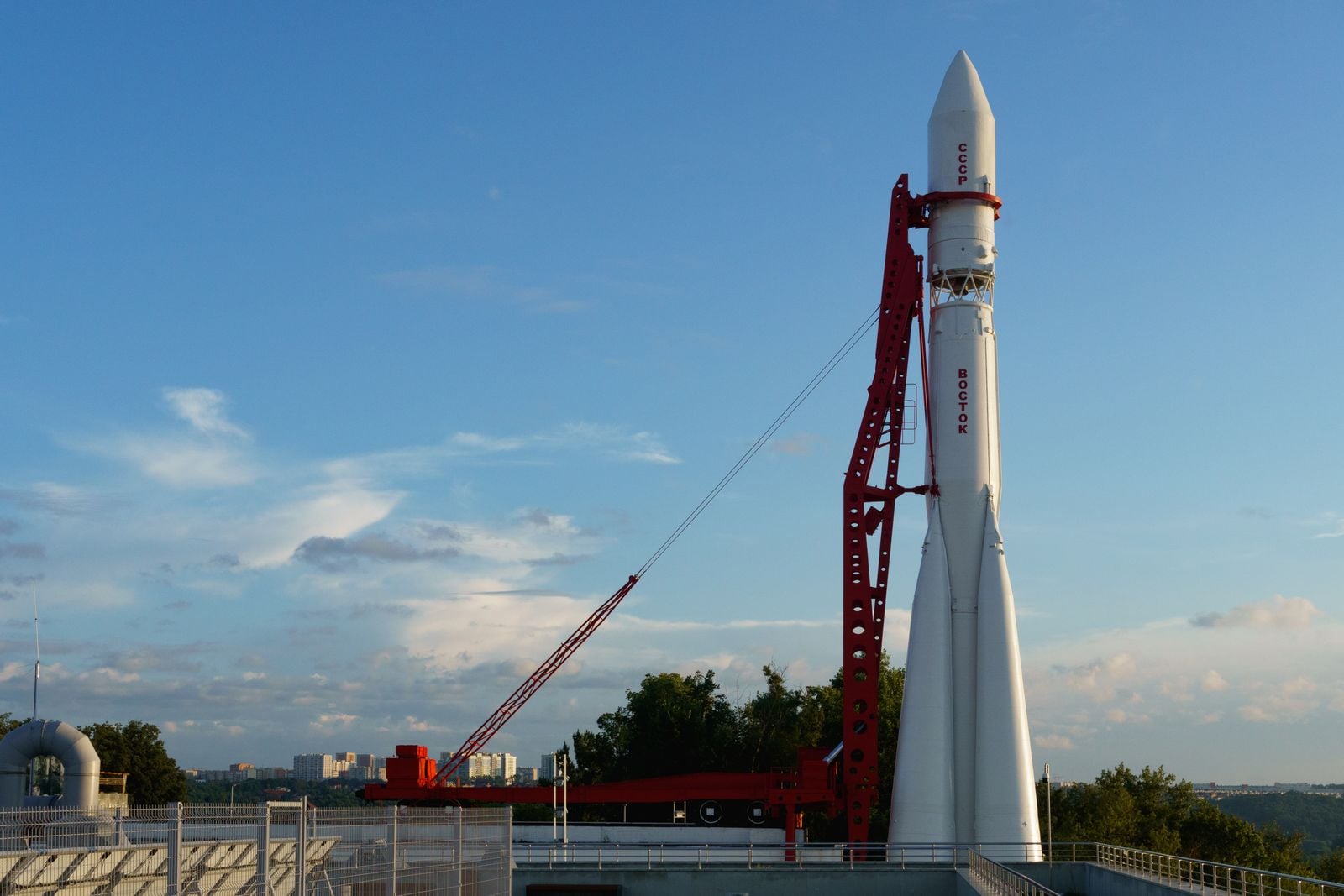
The rocket that made all of it possible was the R-7 Semyorka, originally designed as an intercontinental ballistic missile capable of carrying a thermonuclear warhead to the continental United States. On 4 October 1957 a modified R-7 placed Sputnik 1 into orbit. On 3 November 1957 it lofted Laika. On 12 April 1961 it carried Gagarin. The same fundamental design, in updated form, still launches Soyuz crews to the International Space Station today — the longest-serving orbital launch vehicle family in history.
Between 1957 and 1966, Korolev’s bureau delivered the first artificial satellite, the first animal in orbit, the first human in orbit, the first woman in orbit (Valentina Tereshkova, 1963), the first multi-crew spacecraft (Voskhod 1, 1964), and the first spacewalk (Alexei Leonov, March 1965). A BBC Sky at Night Magazine profile of Korolev notes that this run of firsts was compressed into less than a decade, driven by a single bureau operating under a single technical director whose name the public was not permitted to know.
Gagarin, according to accounts published after Korolev’s death, referred to him in private simply as SP — the initials of his first name and patronymic. Even the cosmonauts used the euphemism.
The surgery that killed him
By late 1965, Korolev was 58, exhausted, and unwell. He had been complaining of intestinal bleeding. On 14 January 1966 he was admitted to a Moscow hospital for what was described as a routine polyp removal. The operation was performed by Boris Petrovsky, the Soviet Minister of Health. Once the surgery began, the situation worsened rapidly: the polyp turned out to be a large malignant tumour, and Korolev’s jaw — broken during his 1938 NKVD interrogation and never properly reset — could not be opened wide enough to intubate him for extended anaesthesia. He died on the operating table of heart failure.
He was 59. The Pravda obituary two days later carried his photograph and, for the first time in print, his full name and title. He was buried in the Kremlin Wall Necropolis. The state that had hidden him spent the following week publishing everything he had built.
What his death cost the program — and the record
The lunar program he had been directing — the N1 super-heavy rocket, the Soviet answer to the Saturn V — collapsed in the years after his death. All four N1 launches between February 1969 and November 1972 failed, most spectacularly the second attempt in July 1969, which destroyed the launch pad. The rocket clustered 30 NK-15 engines in its first stage because Korolev’s rival Valentin Glushko had refused to build larger engines using the propellants Korolev preferred; the KORD fault-management system meant to coordinate those 30 engines was defeated by electromagnetic interference between them, turning single-engine failures into cascade shutdowns.
Siddiqi, the Fordham historian, has offered the measured verdict that Korolev’s death had a very negative effect on the Soviet space program as a whole, including the lunar program, but that he doubted the Soviets would have made the Moon landing even if Korolev had lived, because so many structural and organisational problems were already present while he was alive.
That caveat is the one the alternate-history television now rests on. Star City, which premiered on Apple TV in 2026, is set in a timeline where the 1966 surgery does not kill him and Alexei Leonov walks on the Moon in 1969. The show’s dramatic engine is not that Korolev was a genius who could solve any problem, but that his survival was the necessary condition under which the program’s institutional pathologies could have been addressed at all.
One consequence of a decade of anonymity is that the Western intelligence picture of the Soviet space program was, for years, a picture without a face. CIA assessments through the late 1950s and early 1960s referred to the Chief Designer as a hypothesised figure whose existence could be inferred from the pattern of Soviet achievements but whose identity, nationality, and biography were unknown. Some analysts speculated the Chief Designer was a committee. Others suspected a captured German engineer. The correct answer — a Ukrainian-born, Gulag-surviving aeronautical engineer named Korolev — was not confirmed in the West until Pravda printed it.
Space Daily has written before about the Buran shuttle’s single 1988 flight, another Soviet program whose technical achievement was decoupled from public recognition by the state’s habits of secrecy. The pattern is older than Buran. It began with Korolev.
The anonymity also meant that when he died, the state had to invent his public identity retroactively. The Pravda obituary was the first time Soviet citizens saw the photograph of the man whose name had been on none of the achievements they had spent a decade celebrating. Schoolchildren who had memorised Gagarin’s flight learned, in one morning, that there had been a designer, that he had been Ukrainian-born, that he had been imprisoned by Stalin, and that he was already dead.
The name on the wall
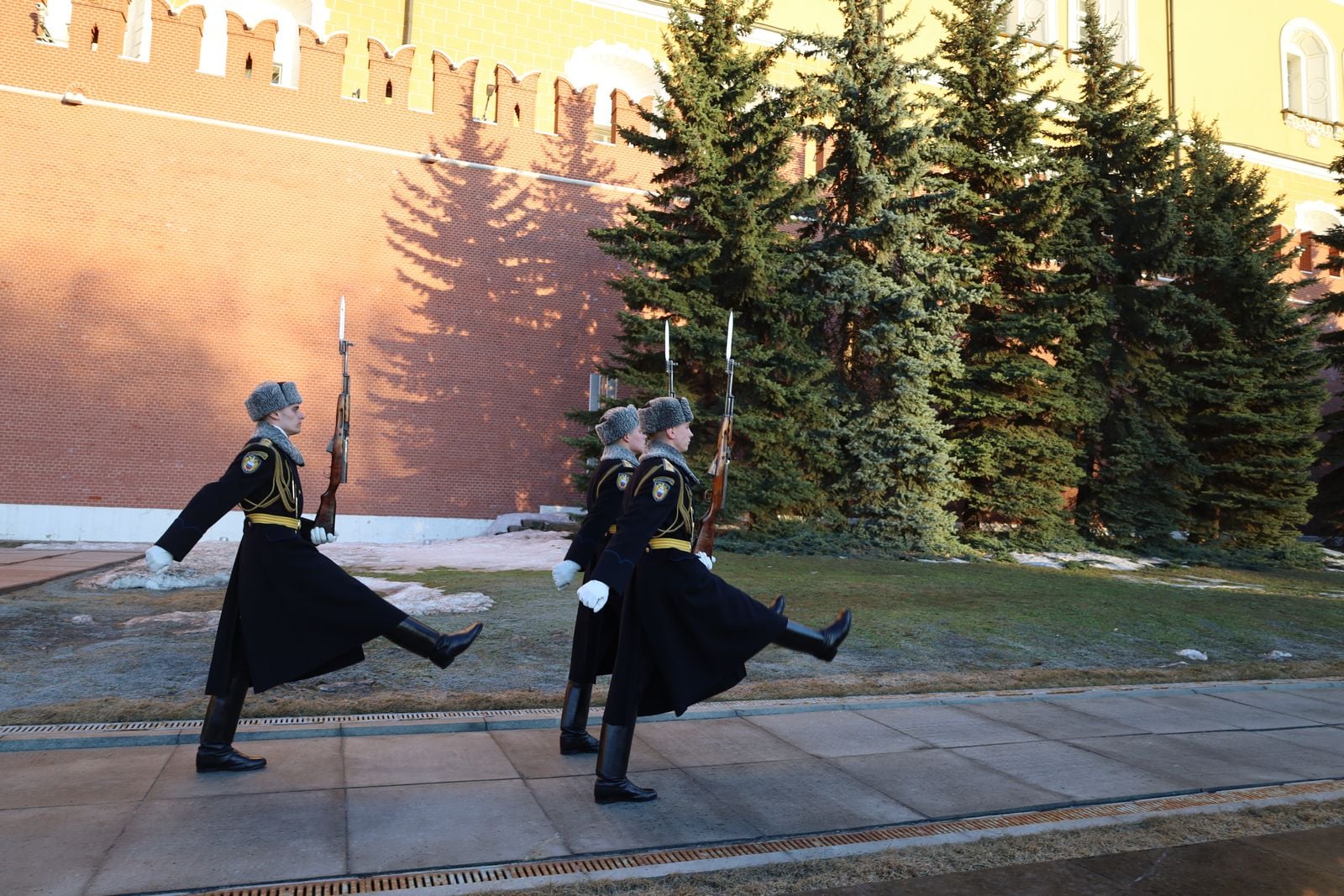
Korolev’s ashes are interred in the Kremlin Wall, near Lenin’s mausoleum. A crater on the far side of the Moon carries his name. A city outside Moscow, formerly Kaliningrad, was renamed Korolyov in 1996. The Yuri Gagarin Cosmonaut Training Center at Star City — the real one, not the Apple TV version — still trains the cosmonauts who ride his rocket’s descendants to orbit.
The R-7 family, in its current Soyuz-2 configuration, has now flown more than 1,900 times across all variants since 1957. Every crewed launch from Baikonur since Gagarin has used a rocket that traces its lineage directly to the machine Korolev built to carry a hydrogen bomb.
The man’s name appeared in a Soviet newspaper for the first time on 16 January 1966. Sixty years later, it is on a Moon crater, a Russian city, and the side of every Soyuz that leaves the pad.