

On the night of October 4, 1957, a polished aluminum sphere about the size of a beach ball began circling Earth at roughly 18,000 miles per hour, sending out a pulse that radio amateurs around the world could hear as it passed overhead.
Sputnik 1 carried no camera, no weapon, and no elaborate laboratory. Its most famous instrument was a pair of 1-watt radio transmitters broadcasting on 20.005 and 40.002 megahertz, frequencies that put the first artificial satellite within reach of ground stations and amateur operators with shortwave equipment.
The beep was the public proof. NASA’s history office describes Sputnik 1 as a 58-centimeter, 83.6-kilogram satellite that took about 98 minutes to orbit Earth, while other orbital catalogues give its early period as roughly 96 minutes. Either way, it came back again before most listeners had gone to bed.
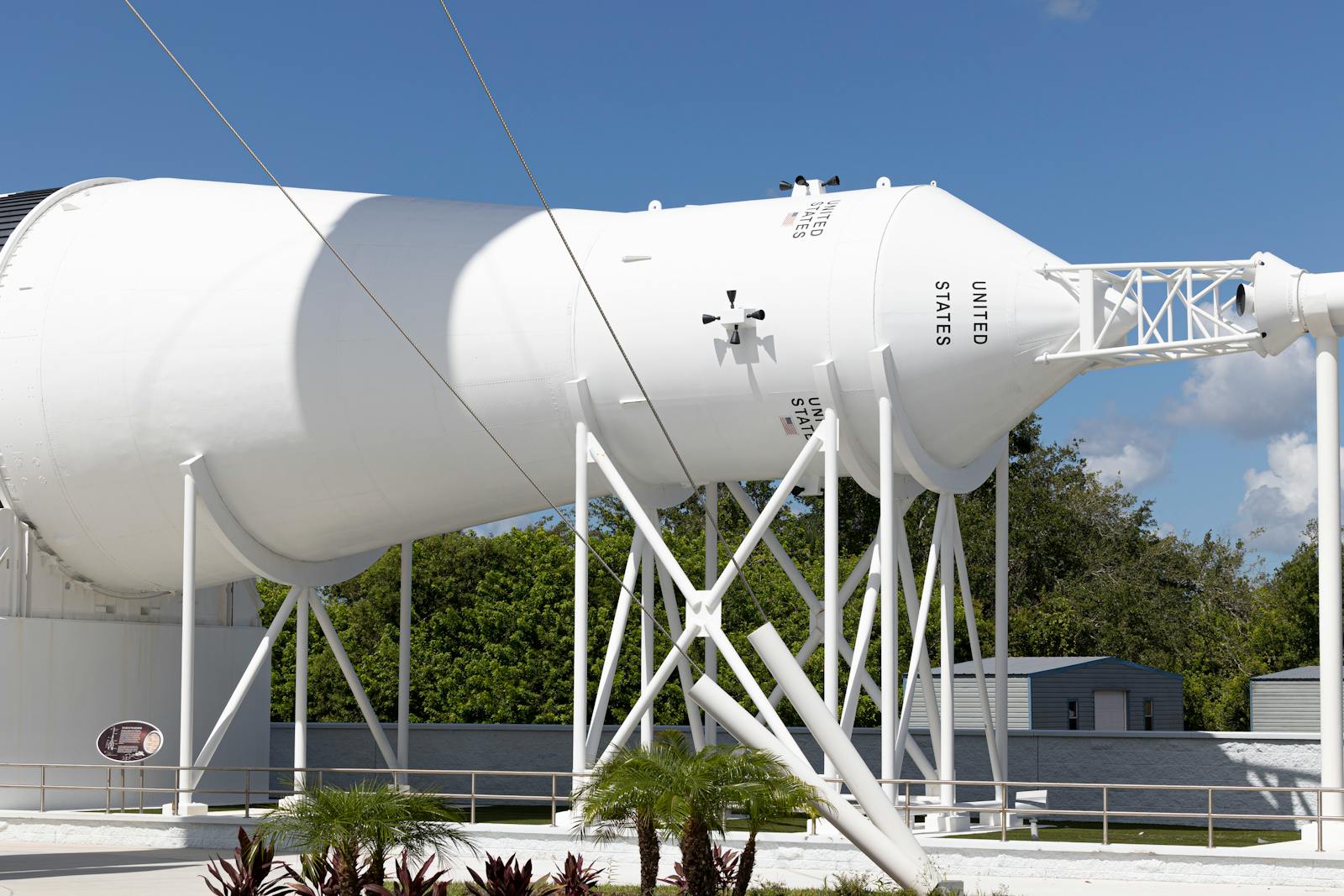
A signal designed to be heard
Sergei Korolev, the chief designer behind the R-7 rocket and the early Soviet space program, worked inside a system that kept even his name secret. Soviet press accounts did not identify him publicly during his lifetime. Outside the small circle around OKB-1, he was known only as the Chief Designer.
Sputnik 1 was secretive in origin, but not in sound. NASA’s National Space Science Data Center lists the spacecraft’s two transmitter frequencies as 20.005 and 40.002 megahertz, and the American Radio Relay League later noted that the 1-watt signal was within range of nearly any radio amateur.
The signal was not speech. It was a carrier keyed on and off, turned into an audible tone by radio receivers on the ground. To a listener, it became the clipped sound that newspapers soon rendered as a space-age beep.
That simplicity mattered. A hidden payload could be doubted, but a repeating signal crossing the sky could be recorded, timed, and compared by people who had never seen a Soviet rocket and had no access to a military tracking station.
Why the simple satellite flew first
The satellite that reached orbit was not the original Soviet plan. Korolev’s team had been working toward a larger scientific spacecraft called Object D, but that more ambitious geophysical satellite was not ready in time.
The stripped-down replacement was Object PS-1, from the Russian phrase usually translated as “simple satellite.” It was a polished metal sphere 58 centimeters, or 22.8 inches, across, with four external antennas trailing from one side.
Inside were batteries, radio transmitters, a fan, temperature switches, and pressure sensors. RussianSpaceWeb’s technical history of the design describes how temperature and pressure conditions could change the length of the transmitted signal, turning the famous beep into a crude health report from orbit.
It was enough. The spacecraft gathered information about atmospheric drag and radio propagation through the ionosphere, but its larger achievement was that it made orbital flight audible.
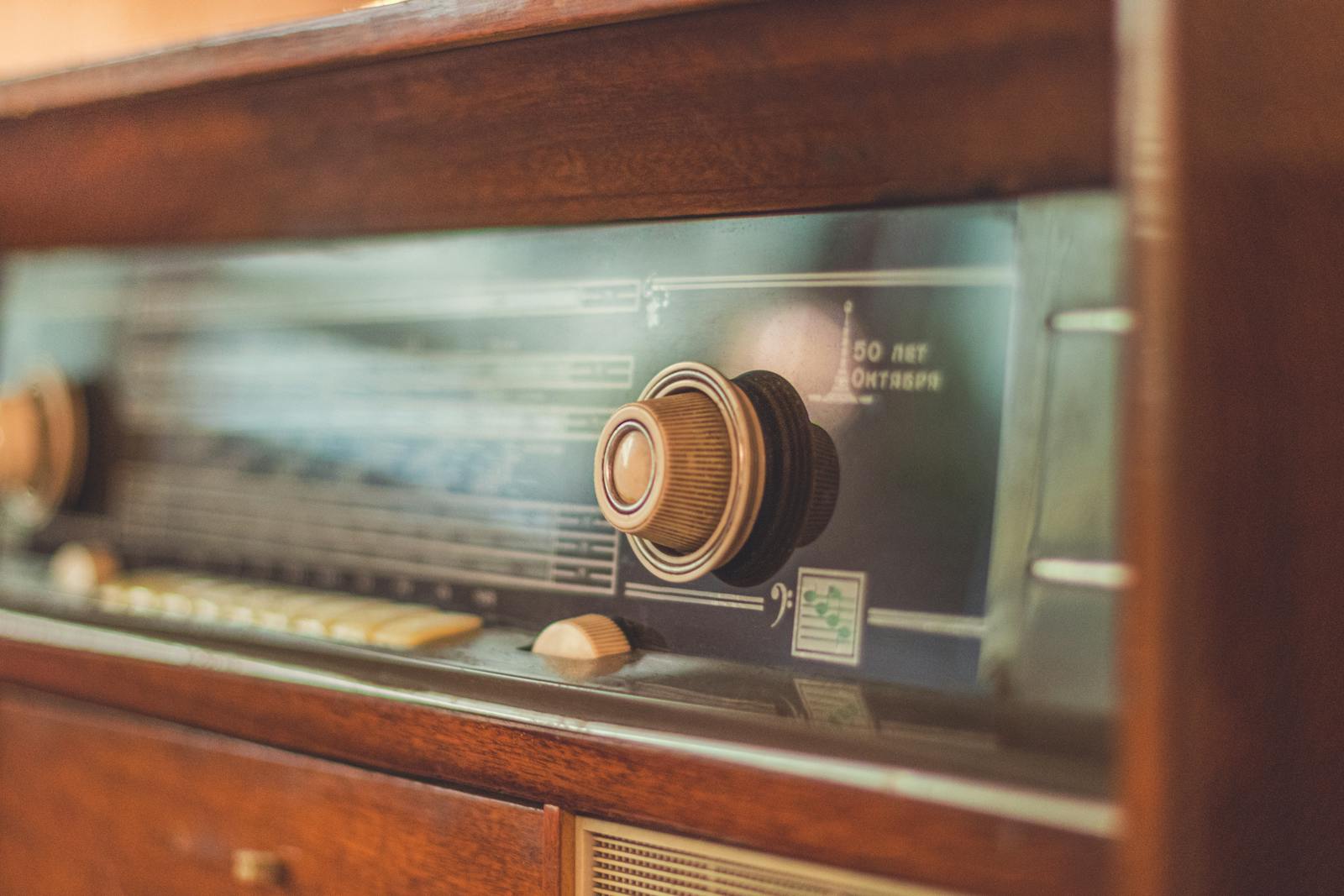
What people actually heard
Within hours of launch, receiving stations and amateur operators were trying to catch the signal. RCA engineers near Riverhead, Long Island, recorded it early, and American broadcasters soon put the sound on the air.
The instructions were simple enough to print. The American Radio Relay League told listeners to tune near 20 megacycles and then adjust slightly as the moving satellite shifted frequency through the Doppler effect.
The Doppler shift was part of the drama. As Sputnik approached a receiver, the tone moved one way. As it passed and receded, it moved the other. The sound itself told listeners that this was not a station across town, but a machine traveling faster than any aircraft above the atmosphere.
Some people saw a moving point of light as well, though many naked-eye sightings were probably of the brighter R-7 rocket body rather than the small satellite itself. The radio signal was more reliable than the view.
The 96-minute clock
Sputnik 1 did not just beep once. It came around again and again, roughly every 96 to 98 minutes, depending on how the orbit was measured and how it changed as drag slowly pulled the spacecraft lower.
CelesTrak’s satellite catalogue gives Sputnik 1’s initial orbit as 215 kilometers by 939 kilometers, with an inclination of 65.1 degrees. That path carried the signal across much of the inhabited world.
The Smithsonian Astrophysical Observatory’s Operation Moonwatch, a network of volunteer observers created for the International Geophysical Year, became part of the tracking effort. Amateur observation had suddenly become a front-row seat to geopolitics.
For three weeks, the planet had a new sound in the shortwave bands. Then the batteries died, and the beeping stopped. The spacecraft kept circling silently until January 4, 1958, when it reentered the atmosphere after 1,440 orbits.
The political shock of an audible orbit
The American government had expected the Soviet Union to try for a satellite during the International Geophysical Year. What changed the public mood was the directness of the evidence. Anyone with the right receiver could hear the Soviet machine passing overhead.
The response spread through schools, newspapers, laboratories, and Congress. NASA’s account of the dawn of the Space Age notes that the Sputnik launch led directly to the National Aeronautics and Space Act of 1958, which created NASA from the old National Advisory Committee for Aeronautics and other agencies.
The shock also helped create new institutions outside civilian spaceflight. DARPA’s own history traces the formation of the Advanced Research Projects Agency in February 1958 to the events triggered by Sputnik.
Education policy moved too. The U.S. Senate’s historical account of the National Defense Education Act describes the 1958 law as a major federal push for science, mathematics, foreign languages, loans, and fellowships after the satellite crisis.
The beep was not the only reason those institutions appeared. But it made the Soviet lead impossible to treat as an abstraction.
What followed the silence
Sputnik 2 launched less than a month later, on November 3, 1957, carrying the dog Laika and a much heavier instrument package. By April 1961, Yuri Gagarin would ride a descendant of the same R-7 rocket family into orbit.
Korolev never received public credit while he was alive. He died in January 1966, at 59, before Soviet authorities openly attached his name to the achievements he had directed.
Sputnik 1 had already vanished by then. The metal sphere burned up after three months in orbit, but the sound remained in recordings, museum displays, amateur radio histories, and anniversary re-creations.
What crossed the sky in October 1957 was a 184-pound aluminum ball with two 1-watt transmitters and four antennas. The sound meant almost nothing by itself, just a pulse on a frequency. But because it could be heard directly, at kitchen tables and radio benches far from any launch site, it made the Space Age arrive as a noise in the headphones.
