
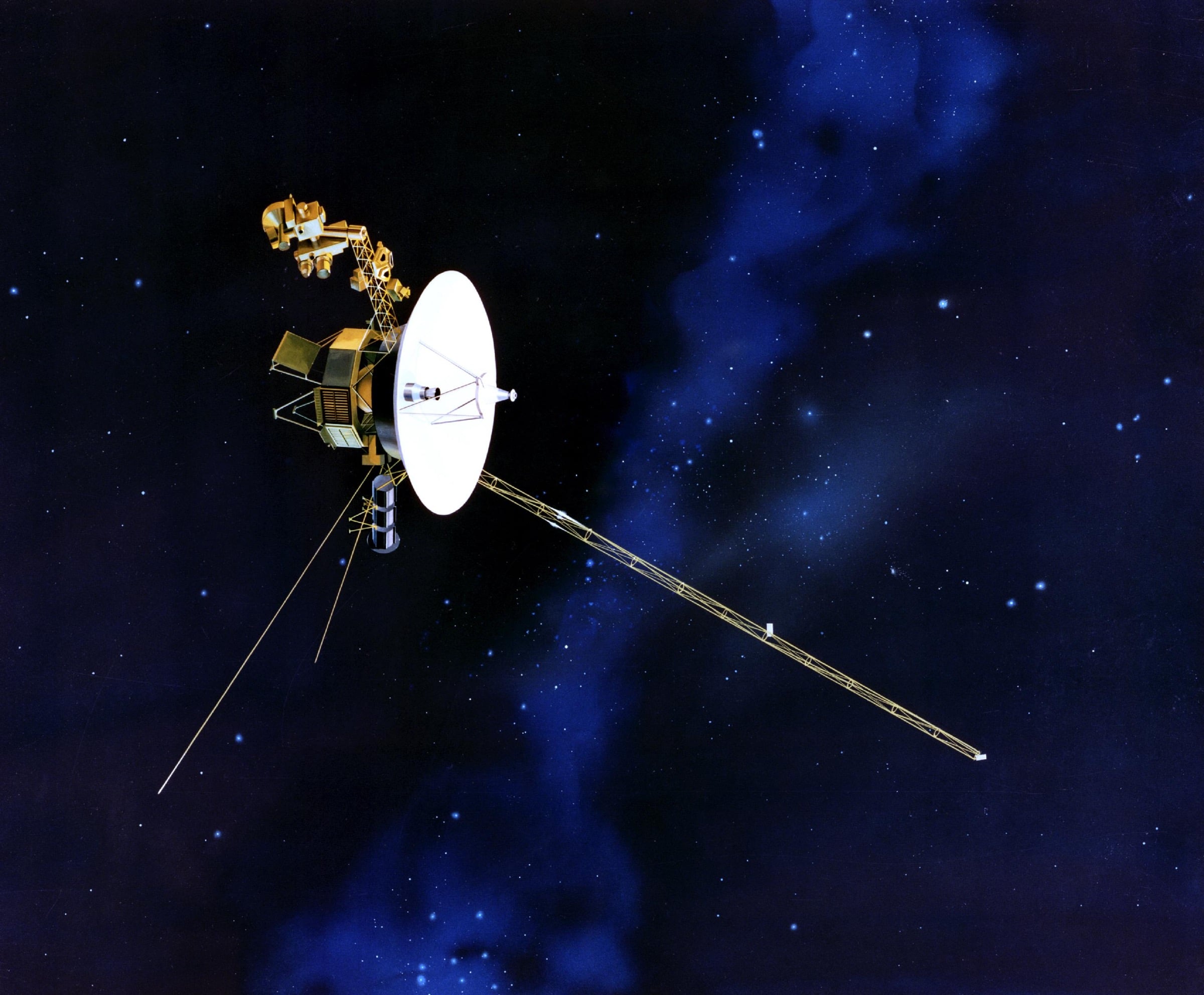
There is no repair bay for Voyager 2. No astronaut can replace a failing component, and no new cable, heater or power supply can catch a spacecraft that has been travelling away from Earth since 1977.
What NASA engineers do have is a radio link, decades of documentation and the ability to rethink how the hardware already aboard the probe is used. In August 2026, that was enough to free up power and postpone another science-instrument shutdown by at least a year.
NASA gives Voyager 2’s one-way light time as approximately 19½ hours. A command and its earliest confirming reply therefore span roughly 39 hours, before allowing time for the spacecraft to execute the instruction or for engineers to analyse the result.
The power-saving change was called the Big Bang
NASA’s 4 August mission update says engineers at the Jet Propulsion Laboratory successfully completed an operation nicknamed the “Big Bang.” The name refers to making a coordinated swap rather than changing one small load at a time.
The team simultaneously turned off a set of powered devices and substituted lower-power alternatives, while keeping the spacecraft warm enough to work. NASA has not described the result as a permanent rescue. It is a power saving in a machine whose available electricity continues to decline.
Without the change, Voyager 2 would have needed to lose another science instrument before the end of 2026. NASA now expects its three active instruments to continue together for at least an additional year. The agency plans to carry out a similar swap on Voyager 1 in the coming months.
Four watts disappear every year
Voyager 2 is far beyond the practical reach of sunlight, so solar panels were never part of its design. Its three radioisotope thermoelectric generators convert heat from the decay of plutonium-238 into electricity. The system has no moving parts, one reason it has lasted so long, but its output is not constant.
Each Voyager loses about four watts of usable electrical power per year. Four watts is modest in a house. On a spacecraft operating with almost no spare margin, it can represent the difference between keeping an instrument alive and switching it off.
Engineers have spent years removing loads in a careful order. Heaters and systems no longer needed after the planetary encounters went first. Science instruments followed only when the power budget left no reasonable alternative. A 2024 decision to retire Voyager 2’s plasma science instrument, for example, preserved power for the instruments still returning useful interstellar measurements.
Every command is a long experiment
The delay changes how engineering decisions are made. On Earth, a technician can adjust a setting, watch the response and reverse course within minutes. With Voyager 2, a command sent through NASA’s Deep Space Network travels for most of a day before it reaches the probe. The telemetry describing what happened then makes the same journey back.
That removes the possibility of live troubleshooting. Command sequences have to account for the spacecraft’s state far in advance. Engineers test assumptions on the ground, model the electrical and thermal consequences, send carefully checked instructions and wait.
The spacecraft also has to protect itself during that silence. Stored command sequences and onboard fault responses let it continue basic operations without continuous direction from Earth. Autonomy here does not mean modern artificial intelligence. It means compact, deterministic logic designed for computers built when memory and processing power were extremely limited.
The remaining science cannot be replaced
Voyager 2’s active instruments measure magnetic fields, plasma waves and energetic particles in interstellar space. The readings are sparse compared with those from a modern observatory, but their location makes them unique. Voyager 1 and Voyager 2 are the only functioning spacecraft to have crossed the heliopause, the boundary beyond the bubble shaped by the solar wind.
The probes sample different paths through that environment, so one cannot simply substitute for the other. The record becomes more valuable as it grows longer and as the spacecraft travel farther from the Sun.
A previous Space Daily account of the Voyagers’ continuing interstellar mission described the larger pattern: the probes survive not because nothing breaks, but because generations of engineers keep finding safe ways around the losses.
An extra year is not a promise
“At least a year” is a planning estimate, not a guarantee. Nearly 49 years of radiation, cold and component ageing leave many ways for the mission to end that have little to do with the annual power decline. A transmitter, computer, thruster or communications link could fail first.
Nor did the Big Bang create new energy. It reduced the demand placed on a shrinking supply. NASA’s Voyager mission FAQ notes that engineering data may continue after the remaining science operations wind down, and that the probes could remain within Deep Space Network communications range until roughly 2036. That outer date depends on there being enough power to transmit.
The achievement is smaller and more impressive than a miraculous repair. Engineers found nearly a year’s worth of science inside the difference between two ways of running the same old hardware. They did it without seeing or touching the spacecraft, then waited across billions of kilometres to learn whether their reasoning was right.
