

On the afternoon of 3 June 1977, a young woman lay on a table at Bellevue Hospital in New York while a computer converted the electrical activity of her brain into sound. Her name was Ann Druyan. She was 27, creative director of the Voyager Golden Record project, and two days earlier she had agreed by telephone to marry Carl Sagan. The hour of EEG and EKG data captured that afternoon — compressed to about a minute — was pressed into the grooves of a gold-plated copper disc, bolted to the side of two spacecraft, and launched toward the outer planets. It is now more than 25 billion kilometres from Earth.
The team had less than six weeks. Sagan, astronomer Frank Drake, writer Timothy Ferris, artist Jon Lomberg, and Druyan worked against a launch window that would not move, arguing over greetings, whale song, Bach, Chuck Berry, and what, exactly, a human being sounds like from the inside. The folklorist Alan Lomax, working from New York rather than Ithaca, selected the bulk of the field recordings.
What actually went onto the disc
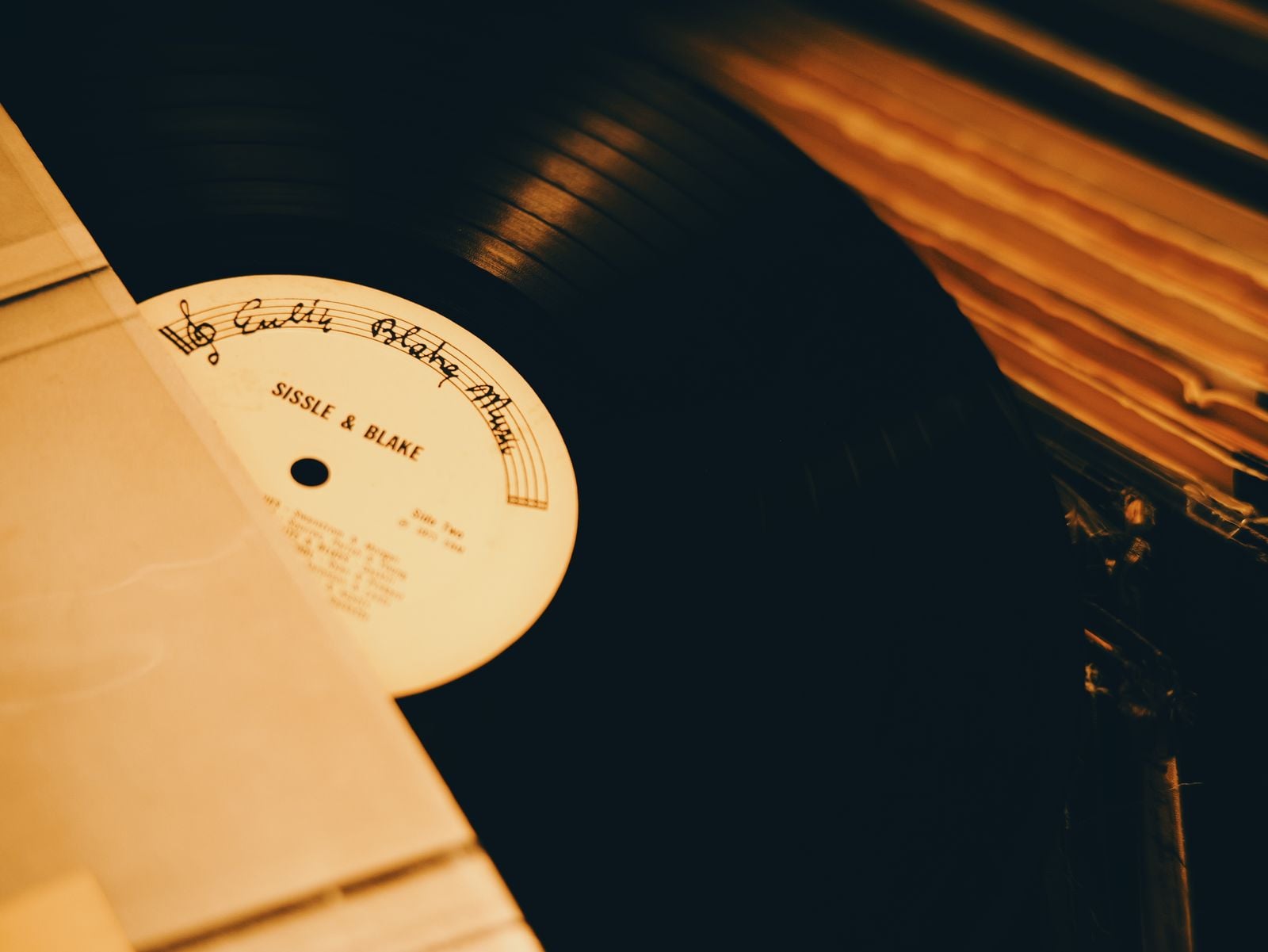
The Golden Record is a 12-inch phonographic gold-plated copper disc, shipped with a stylus and cartridge and a diagram etched into its aluminium cover explaining how to play it. Each Voyager carries an identical copy. According to an account published by The Conversation on the record’s 40th anniversary, the grooves hold both ordinary audio and 115 encoded images, along with greetings in 55 languages and a curated tour of terrestrial sound.
The audio runs from a Georgian men’s chorus to Blind Willie Johnson’s Dark Was the Night, Cold Was the Ground. It includes Bach’s Brandenburg Concerto No. 2, Mozart’s Magic Flute, Louis Armstrong, Chuck Berry’s Johnny B. Goode, and honkyoku shakuhachi. It includes the sound of a kiss, a mother speaking to her newborn, thunder, surf, a chimpanzee, and a humpback whale. Ferris also wanted one mark made directly by a human hand, and JPL’s archive records the phrase he had etched between the label and the grooves: “To the makers of music – all worlds, all times.”
And then, near the end, the brainwaves.
How Druyan’s EEG got onto a spacecraft
The idea was Druyan’s. She had asked Sagan whether, if she recorded her brainwaves, a civilisation a billion years from now could conceivably read them. He did not know. He suggested they try anyway. The committee volunteered her to supply the signal, and she booked a laboratory at Bellevue where a technician captured an electroencephalogram, an electrocardiogram, eye movement and other bodily signals across a single hour.
She went in with a script. According to a 40th-anniversary panel at Caltech reported by the Orange County Register, Druyan tried to hold a mental itinerary of Earth’s history in her head during the recording — the movement of continents, the rise of civilisations, the invention of writing.
Her thoughts drifted.
Two days earlier, she and Sagan had ended a phone call by agreeing to marry. They had not yet kissed. Both were in other relationships. Writing years later in the epilogue to Sagan’s Billions and Billions, Druyan described entering the Bellevue laboratory and being hooked to a computer that turned the data from her brain and heart into sound. In an account of the recording session published by Futurism, she is quoted saying that “my feelings as a 27 year old woman, madly fallen in love, they’re on that record” — and that the permanence of it, on a timescale of a hundred million years, is the part she finds it hard to be afraid of.
The six weeks at Cornell
The selection process was compressed and contentious. Sagan had been given the assignment by NASA with a launch window that would not wait. NASA’s own account of the project puts it plainly: the group had less than six weeks to assemble something meant to represent the entire population of Earth. Frank Drake, who had designed the earlier Pioneer plaques with Sagan, proposed the format and worked out the technical encoding — how to press images into an audio groove so that a civilisation with no shared reference could reconstruct them. Ferris, writing in The New Yorker, described the production as a scramble of long-distance phone calls, borrowed studio time, and last-minute swaps.
Some choices were vetoed. NASA rejected a photograph of a nude man and pregnant woman; the team submitted a silhouette instead.
The most repeated story about the record is that the Beatles were nearly on it. In the usual telling, Here Comes the Sun was wanted, the band agreed, and EMI refused the rights. Ferris, who produced the record, has disputed the premise directly, writing in The New Yorker that the track was never a serious contender and that the wit of the title seemed unlikely to survive a billion years. The two accounts have never been reconciled. What is certain is that the song is not on the disc, and Chuck Berry is.
The Georgian folk song Tchakrulo made it on, but not before the committee found out what it said. Ferris has written that for all anyone on the team knew, the song could have been celebrating something indefensible. They located a Georgian speaker in Queens, Sandro Baratheli, and had him translate. It turned out to be a peasants’ protest against a feudal landlord. It stayed. Sagan, for his part, had come to Cornell after Harvard denied him tenure in the late 1960s, reportedly for being too public a scientist; Cornell named him David Duncan Professor of Astronomy and Space Sciences, and it was in a Space Sciences Building office there that much of the record was assembled.
What a brainwave actually is, and why it survived the trip
An EEG measures voltage differences between electrodes placed on the scalp — typically in the range of microvolts, oscillating at a few cycles to a few dozen cycles per second. It records the aggregate behaviour of large populations of neurons. It does not record thoughts. To fit an hour of that signal onto a record with finite groove length, the recording was heavily compressed, and what plays back is a burst of crackle and pulse with no intelligible content in it at all.
There is no way to extract Druyan’s actual thoughts from the disc. The signal is too coarse, and it was never a transcript to begin with. What survives is the fact of a nervous system, doing what nervous systems do, on a particular afternoon. We know what that minute meant only because Druyan later explained it in published accounts.
That is the object now travelling through interstellar space at roughly 17 kilometres per second.
Where the record is now
Voyager 1 crossed into interstellar space in 2012 and is currently the most distant human-made object. NASA’s mission tracker puts it past 25 billion kilometres, closing on a threshold it will cross in November 2026, when it becomes the first object built by humans to sit a full light-day from Earth. Voyager 2 crossed the heliopause in 2018 and trails behind. Both spacecraft are still transmitting on plutonium-238 radioisotope generators whose output falls a little each year, and NASA has been shutting down instruments to conserve the shrinking power budget.
The spacecraft themselves will eventually fall silent. The records will not. Gold-plated copper, in the near-vacuum of interstellar space, has no obvious mechanism of decay on any timescale that matters to human civilisation. Micrometeoroid strikes will pit the surface over millions of years. The information will remain readable for a very long time. The object was designed to outlive not only the spacecraft but plausibly the civilisation that made it.
There is no way to verify that any of it will be found. The nearest star to Voyager 1’s current trajectory is a red dwarf called Gliese 445, and the spacecraft will pass within about 1.6 light-years of it in roughly 40,000 years. Voyager 2 will pass Ross 248 on a similar timescale. Neither is a close approach in any meaningful sense. The odds of interception are effectively zero across any period a human being would care about.
The record is not really an experiment. It is a gesture whose meaning is fixed on the sending end.
The private layer inside a public artefact
The committee could have stopped at greetings, music, and images. The decision to include a physiological recording reflects a specific intuition Sagan and Druyan held about what a message to another mind should contain. Language would probably be unreadable. Music might be unrecognisable as music. But the electrical activity of a working brain is a physical signature that any technologically capable civilisation would, in principle, be able to identify as the output of a nervous system.
Whether or not that reasoning holds, it captures something about the project’s ambition. The record was not really designed for aliens. Sagan had said as much about the earlier Pioneer plaque, writing that its greater significance was not as a message to out there but as a message to back here.
Most of what went onto the record was chosen to represent humanity in the aggregate: many languages, many musics, many faces. The brainwave is the exception. It is one specific 27-year-old woman on one specific afternoon in June 1977, thinking about one specific man she had agreed to marry two days earlier.
Sagan and Druyan married in 1981 and stayed together until his death in 1996. Druyan has spoken openly about the recording in the decades since — at Caltech, on Radiolab, in interviews around the release of a Kickstarter-funded vinyl edition of the record that Business Insider covered in its explainer on the record’s contents. That reissue, as NPR reported, raised more than $1.3 million from backers who wanted to hear at home what had been sent to the stars. The personal layer inside the record was known to the team at the time but not widely publicised until decades later.
What is up there, exactly, is this. A 12-inch gold-plated copper disc. A stylus. A cartridge. An etched cover with a pulsar map and instructions. Bach, whale song, thunder, greetings in Akkadian and Mandarin and Wu, the sound of a kiss, a mother and child, a line scratched by hand to the makers of music in all worlds and all times, and — encoded near the end — the compressed electrical activity of a young woman’s brain during the hour she was thinking about the man she had just agreed to marry.
It is currently moving away from the Sun at roughly 61,000 kilometres per hour. It will keep going long after the transmitter goes dark, long after the last engineer who worked on Voyager is gone, and long after the Cornell office where the arguments happened is no longer standing. NASA expects the power budget to narrow through the late 2020s and into the 2030s. The record will not notice. Somewhere out past the heliopause, in the dark between stars, a minute of a June afternoon in 1977 is still travelling.