
Human Factors
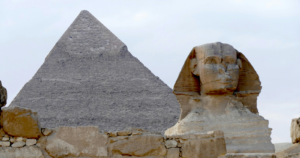
The Great Pyramid of Giza is described as one of the world's oldest landmarks, but…
The Great Pyramid of Giza is one of those structures whose age has been repeated so often that the number no longer registers.

The Great Pyramid of Giza is one of those structures whose age has been repeated so often that the number no longer registers.

When Nineveh fell in 612 BC, the fire that destroyed King Ashurbanipal's palace baked his library of 30,000 clay tablets into ceramic, preserving the Epic of Gilgamesh and most of what we know about Mesopotamian literature.
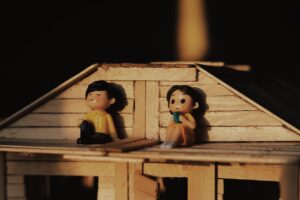
Frances Glessner Lee, heir to the International Harvester fortune, built twenty miniature crime scenes in the 1940s to train homicide detectives. Eighteen of her Nutshell Studies of Unexplained Death are still used by the FBI and Harvard forensic seminars today.

In 1901 sponge divers off the Greek island of Antikythera recovered a corroded lump of bronze that turned out to be a 2,000-year-old hand-cranked computer. It predicted eclipses, tracked the Moon's irregular orbit, and marked the Olympic Games, with no comparable machine appearing for the next 1,400 years.
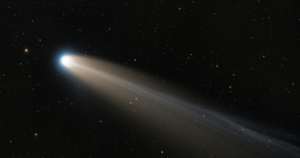
On 4 July 1054, astronomers in Song dynasty China recorded a new point of light near the southern horn of the constellation we call Taurus.
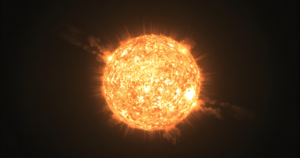
The visible surface of the Sun, the photosphere, sits at around 5,500 degrees Celsius.
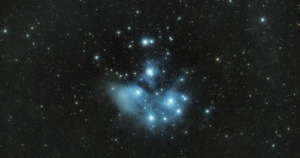
In July 2011, NASA's Jet Propulsion Laboratory announced that two teams of astronomers had detected an enormous mass of water vapour around a quasar called APM 08279+5255, more than 12 billion light-years away.
Around 240 BCE, Eratosthenes of Cyrene, the chief librarian at Alexandria, produced an estimate for the circumference of the Earth.
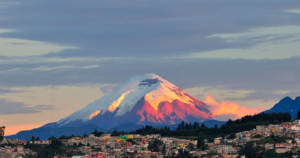
Mount Everest is the highest point on Earth measured from sea level. Its official height, agreed by Nepal and China in 2020, is 8,848.86 metres.
Between roughly 5.97 and 5.33 million years ago, the Mediterranean Sea was cut off from the Atlantic and lost most of its water to evaporation.
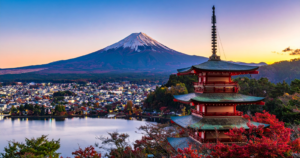
The town is called Kamikatsu. It sits in the mountains of Shikoku, the smallest and least populated of the four main Japanese islands, about an hour's drive inland from the prefectural capital of Tokushima.
According to NASA's December 2025 announcement that construction of the Nancy Grace Roman Space Telescope had been completed, the observatory is on track for…
According to the official ESA Webb announcement on 27 May 2026, two papers published the same day, one in Nature and a companion in Monthly Notices of the…
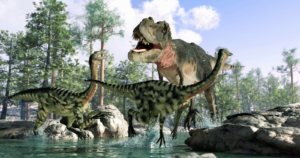
A study published in May 2026 in the Proceedings of the National Academy of Sciences reports a finding that complicates the standard one-line version of the dinosaur extinction.
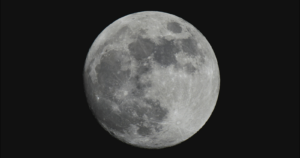
Between 1969 and 1972, NASA deliberately steered spent pieces of Apollo hardware into the Moon.
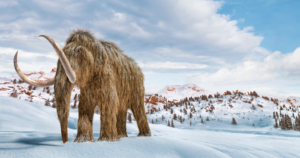
In 1951, gold miners at Dome Creek, a small settlement north of Fairbanks, donated a pile of fossil bones from their excavations to the explorer and naturalist…