
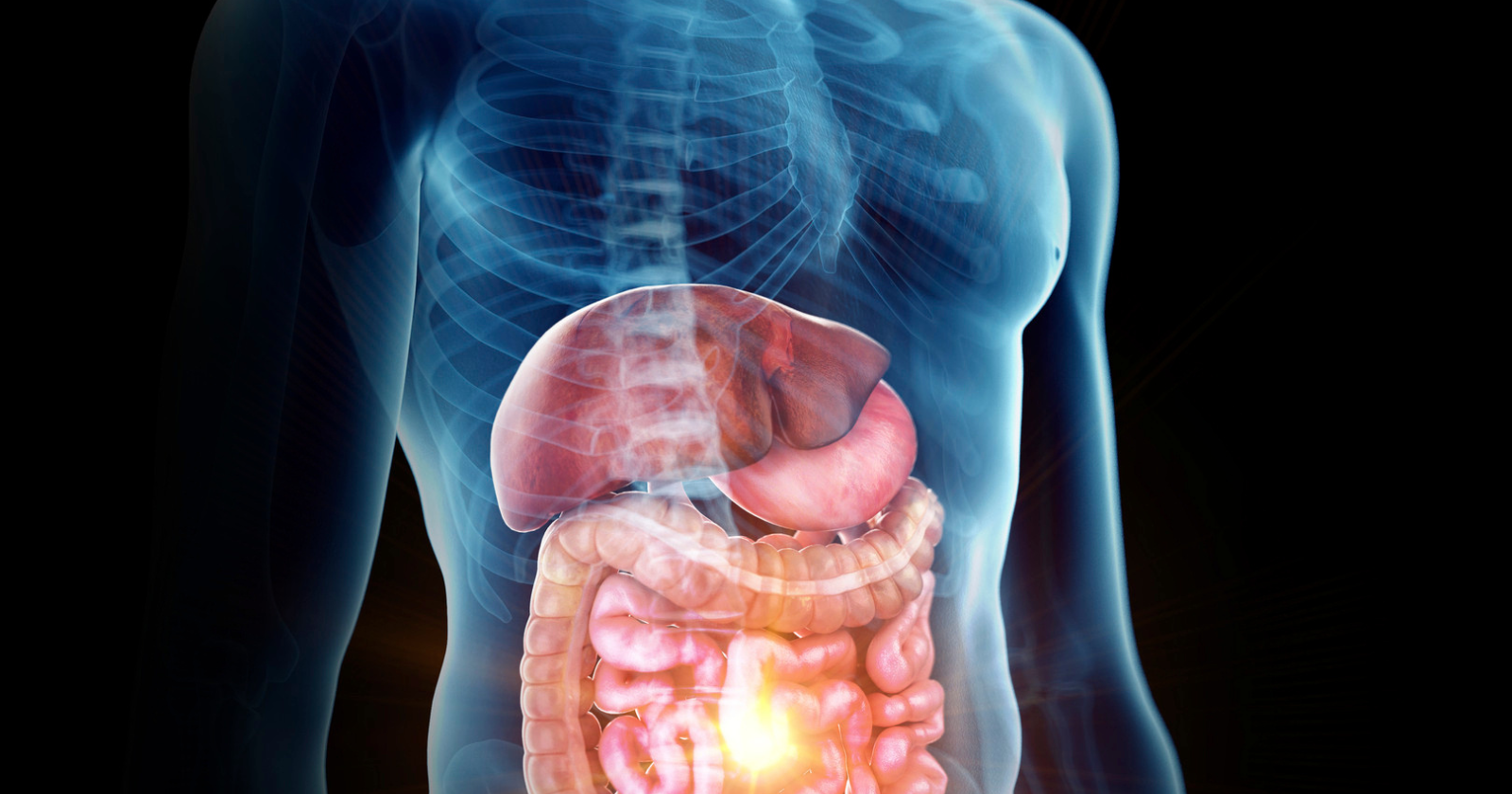
The standard cultural framing of where one’s nervous system is located tends to assume that the nervous system is, in any meaningful sense, all in the head. The framing makes intuitive sense. The brain is where most of the conscious activity that the person identifies as “thinking” appears to occur. The spinal cord, which extends from the brain down through the back, is recognized as part of the nervous system, but is generally treated as a kind of cable carrying signals between the brain and the rest of the body rather than as a site of independent activity.
The framing misses, on close examination, what is probably the most numerically significant component of the human peripheral nervous system. The component is located in the gut. The component is called the enteric nervous system. The component consists, by every available measurement, of approximately 500 million neurons distributed throughout the walls of the gastrointestinal tract, from the esophagus to the rectum. The component contains, accordingly, roughly five times as many neurons as the entire spinal cord. The component operates, on the available evidence, with enough independence from the central nervous system that researchers have, for several decades, been calling it the second brain.
What this second brain is doing, beyond the obvious digestive functions that the wider register associates with the gut, is considerably more interesting than the cultural register has yet absorbed.
What the enteric nervous system actually is
It is worth being precise about what the enteric nervous system consists of, because the wider register has tended to absorb the concept in vaguer terms than the underlying biology warrants.
The enteric nervous system is, by every available measurement, a complete and functional nervous system embedded in the wall of the digestive tract. The system consists of approximately 500 million neurons, distributed throughout two layers of gut tissue, organized into local networks that handle local processing without requiring input from the brain. The system uses many of the same neurotransmitters that the brain uses, including serotonin, dopamine, acetylcholine, and various others. The system is structurally distinct from the autonomic nervous system that connects it to the brain, although it communicates with the autonomic system continuously.
The structural feature that distinguishes the enteric nervous system from the other peripheral nervous systems is its capacity for independent operation. The Cleveland Clinic’s documentation describes the enteric nervous system as the most complex neural network outside the brain itself, and as the only peripheral nervous system that can gather information about its local conditions, process that information locally, and generate a coordinated response without sending the information back to the brain for processing. The system handles most of its own decisions about how to move food through the digestive tract, when to secrete digestive enzymes, how to manage blood flow within the gut, and how to respond to various local disturbances.
The independence is not, on close examination, total. The enteric nervous system communicates continuously with the brain through several pathways, most notably the vagus nerve, which is the primary information highway between the gut and the brain. The communication is bidirectional. The brain sends signals to the gut. The gut sends signals to the brain. The traffic flows in both directions, but on the available evidence, the traffic from gut to brain is substantially heavier than the traffic in the other direction.
What the gut is actually sending up
The structural fact that the wider cultural register has not, on the available evidence, fully absorbed is what the gut is actually communicating to the brain through these channels.
The most consequential of these communications, for the question of emotional life, involves the production of serotonin. Approximately 95 percent of the body’s serotonin is produced in the gut rather than in the brain. The serotonin produced in the gut has multiple functions, including the regulation of gut motility and the modulation of the local immune response, but it also contributes to the wider neurochemical environment that the brain is operating in. Disruptions to gut serotonin production are, on the available evidence, correlated with disruptions to mood regulation in the brain. The mood and the gut are, in this respect, in continuous biochemical conversation.
The communications also include the various signaling molecules that the gut bacteria themselves produce as byproducts of their metabolic activity. The molecules include short-chain fatty acids, various neuroactive compounds, and signaling proteins that the immune system uses to communicate the current state of the gut environment. The signals reach the brain through the bloodstream and through the vagus nerve, and the brain incorporates them into its ongoing calibration of mood, alertness, anxiety, and the various other states that the conscious mind experiences as features of its own internal weather.
The structural implication of all this, on close examination, is that the gut is doing considerable amounts of work that the conscious mind is not aware of, and that the conscious mind’s experience of its own emotional state is, in significant part, the brain’s reading of signals that the gut has been producing in response to conditions the conscious mind has not yet been informed about.
What “informed before the conscious mind” actually involves
The structural feature that gives the second-brain framing its weight, on close examination, is the timing of the gut’s responses relative to the conscious mind’s awareness.
The gut, by virtue of its 500 million neurons and its continuous monitoring of local conditions, is often producing responses to environmental conditions before the conscious mind has registered that any response is being produced. The classic example is the feeling of “butterflies” in the stomach before a stressful event. The conscious mind, in most cases, becomes aware of the butterflies only after the gut has already produced them. The gut, in some real way, has already responded to the situation. The conscious mind is, by structural design, the second to be informed.
The same pattern operates in less dramatic situations. The vague sense of unease before a meeting that turns out to be difficult. The slight nausea on first meeting a person who later proves untrustworthy. The various small visceral signals that the conscious mind has been trained to dismiss as random noise but that, on the available evidence, are produced by the gut’s continuous monitoring of environmental conditions through channels that the conscious mind does not have direct access to. The gut is, in many cases, picking up on cues the conscious mind has not yet processed. The gut is producing the response to those cues. The conscious mind, in due course, is informed.
This is, on close examination, the structural feature that the cultural phrase “gut feeling” has been pointing at all along. The phrase has been treated, in most contexts, as a folksy metaphor. The phrase is, on the available biology, more literal than the metaphorical framing allows for. The gut does have feelings, in the sense that it is producing real biochemical responses to environmental conditions, and the responses are influencing the conscious mind’s eventual experience of the situation. The conscious mind’s “gut feeling” is, in some real way, the conscious mind’s belated awareness of what the gut has already been doing.
What this implies for self-knowledge
The wider implication of all this, on close examination, is that the standard cultural model of the self as a unified conscious entity is, in some real way, less accurate than the biology warrants. The self is, more accurately, a distributed system in which several semi-autonomous processing centers operate in parallel, and in which the central nervous system in the head is, more specifically, one component among several rather than the sole site of cognitive activity.
The enteric nervous system is one of the most significant of the other components. The system is doing real work. The system is influencing the conscious mind’s experience of its own life in ways the conscious mind is, by structural design, often not aware of. The conscious mind’s reports of its own emotional state are, in some real way, partial reports that do not include the upstream gut signaling that has, in many cases, produced the state in the first place.
This is not, on close examination, a diminishment of the conscious mind. The conscious mind is still the integrator. The conscious mind is still where the various inputs from the body’s distributed processing centers come together into the coherent experience of being a particular person. The conscious mind is, however, in some real way, less in charge than the standard self-conception has been treating it as. The gut has been making contributions all along. The contributions have been, until very recently, mostly invisible to the conscious mind that has been receiving them.
The acknowledgment this article wants to leave
The human gut contains approximately 500 million neurons organized into an enteric nervous system that operates with enough independence from the central nervous system that researchers have, for decades, been calling it the second brain. The system handles most of its own digestive decisions, communicates continuously with the brain through the vagus nerve and other pathways, produces approximately 95 percent of the body’s serotonin, and is, on the available evidence, often producing emotional responses to environmental conditions before the conscious mind has registered that any response is being produced.
The structural implication is that the conscious mind’s experience of its own emotional life is, in significant part, the conscious mind’s belated reading of signals that the gut has already been producing. The gut is, in many cases, the first responder. The conscious mind is the second. The cultural phrase “gut feeling” is, on the available biology, more literal than the metaphorical framing allows for. The gut is doing the feeling. The conscious mind, in due course, is being informed.
The wider cultural register has not yet, on the available evidence, adequately absorbed this. The absorbing is, in some real way, the work of the next several decades of public science communication. The biology has been clear for some time. The cultural model of the self has been slow to update. The updating, when it eventually occurs, will involve the recognition that the self is, in some real way, a distributed system rather than a unified one, and that the various components of the system are doing more of the actual work of being alive than the conscious mind has so far been willing to credit.