

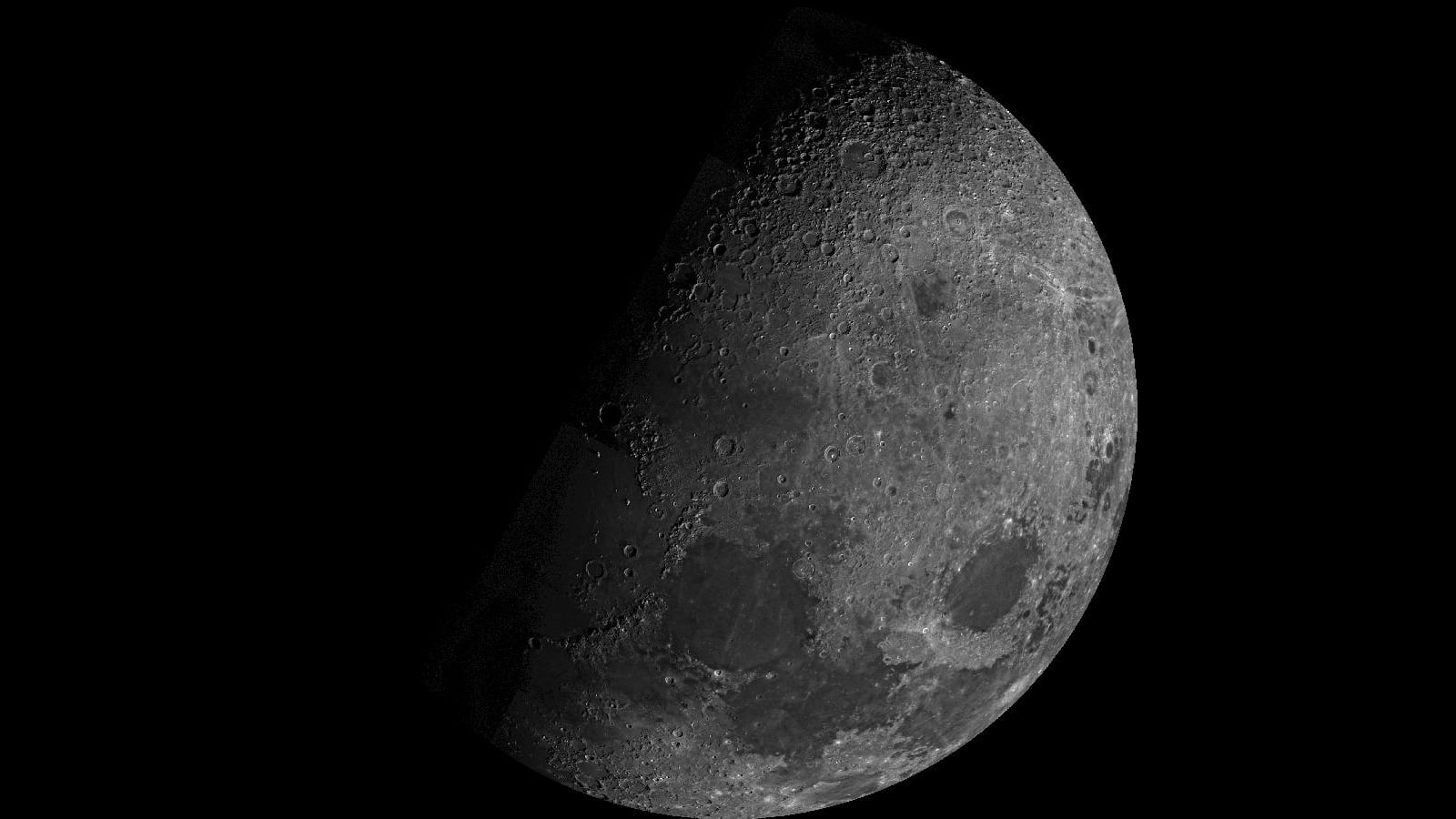
In 1958, the US Air Force asked a small research group in Chicago to examine what a nuclear detonation on or near the Moon might reveal and how it would appear from Earth. The classified effort was known as Project A119 and carried the deliberately neutral title A Study of Lunar Research Flights.
The study belonged to the political shock that followed Sputnik as well as to early lunar science. Project leader Leonard Reiffel later said the Air Force wanted a visible display of American capability. A blast near the lunar terminator could produce a flash and an expanding cloud of debris illuminated by sunlight against darkness.
Among the contributors was Carl E. Sagan, then completing doctoral work at the University of Chicago. He turned 24 in November 1958. His assignment included modelling how dust and gas from an explosion would expand in vacuum and weak lunar gravity, work needed to estimate whether observers on Earth could see the cloud.
A classified project with an unclassified title
Reiffel led the work at the Armour Research Foundation, now part of the Illinois Institute of Technology. The surviving Air Force report preserved by the US Government Publishing Office names him as author and lists Sagan among twelve contributors.
The document is dated 19 June 1959, after the active investigation had ended. Its title page identifies the Air Force Special Weapons Center, the Research Directorate and a contract with the Armour foundation. The report considers nuclear detonations on or near the Moon as possible sources of scientific information.
Its surviving language is technical, not an order to launch a weapon. Project A119 advanced far enough for specialist reports and feasibility calculations, but Reiffel later said it never reached operational planning. No warhead was launched, no final target was adopted for a mission and no nuclear device was detonated on the Moon.
The intended spectacle was not a mushroom cloud
A terrestrial mushroom cloud depends on an atmosphere. The Moon has almost none, so a detonation would not produce the familiar rising column and cap. The visible event would instead involve the initial flash and debris thrown from the surface into vacuum.
Reiffel told The Observer in May 2000 that the concept placed the explosion near the Moon’s edge on the night side. Sunlight beyond the terminator would illuminate the expanding debris, maximising its contrast for observers on Earth.
His description supplied the political context absent from the report’s neutral title. He called the main aim a public-relations exercise and an act of one-upmanship at a time when the United States appeared to be trailing the Soviet Union in space. Sputnik had made that technological imbalance visible to the world.
Sagan was a doctoral student, not the project leader
Sagan’s later fame can distort his position in 1958. A Cornell biographical record gives his birth date as 9 November 1934 and notes that he completed his University of Chicago doctorate in 1960. He was a graduate researcher working under planetary astronomer Gerard Kuiper when A119 was commissioned.
The report lists “C. E. Sagan” as a contributor. Reiffel later said Sagan carried out mathematical modelling of the expansion of dust and gas around the Moon. That calculation connected the physics of a low-gravity, airless body to the Air Force’s interest in whether the resulting cloud could be detected from Earth.
Sagan also prepared work on possible astronomical information from a lunar nuclear detonation and on radioactive contamination of the Moon. Those paper titles eventually helped bring A119 to public attention when biographer Keay Davidson found that Sagan had mentioned the classified work in a 1959 fellowship application.
Participation does not establish that Sagan originated the scheme or chose its political purpose. He was one member of a larger team answering a classified research question. Later summaries sometimes compress his analytical role into authorship of the plan, a stronger claim than the documentary record supports.
The science questions were real, but not neutral
A nuclear explosion could, in principle, expose lunar material and generate signals for instruments on Earth or equipment placed on the Moon. The declassified report explored questions involving seismology, surface composition, radiation and the behaviour of matter in the lunar environment.
Its conclusions were conditional. Useful seismic measurements, for example, would require instruments already operating on the lunar surface. Other proposed observations depended on timing, geometry and the ability to separate a brief artificial event from the Moon’s background environment.
Those possible measurements did not erase the cost. Reiffel said he warned that radioactive contamination would damage a pristine site for later lunar research. Launch failure also remained an obvious hazard whenever a nuclear device was attached to a rocket, even if the intended destination was far from Earth.
SpaceDaily’s earlier account of Project A119 emphasised the Cold War logic. The archival record adds an important restraint: “study” is the right word. Feasibility work is serious, but it is not the same as an authorised launch operation.
The cancellation record has a hole in it
Reiffel said his group produced eight reports between May 1958 and January 1959. The Armour foundation destroyed its copies in 1987, although one principal volume later emerged through declassification. The missing papers limit how confidently the project’s final decision can be reconstructed.
In his short letter to Nature in 2000, Reiffel confirmed the classified work and Sagan’s involvement. In his interview that month, he said he did not know why the plan was dropped. He welcomed the change but did not claim to have received a definitive explanation.
Risks to lunar science, public reaction, launch safety and a changing political environment are all plausible explanations. They should not be turned into one documented official reason without a surviving cancellation order. January 1959 marks the end of the study reports, not a public policy announcement with a stated rationale.
1959 produced a different lunar signal
In September 1959, the Soviet Luna 2 became the first human-made object to reach the Moon. It carried metal pennants rather than a warhead, an episode examined in SpaceDaily’s account of Luna 2.
The contrast is useful. Both projects treated the Moon as a stage for technical prestige, but only one reached it, and the American response ultimately moved towards robotic reconnaissance and then a crewed landing rather than a nuclear flash. Later treaties prohibited nuclear detonations in space and placing nuclear weapons on celestial bodies.
Project A119 is documented history, not an executed mission and not a story with every motive neatly preserved. Its surviving report shows what was studied; Reiffel’s testimony explains how he understood its purpose. The gap between those records is part of the history, including the unanswered question of why the work stopped.