

At 21:02:23 UTC on 13 September 1959, the radio signal from Luna 2 stopped at the receivers of Jodrell Bank in England. The silence was the first independent confirmation that a human-made machine had travelled from Earth to another celestial body. It also completed a second mission, one carried not by the scientific instruments but by two metal spheres packed with Soviet emblems.
Luna 2 was an instrumented probe built to end its life at the Moon. It carried detectors for radiation, magnetic fields, charged particles and micrometeorites, but it also carried 144 small steel plates arranged into explosive spheres. The same impact was meant to produce scientific knowledge and leave a political signature.
That combination is what makes Luna 2 more revealing than a simple first in the space race. The probe was not science disguised as propaganda, or propaganda replacing science. It was both at once, engineered down to the final radio pulse and the last pentagonal plate.

A flight designed to end at the Moon
The Soviet Union had been trying to hit the Moon since 1958. Its first three attempts ended in launch failures, and Luna 1 missed the Moon by about 6,400 kilometres in January 1959 before becoming the first spacecraft to enter orbit around the Sun. Another launch failed in June. The sequence made Luna 2 a test of whether Sergei Korolev’s team could turn raw rocket power into precise interplanetary navigation.
The spacecraft lifted off from Baikonur on 12 September aboard an 8K72 rocket derived from Korolev’s R-7. Luna 2 was almost identical to Luna 1, a sphere weighing nearly 400 kilograms with antennae and instruments projecting from its body. It had no camera and was not attempting a soft landing. Its planned destination was the surface at full speed.
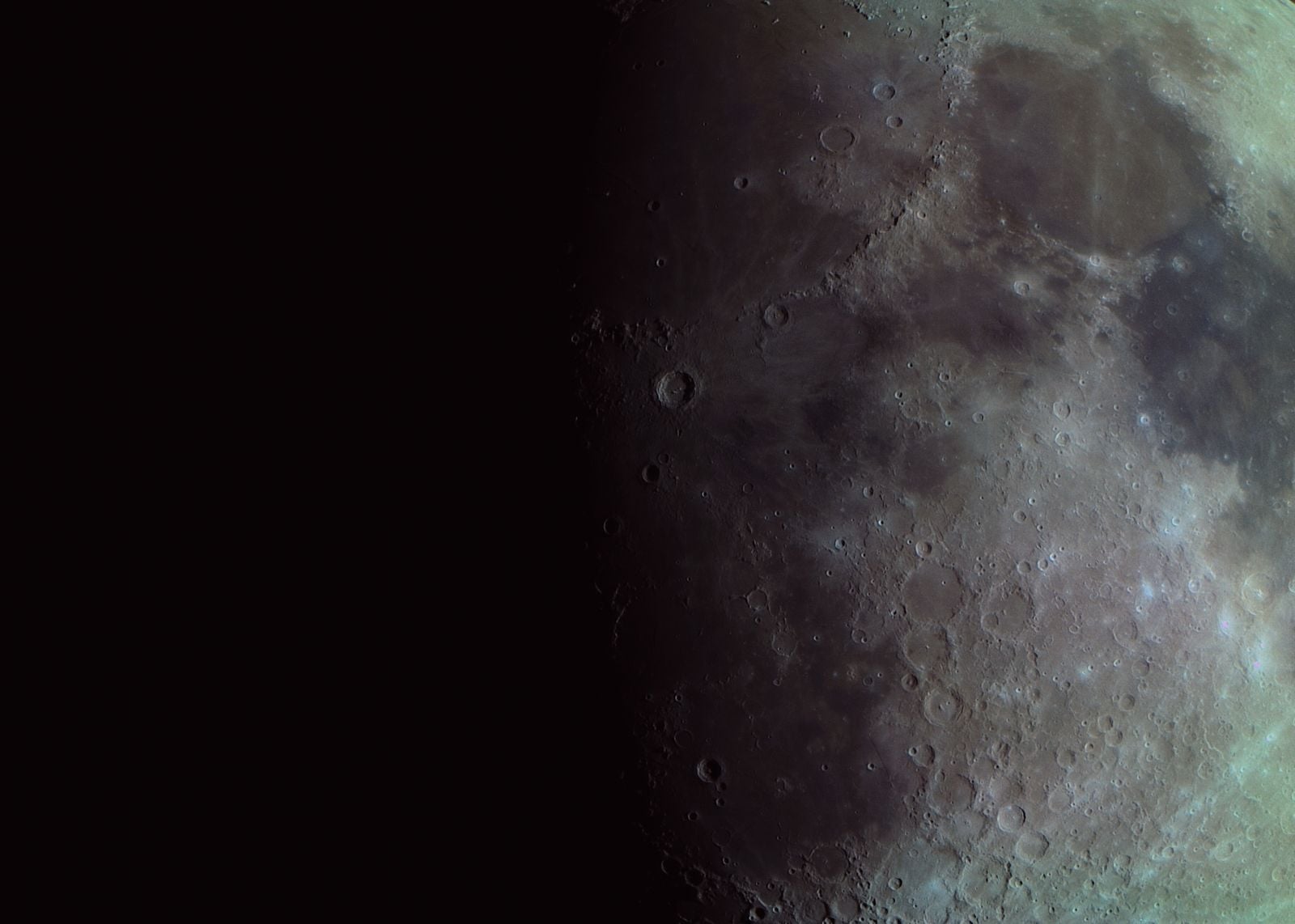
A NASA history of the mission places the impact between Mare Imbrium and Mare Serenitatis, roughly 260 kilometres from the future Apollo 15 landing site. The spacecraft became the first to make contact with another celestial body. It reached the Moon without braking into orbit or attempting a survivable landing.
The flight lasted a little more than 38 hours from launch to the loss of signal. Along the way, the upper stage released a visible sodium cloud that allowed astronomers to track its path from Earth. Unlike later lunar spacecraft, Luna 2 did not brake, enter orbit or hover over a landing site. Its trajectory had only one successful ending.
The Soviet achievement also arrived after four failed American Pioneer attempts and a distant Pioneer 4 flyby. The United States had reached interplanetary space, but it had not yet touched the Moon. In September 1959, that distinction belonged entirely to Korolev’s still-secret programme, whose architect would not be publicly named until after his death.
The science continued until the signal vanished
The probe carried Geiger and scintillation counters, a magnetometer, ion traps and micrometeorite detectors. These instruments sampled the environment beyond Earth’s magnetic protection and continued operating during the approach to the Moon. Luna 2 was therefore a moving laboratory before it became an impactor.
The ion traps were among the mission’s most important instruments. Arranged around the rotating spherical spacecraft, they sampled charged particles along multiple directions during the flight. Combined with the radiation and magnetic measurements, they turned the route to the Moon into a laboratory rather than a passage through assumed emptiness.
At the Moon, the results were defined partly by what the instruments did not find. NASA’s mission account records no detectable lunar magnetic field or radiation belts. Later missions would reveal local magnetic anomalies in the lunar crust, but Luna 2 found no Earth-like global magnetic environment surrounding the Moon.
The science depended on knowing that the spacecraft had actually reached its target. Moscow sent Jodrell Bank the frequencies and pointing information needed to follow Luna 2, giving an observatory outside the Soviet Union the means to check the claim. That decision made independent verification part of the mission design.
The Jodrell Bank tracking archive records that the signal ceased at 21:02:23 UTC on 13 September. A Doppler record showed the transmitter following the expected approach to the Moon before it disappeared. There was no need for anyone to see an impact flash through a telescope. The radio silence carried the proof.
The 144 steel plates inside two explosive spheres
The political payload was divided between two hollow balls. According to the Moscow Museum of Cosmonautics, a sphere 150 millimetres across was installed on the rocket’s third stage, while a smaller 90-millimetre sphere was attached to the spacecraft’s instrument container. They were separate objects travelling toward the same end.
Each sphere was assembled from 72 steel pentagons, giving the mission 144 plates in total. Twelve regular pentagons and 60 irregular ones formed each ball. Their surfaces carried the Soviet coat of arms and inscriptions identifying the Union of Soviet Socialist Republics and the month of September 1959.
Explosive material sat inside each hollow sphere, connected to a fuse intended to fire on impact. The idea was not to detonate the pennants in advance of the collision. It was to throw the plates in every direction at the instant the sphere struck, with the explosion reducing the impact speed of at least some outward-moving pieces.
That was an ingenious hope, not a guarantee of survival. Luna 2 and its rocket stage reached the surface at several kilometres per second, an impact regime in which metal can melt, vaporise and fragment. No mission has recovered one of the plates, and no image has established that an intact pennant lies at the site. The honest answer is that their condition is unknown.
The spheres nevertheless performed their political function even if every flown plate was destroyed. Soviet officials could describe emblems delivered to the Moon, display matching assemblies on Earth and make the mission physically legible to people who would never study a magnetometer trace. A complicated interplanetary experiment became a steel ball that could be held in two hands.
A lunar first carried into the White House
The timing amplified that message. Soviet Premier Nikita Khrushchev began his visit to the United States on 15 September, two days after the impact. During the trip he presented President Dwight D. Eisenhower with a replica of the spherical pennant assembly, an object that NASA says is preserved at the Eisenhower Presidential Library and Museum in Abilene, Kansas.
The gift compressed the mission into a single scene. Eisenhower was not being handed scientific data, even though the probe had returned it. He was being handed a model of the object that symbolised Soviet arrival, with the implication that its counterparts had already crossed the distance between the two worlds.
This was propaganda in the literal sense of material made to spread a state message. Yet its force depended on a genuine technical achievement that foreign receivers could verify. A fabricated impact would have collapsed under Jodrell Bank’s measurements; a real impact without a visible symbol would have been harder to stage as political theatre.
Luna 2 established a pattern that continued through the Soviet lunar programme. Robotic spacecraft could perform science while also collecting prestige, whether by returning images, landing intact or bringing soil home. A decade later, Luna 15 was still attempting a robotic sample return while Apollo 11’s astronauts were preparing to leave the surface.
The pennants also made an abstract competition tangible. Rocket thrust, tracking accuracy and particle measurements were difficult to photograph. A metal sphere covered in emblems needed no technical translation. It said that Soviet engineering had reached the Moon first.
Science and symbolism in the same impact layer
In 2023, Justin Holcomb, Rolfe Mandel and Karl Wegmann proposed using Luna 2’s impact as the beginning of a lunar Anthropocene. Their paper in Nature Geoscience treats the mission as the opening point in a growing archaeological record of human activity on the Moon. The term is a proposal, not a formally adopted geological epoch.
The framing fits Luna 2 because the mission left more than wreckage. It introduced manufactured material, an impact disturbance and an intended cultural message into the lunar record at the same moment. The regolith had always been altered by natural impacts and surface processes, but after September 1959 it also contained the consequences of human decisions made on Earth.
The precise remains are harder to describe than the history. The reported impact region lies near Aristillus, Archimedes and Autolycus, with the first of those names confirmed in the USGS planetary nomenclature database. The exact crater has not been tied to a recovered spacecraft or a clearly resolved field of pennants.
That uncertainty gives the site scientific value of its own. A future close inspection could test how an early spacecraft’s metals changed after decades of radiation, micrometeorite impacts and severe temperature cycling. NASA has made similar preservation arguments for American lunar artifacts, including impact sites, in its technical recommendations for lunar heritage locations.
Legal ownership of a launched object is not the same as ownership of the ground beneath it. The Outer Space Treaty rejects national appropriation of the Moon while preserving jurisdiction and control over registered space objects. Any future visit to Luna 2 would therefore encounter both a scientific site and the residue of a Cold War state project.
For now, the evidence that can still be heard most clearly remains on Earth: the tracking record ending at 21:02:23 UTC, the instrument results transmitted before it and the replica sphere carried into Eisenhower’s hands. Somewhere near the boundary of two lunar seas, whatever survived has spent more than six decades passing from hard sunlight into black night, the science completed and the political message still attached to the moment of arrival.