
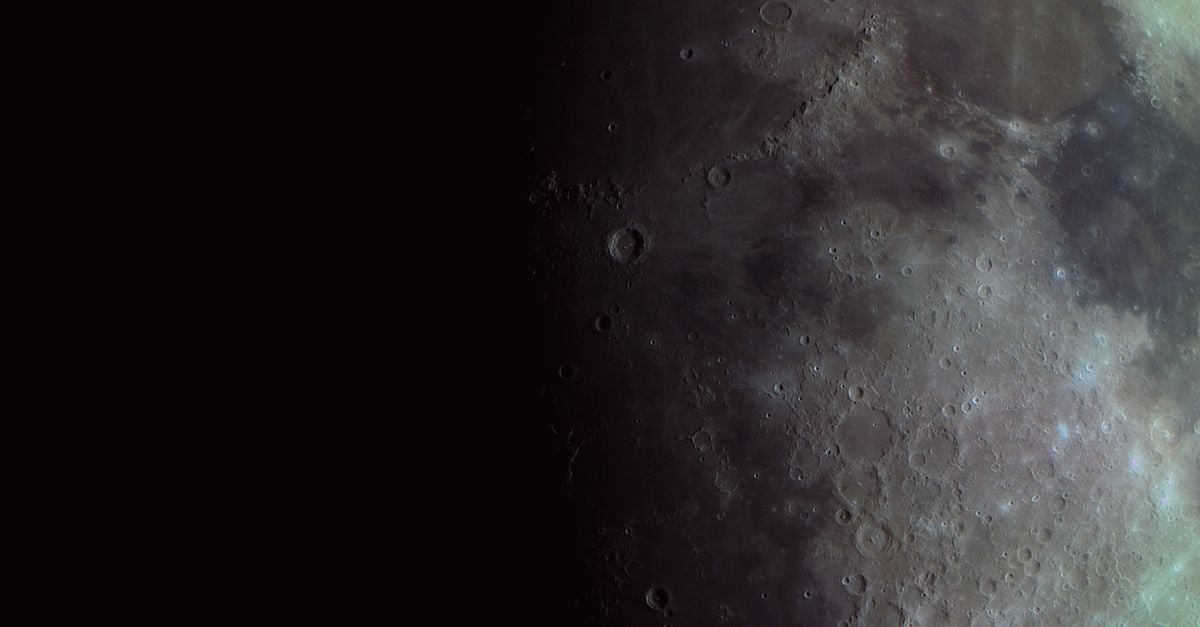
The most famous week in spaceflight had a second contestant that almost no one was watching. In July 1969, while Neil Armstrong and Buzz Aldrin were on the surface of the Moon and preparing to leave it, a Soviet robotic craft called Luna 15 was circling overhead, working towards a landing of its own in a different lunar sea. Its job was to scoop up soil and rush it back to Earth, and if it could, to return the first Moon samples before the Americans got home. It never got the chance. After 52 orbits it crashed.
The surface of the Moon is where the race is remembered as ending. In truth it carried on for another day and a half, in orbit, above the astronauts’ heads.
A quieter way to win
Luna 15 was an uncrewed sample-return craft, designed to land, drill or scoop a small amount of lunar soil, and launch it back to Earth automatically, with no people involved at any stage. It was the Soviet Union’s attempt to salvage a first from a race it had clearly lost for the crewed landing.
The timing was deliberate. Luna 15 launched on 13 July 1969, three days ahead of Apollo 11. Because a small robotic craft could in principle grab its sample and turn for home quickly, there was a narrow chance it could deliver the first lunar soil to Earth around the same time as Apollo 11, or even before the astronauts splashed down. A machine could not match two men walking on the Moon, but returning the first sample would have been something for the Soviet programme to point to.
Two nations at the Moon at once
For several days in July 1969 the United States and the Soviet Union had spacecraft at the Moon at the same time. Luna 15 reached lunar orbit and settled into a long series of passes, eventually completing 86 communications sessions and 52 orbits at a range of altitudes and inclinations as controllers studied the ground below and looked for a safe place to come down.
Its presence caused genuine unease in the United States, where there was concern that the Soviet craft’s orbit might interfere with Apollo 11. In an unusual step for the era, the Soviet side passed Luna 15’s orbital details to NASA, through the astronaut Frank Borman, to give assurance that the two missions would not cross paths. So the machines shared the sky over the Moon while the crews below got on with their own work.
The descent and the crash
Apollo 11 had landed on 20 July, and Armstrong and Aldrin had already made their walk and were preparing for the climb back to orbit. It was in those hours, on 21 July, that Luna 15 finally moved to land.
At 15:47 Universal Time the craft fired its main retrorocket to drop out of orbit toward Mare Crisium, the Sea of Crises, well to the north-east of the Apollo landing site. Four minutes later its transmissions stopped, at a calculated altitude of about three kilometres. The craft had almost certainly flown into the side of a mountain. It struck the surface at roughly 15:50 Universal Time, its impact point some 550 kilometres from where the two Americans sat in their lander. Luna 15 hit the Moon a couple of hours before Armstrong and Aldrin lifted off to begin their flight home.
What was lost, and what came after
It is easy to overstate what a working Luna 15 would have meant. Even a flawless mission, returning a capsule of lunar dust to Earth, would not have rivalled the sight of a person stepping onto another world. But it was a real attempt at a real first, running in parallel with Apollo the whole way, and it failed at the last step of all, the landing.
The idea itself was sound, and the Soviets proved it the following year. In September 1970, Luna 16 did what Luna 15 could not, landing on the Moon, collecting a small core of soil and returning it safely to Earth. It was the first fully robotic lunar sample return, and it showed that the approach Luna 15 had been reaching for was workable after all.
Luna 15 is remembered now, when it is remembered at all, as a crashed footnote to Apollo 11. It is a more interesting thing than that. It is the evidence that the race to the Moon did not stop when the Eagle landed, but kept going quietly in orbit for another day, until a small machine ran out of altitude over the Sea of Crises.
