

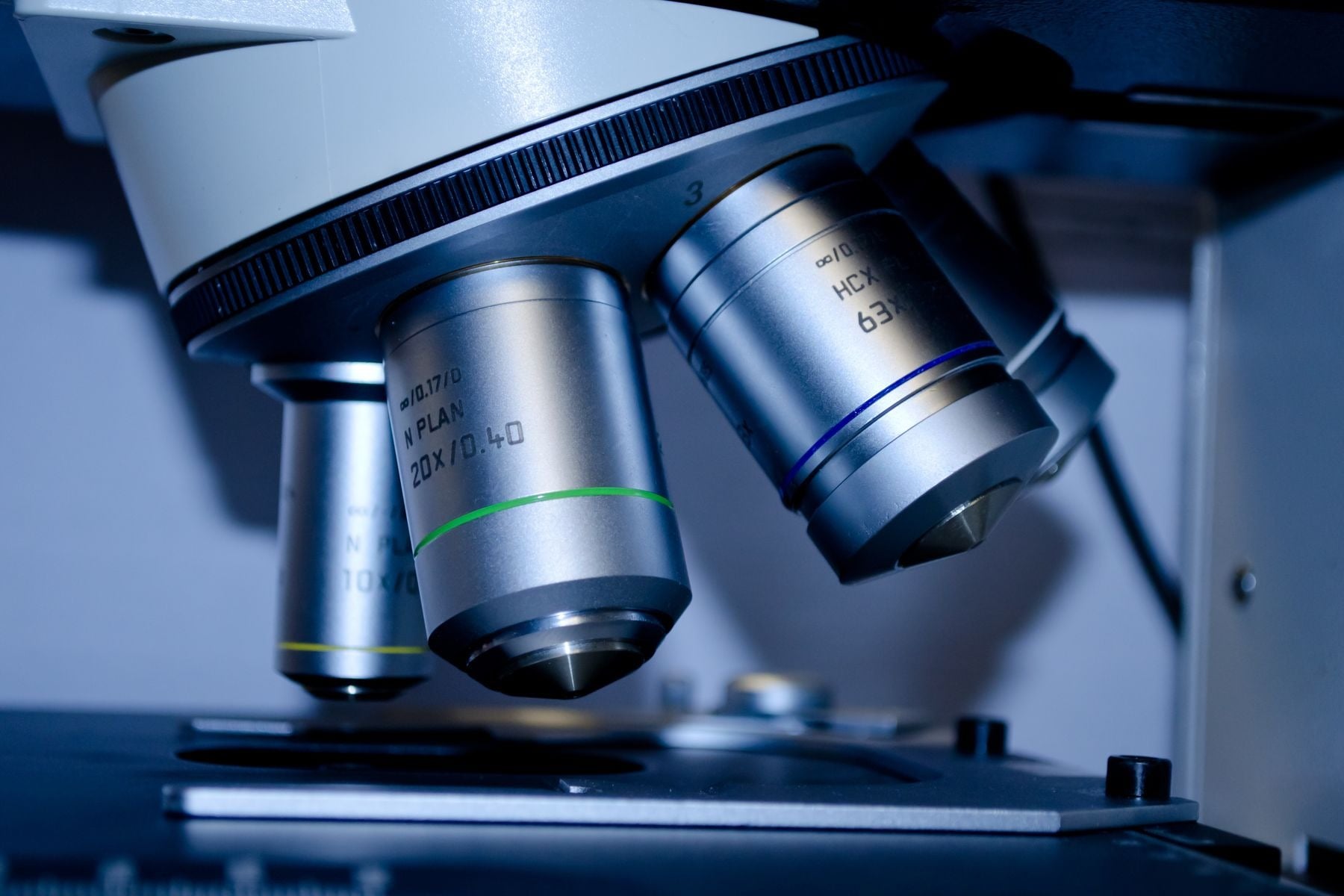
Werner Heisenberg’s doctoral oral examination has acquired the neat shape of a parable. A young theorist cannot explain how a microscope resolves fine detail. Four years later, the same man places an imaginary microscope at the centre of the argument most closely associated with his name.
The underlying event is not folklore. On 23 July 1923, at the University of Munich, Heisenberg answered Arnold Sommerfeld’s theoretical questions and the mathematics questions capably. He then stumbled in astronomy and failed badly on experimental physics. Wilhelm Wien, the experimentalist on the committee, wanted him failed. Sommerfeld, who considered Heisenberg an exceptional theorist, would not accept that verdict.
The compromise was a doctorate graded cum laude. In this examination it was the lowest of three passing grades, respectable only if one forgets how highly Heisenberg had been rated in theory. He passed, but the result felt to him like a public measure of everything he did not know.
The questions Heisenberg could not answer
The most detailed published account comes from physicist and historian David Cassidy. In his history of the oral examination for the American Physical Society, Cassidy reconstructs an afternoon that went from uncomfortable to nearly disastrous.
Heisenberg had been required to take Wien’s four-hour laboratory course in experimental physics. During it, he used a Fabry-Perot interferometer, an optical instrument in which partially reflecting surfaces produce an interference pattern that can separate very closely spaced wavelengths. Wien had lectured on it extensively. Yet when asked in the oral, Heisenberg could not derive the instrument’s resolving power.
Wien tried more familiar optical devices. Heisenberg could not derive the resolving power of a telescope or a microscope either. Wien then asked how a storage battery worked. Heisenberg was lost again.
These were not questions drawn at random from an examiner’s cabinet of curiosities. Wien believed that anyone receiving a doctorate in physics, including one of Sommerfeld’s precocious theorists, needed a working command of experiment. Heisenberg’s poor laboratory work had already irritated him. The oral confirmed, in Wien’s view, a gap too large to excuse.
Resolving power is more than magnification
The microscope question matters because it concerns a genuine limit on seeing. Magnification makes an image appear larger. Resolution determines whether two neighbouring points remain distinguishable rather than merging into one blur.
Even an ideal lens cannot reproduce arbitrarily small detail. Light is a wave, and light passing through a finite aperture diffracts. The resulting pattern has width. Two objects placed close enough together produce patterns that overlap so strongly that the instrument can no longer separate them reliably.
In simplified terms, shorter-wavelength light permits finer spatial resolution, while a lens that gathers light across a larger angle also improves it. The exact formula depends on how resolution is defined and on the optical arrangement. The central tradeoff does not: the scale of the detail an instrument can distinguish is tied to the wavelength used and the geometry of the aperture.
That is why merely increasing magnification is not enough. Enlarging a diffraction-limited blur gives a larger blur. Wien expected Heisenberg to derive the relevant relationship and connect the laboratory instrument to the wave optics behind it.
The battery question probed a different kind of practical literacy. A rechargeable storage battery converts chemical energy into electrical energy and, when charged, uses an external current to drive the chemistry back toward its earlier state. Heisenberg’s inability to explain even the principle reinforced Wien’s impression that the candidate had treated experimental physics as something peripheral.
A difficult thesis and a divided committee
Heisenberg was not defending a thesis about quantum mechanics. Sommerfeld had steered him toward a traditional problem in hydrodynamics: the transition from smooth, laminar flow to turbulence. The subject grew partly from an engineering problem involving a channel on Munich’s River Isar.
He submitted a 59-page dissertation, On the Stability and Turbulence of Liquid Currents, on 10 July 1923. The calculation was approximate, but the problem was so difficult that Sommerfeld later wrote that he would not have assigned it to any of his other students. Objections raised after the thesis was accepted left its result in doubt for years, before later work vindicated its main conclusion.
The oral committee contained Sommerfeld and Wien, plus examiners for Heisenberg’s minor subjects of mathematics and astronomy. The two physicists had to agree on one grade in physics. Cassidy writes that Sommerfeld favoured the highest mark and Wien the lowest. Their average became the lowest passing physics grade, and the same grade, cum laude, became the overall doctoral result.
The label can sound grand in English, but in that grading scheme it meant that Heisenberg had passed by the narrowest category above failure. The Werner Heisenberg Society’s biographical account likewise records that Wien wanted to fail him for weak experimental knowledge and that he received neither magna nor summa cum laude.
Heisenberg was mortified. He left a small celebration at Sommerfeld’s house early, packed his belongings and caught the midnight train to Göttingen. The next morning he asked Max Born whether the offer to become Born’s assistant still stood. It did.
Two years later, a mechanics without electron paths
The examination exposed a real weakness, but it was a poor forecast of what Heisenberg could do in his strongest domain. In 1925, while struggling with the failures of the old quantum theory, he developed the work that became matrix mechanics.
The old picture treated electrons as if they followed definite paths around an atomic nucleus, even though those orbits could not be directly observed. Heisenberg tried to build a theory from quantities connected to observations, particularly the frequencies and intensities of light emitted or absorbed by atoms. His mathematical arrays were recognised by Born as matrices.
As the American Physical Society’s account of the 1925 work explains, the new mechanics was deliberately abstract. It discarded an intuitively satisfying picture when that picture no longer matched what atomic spectra demanded.
Matrix multiplication also carries a property with profound physical consequences: order can matter. Multiplying one matrix by another does not always give the same result when the order is reversed. In quantum mechanics, position and momentum are represented by operators with precisely this noncommuting relationship.
This history still shadows modern particle physics. SpaceDaily recently covered an uncommon B-meson transformation at CERN that continues to sit slightly away from the Standard Model prediction. The context is different, but the method is recognisably descended from the same turn Heisenberg helped make: nature at small scales is read through observables, probabilities and mathematical relations, not through miniature versions of everyday motion.
The microscope returned in 1927
In February 1927, Heisenberg wrote a long letter to Wolfgang Pauli outlining what became the uncertainty principle. He submitted the formal paper, On the Perceptual Content of Quantum-Theoretical Kinematics and Mechanics, on 23 March.
To give physical content to the mathematics, he imagined trying to determine an electron’s position with a gamma-ray microscope. Ordinary visible light has a wavelength far too long to locate an electron on the relevant scale. Gamma radiation, with its much shorter wavelength, would in principle provide far finer resolution.
But the illuminating gamma-ray photon also carries momentum. To produce an image, it must scatter from the electron and enter the microscope. The lens accepts photons over a range of possible angles, so the photon’s momentum transfer to the electron cannot be specified exactly. Tightening the positional resolution by using shorter wavelengths brings a larger uncertainty in the electron’s momentum.
The American Institute of Physics reconstruction of the thought experiment follows this reciprocal relationship through the microscope’s aperture. In Heisenberg’s order-of-magnitude treatment, the uncertainty in position multiplied by the uncertainty in momentum is of the order of Planck’s constant.
Niels Bohr found a flaw in Heisenberg’s optical analysis and insisted on a correction. Heisenberg added a note to the paper, but the disagreement mattered beyond the repair of one diagram. It helped sharpen the distinction between a familiar mechanical story about a photon striking an electron and the less picturable structure of quantum theory.
What the uncertainty principle actually says
The gamma-ray microscope is memorable because it turns an abstract relation into a scene: light enters, a photon scatters, an electron recoils. It is also easy to take the scene too literally.
The uncertainty principle is not simply a warning that measuring instruments are clumsy. Nor does it say that an electron has an exact position and exact momentum that a careless observer happens to disturb. In modern quantum mechanics, a state narrowly localised in position necessarily has a broader distribution of momentum, and the reverse is also true. The limitation belongs to the structure of the state, not merely to the quality of the apparatus.
Heisenberg’s microscope was an illustration and a route to intuition, not the final mathematical foundation of the principle. The rigorous position-momentum inequality was formulated soon afterwards in a more precise form. The instrument remains pedagogically valuable, but the AIP history cautions that no picture made from everyday collisions fully captures the quantum interaction.
That mathematical inheritance reaches well beyond microscopes. In another recent SpaceDaily article, observations of a highly magnetised neutron star supplied unusually strong evidence for vacuum birefringence, an effect Heisenberg and Hans Euler predicted in 1936. The story is a useful reminder that the abstract quantum framework Heisenberg helped construct did not remain an argument among theorists. Its consequences can be tested in light arriving from extreme objects across the Galaxy.
The historical irony needs no embellishment
It is tempting to turn the oral examination into a story of poetic justice: the student fails a microscope question, remembers the humiliation and later conquers the subject. The documents do not establish that chain of motivation. We cannot say that Wien’s questioning caused Heisenberg to choose the microscope in 1927.
There is also no need to make Wien a narrow-minded obstacle or Sommerfeld an enlightened defender of theory against experiment. Wien’s concern was legitimate. A physicist should understand how measurements are made, particularly after completing a laboratory course built around the instrument under discussion. Heisenberg’s later microscope analysis was itself imperfect enough for Bohr to challenge it.
Sommerfeld’s judgment was legitimate too. He recognised that the candidate’s weakness was severe but not comprehensive. An examiner can identify a missing competence without possessing a complete measure of the person in front of him.
That is what makes the episode endure. The oral was not wrong because Heisenberg later became famous, and his later work did not retroactively answer the questions he missed. The examination found something true: he was an unusually poor experimentalist. It nearly missed something equally true: his theoretical imagination was already operating at a level that would soon change physics.
Four years separated the failed microscope answer from the gamma-ray microscope. The distance between them was not a transformation from ignorance into universal mastery. It was the narrower, stranger path by which a sharply uneven mind found the kind of problem it was built to solve.