
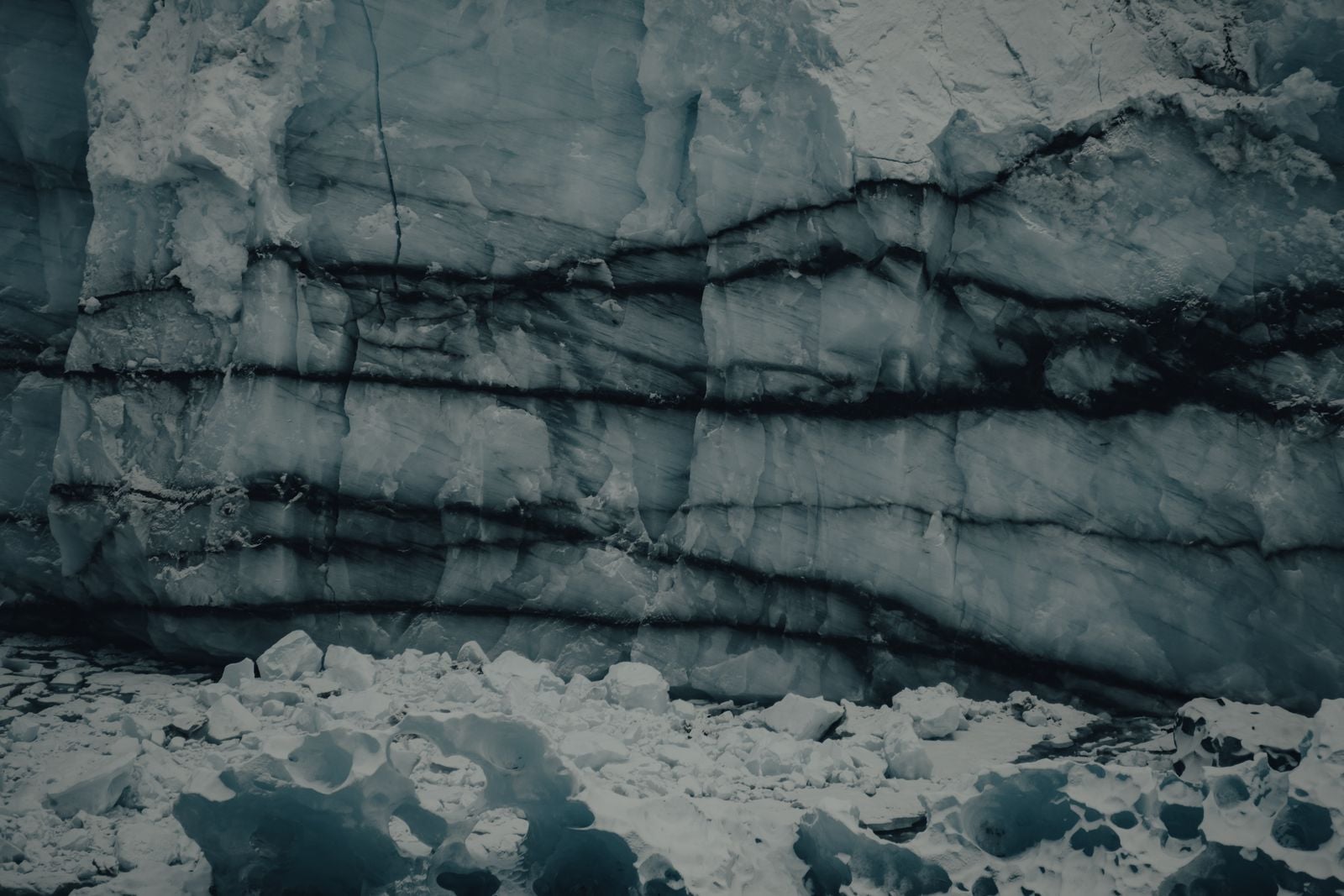
Taylor Glacier moves so slowly that its annual progress can be measured in a few metres, yet during a brine release at Blood Falls in 2018, one point on its surface dropped about 15 millimetres and the ice slowed by nearly 10 percent. A camera saw the red stain spread, temperature sensors recorded cold water entering the lake below, and GPS captured the glacier settling as pressure drained from underneath.
The three records were not collected as part of one carefully designed experiment. They happened to overlap during the same month, creating what researchers described in a 2026 paper in Antarctic Science as a rare, coherent signal of brine draining from beneath the glacier.
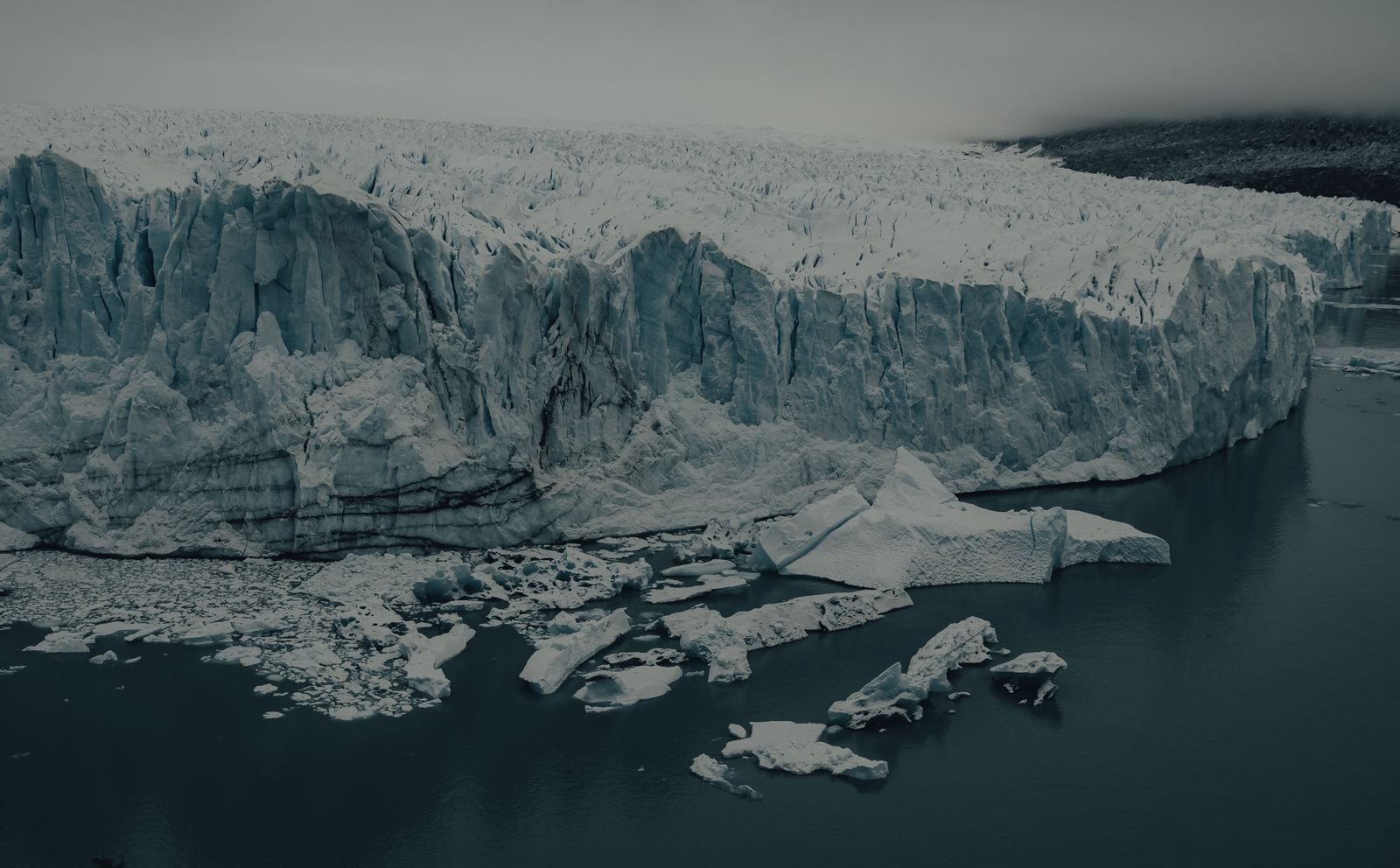
Three instruments caught the same event
The first instrument was a GPS station called TYLG, installed on the surface of Taylor Glacier in 2017. It recorded the station’s position at 15-second intervals, allowing researchers to reconstruct small changes in both the glacier’s elevation and its horizontal speed.
The second was a time-lapse camera aimed at Blood Falls from a tripod near the glacier’s terminus. It took one photograph each day, shortly after midday local time, building a visual record of when fresh brine appeared and how the red stain changed across the ice.
The third instrument was a string of 10 thermistors suspended in the West Lobe of Lake Bonney, approximately 150 metres from the centre of the glacier front. The sensors measured the water once every minute at different depths, with an accuracy of about two-thousandths of a degree Celsius.
None of the instruments could have explained the event alone. Together, the GPS, camera and lake-temperature record connected movement on top of the glacier with red discharge at its edge and a pulse of unusually cold water beneath the lake’s permanent ice cover.
The glacier dropped as the red stain spread
The sequence began on 10 September 2018, when the time-lapse camera recorded the start of a new Blood Falls discharge. Fresh material became visible each day from 19 September through the end of the month, followed by intermittent releases that continued into the middle of October.
During almost the same period, the GPS station recorded a downward displacement of approximately 15 millimetres. The change occurred between 10 September and 22 October, interrupting a longer pattern in which the glacier’s surface had been gradually rising.
The glacier also slowed. Its measured velocity fell from about 5 metres per year to 4.6 metres per year, a decrease of nearly 10 percent that stood out against the relatively stable motion recorded before and after the event.
Fifteen millimetres is less than the width of a finger, but glaciers are massive bodies whose movements are normally smooth when measured over short periods. Detecting that small drop at the same time as the red outflow gave researchers a way to see the mechanical effect of fluid leaving the hidden system below.
A pressurised plumbing system runs through the ice
Blood Falls sits at the snout of Taylor Glacier in the McMurdo Dry Valleys, one of the coldest and driest landscapes on Earth. Antarctica is classified as a desert, yet beneath parts of Taylor Valley, liquid brines persist below ice and frozen ground.
The water is not neatly contained in one large underground lake. An airborne electromagnetic survey published in 2015 detected extensive zones of conductive liquid beneath Taylor Valley, while radio measurements later mapped a concentrated brine pathway inside Taylor Glacier.
That 2017 radio-echo study found evidence of pressurised brine being injected into networks of basal crevasses and routed towards Blood Falls. The salt lowers the freezing point, while heat released as some water freezes helps the remaining brine stay liquid inside ice that is far below zero.
The weight of the glacier presses down on this fluid system. When pressure builds sufficiently, existing cracks can open or widen, allowing brine to move towards the glacier front, through the ice and into Lake Bonney.
The cold brine left a signal inside Lake Bonney
Late in September and again in October, thermistors in Lake Bonney recorded water as much as 1.5 degrees Celsius colder than the seasonal median at a depth of approximately 17.9 metres. The largest anomalies occurred on 23 September and 16 October, during the same broad period in which the camera documented fresh discharge.
The cold water did not simply remain at the lake’s surface. Because the brine was extremely salty and dense, it descended until it reached water of approximately equal density, then spread horizontally through that layer.
Earlier year-round measurements of Lake Bonney had already shown that subglacial brine can enter along the Taylor Glacier front, not only through the visible opening at Blood Falls. Temperature works as a tracer because the lake is strongly layered by salinity, allowing cold intrusions to be followed even when the brine cannot be seen directly.
The 2018 observations linked those lake signals to a visible surface release and a change in the glacier itself. As brine escaped, the researchers concluded, pressure beneath the ice decreased, the glacier surface lowered and its forward movement slowed.
The red color is only the visible end of the process
The liquid emerging from Taylor Glacier contains dissolved ferrous iron produced within an oxygen-poor environment. When the brine reaches the surface and meets the atmosphere, the iron oxidises and the pale discharge develops the dark red and orange colors that gave Blood Falls its name.
The stain is often described as ordinary iron oxide or rust, but the material is more complicated. A multi-technique analysis published in 2022 found abundant amorphous, iron-rich nanospheres rather than strong evidence for clearly crystalline iron-oxide minerals.
The brine also carries evidence of a microbial ecosystem adapted to darkness, cold and a limited supply of organic carbon. A 2009 study in Science found that microorganisms beneath Taylor Glacier cycle sulfur and iron, maintaining an anoxic brine without relying on contemporary photosynthesis.
Conditions like these make the Dry Valleys useful analogues for environments beyond Earth. Scientists have tested organisms from the region under simulated Martian conditions, including Antarctic fungi exposed outside the International Space Station, because the valleys combine extreme cold, dryness, salt and long periods without direct biological input from the surface.
One event does not reveal the whole cycle
The 2018 record has an important limitation. It came from one GPS station, one camera and one thermistor string, meaning the instruments captured conditions at only a few locations across a much larger glacier and lake system.
The data nevertheless show that Blood Falls is not merely a red stain appearing at the end of a passive block of ice. Its releases can coincide with measurable changes in glacier height, glacier velocity and the temperature structure of the lake receiving the brine.
Researchers still do not know how frequently events of this size occur, how much fluid moves during each pulse or how pressure is rebuilt beneath the glacier. The GPS archive and the Lake Bonney thermistor dataset provide longer records, but more sensors spread across the glacier would be needed to map the movement in detail.
The same measurement problem exists on icy worlds far beyond Antarctica. At Saturn’s moon Enceladus, a hidden ocean sends material through cracks in an ice shell, allowing spacecraft to sample an underground sea without landing, but every plume is only a partial view of the system below.
The next pulse may begin beneath an unchanged surface
The researchers behind the 2026 study argue that denser, high-frequency monitoring could reveal whether Blood Falls events are changing in frequency or magnitude over longer periods. Repeated observations could also show how brine releases alter nutrient transport and the layered water of Lake Bonney.
Until then, most of the system remains hidden. Pressure can accumulate beneath Taylor Glacier while its white surface appears still, and brine can move through cracks that no camera can see.
Then the instruments begin to register the change. A GPS point sinks by millimetres, the glacier loses a fraction of its speed and cold water appears almost 18 metres down in a lake sealed beneath ice.
At the glacier’s edge, the final signal is the only one visible to the eye. A dark liquid reaches the air, iron begins to oxidise, and another red stain slowly spreads across the white face of Taylor Glacier.
