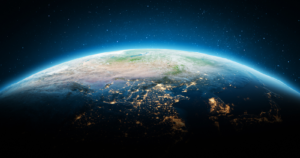
Science The Pacific Ocean is so large that all the world’s land could fit inside it, and there would still be room left over, which is why calling Earth a “blue planet” is almost an understatement By Space Daily Editorial Team · Jun 3, 2026
Mind & Meaning The first fax machine was invented in 1843 — more than thirty years before the telephone — which means that for a 22-year window in the mid-1800s, a Japanese samurai could have theoretically sent a fax to Abraham Lincoln, since the samurai class was not formally abolished until 1867 and Lincoln died in 1865 By Space Daily Editorial Team · Jun 3, 2026
Mind & Meaning In 1938, Harvard researchers began following a group of young men to learn what makes a good life. Almost nine decades on, the strongest finding in their data is not wealth or achievement, but something quieter. By Space Daily Editorial Team · Jun 3, 2026
Mind & Meaning Almost all the gold on Earth — every wedding ring, every coin, every gram in every bank vault — was forged in the collision of dead stars billions of years ago, in events so violent that a single one can produce hundreds of Earth-masses of gold, and the heavy elements were then scattered across the galaxy before our sun was even born By Space Daily Editorial Team · Jun 3, 2026
Science Earth has gone through five mass extinction events in its history, each wiping out the majority of life on the planet — and many biologists argue we are currently in the early stages of the sixth, caused not by an asteroid or a volcanic eruption but by a single species changing the planet's atmosphere, oceans, and ecosystems faster than other species can adapt By Space Daily Editorial Team · Jun 3, 2026
Materials Just six grams of gold coat an Olympic "gold" medal, which is otherwise mostly silver — the last solid-gold medals were handed out at the 1912 Stockholm Games By Space Daily Editorial Team · Jun 3, 2026
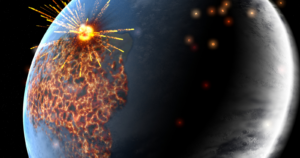
Science The asteroid that ended the dinosaurs did not just leave a crater, it turned the sky into a weapon, and the worst damage may have come after the impact itself was already over By Space Daily Editorial Team · Jun 3, 2026
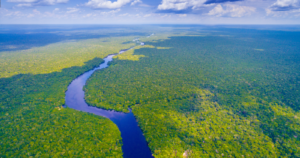
Science The Amazon’s ancient drainage system once ran the other way, carrying water and sediment westward across South America before the rise of the Andes, shifting land levels, and massive sediment buildup helped turn it into the east-flowing river we know today. By Space Daily Editorial Team · Jun 3, 2026
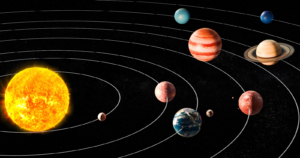
Constellations Almost everyone assumes Venus is our nearest neighbour, but averaged across its orbit the planet closest to Earth is actually Mercury By Space Daily Editorial Team · Jun 3, 2026
Constellations Much of what we know about the scale of the universe rests on a method worked out by a woman employed as a human computer at Harvard for a few cents an hour By Space Daily Editorial Team · Jun 3, 2026
Psychology The conversation women aren't having with their doctors about menopause and memory loss isn't just overdue — it may be one of the most important health decisions of their fifties By Space Daily Editorial Team · Jun 3, 2026
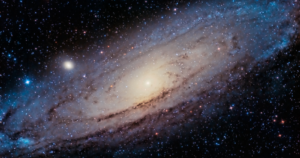
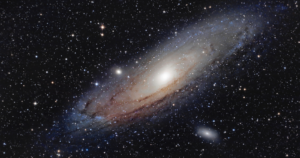
Science The light from the Andromeda Galaxy — the most distant object visible to the naked human eye — left its source about 2.5 million years ago, which means when you look at it on a clear night, you are seeing light that began its journey to Earth around the time the first members of our genus, Homo, were learning to use stone tools By Space Daily Editorial Team · Jun 3, 2026
Psychology Laughter activates many of the same brain reward circuits as food and sex, and a 2025 study finds it measurably lowers cortisol and may restructure how the developing brain builds resilience to stress By Space Daily Editorial Team · Jun 3, 2026
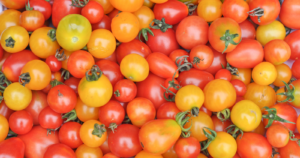
Mind & Meaning Tomatoes were considered poisonous in much of Europe for nearly two centuries after they were introduced from the Americas — not because of anything dangerous in the fruit itself, but because the plant belongs to the same botanical family as deadly nightshade, with leaves and stems that really do contain toxic alkaloids, and the misunderstanding kept the fruit out of European cuisine until the late 1700s By Space Daily Editorial Team · Jun 3, 2026
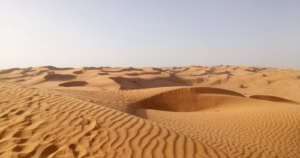
Mind & Meaning Saudi Arabia imports sand — despite being a country dominated by desert, the sand of the Arabian Peninsula is too smooth and round for use in construction concrete, because thousands of years of wind erosion have polished the grains to a shape that does not bond well with cement, and most construction sand must be imported from countries like Australia By Space Daily Editorial Team · Jun 2, 2026

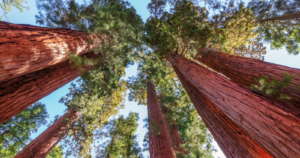
Mind & Meaning Sequoia and redwood trees alive today were already mature when the Roman Empire was at its peak — the oldest living giant sequoias are over 3,000 years old, which means they were standing in California before the Parthenon was built in Athens, before Julius Caesar was born, and before the Roman Empire even existed By Space Daily Editorial Team · Jun 2, 2026