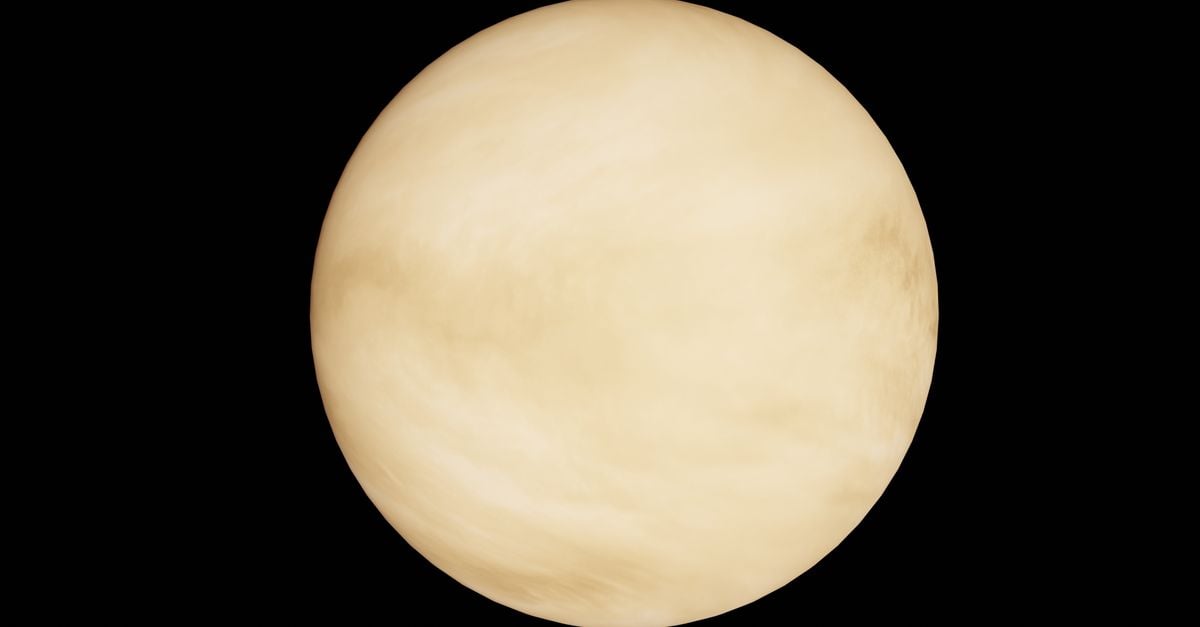
Venus is the planet most like Earth in the ways that are easy to measure, and the least like it in every way that matters. It is almost exactly our size, has almost exactly our mass, and formed right beside us out of the same material. Then it went somewhere we did not, and the result is the most hostile surface in the solar system.
How a near-twin of Earth ended up melting lead is one of the more sobering stories in planetary science, and one we are about to study far more closely.
I am a writer with a long interest in this beat, not a planetary scientist, so treat this as a careful reading of the material rather than expert testimony.
The hell beneath the clouds
The numbers are hard to take in. The surface of Venus sits at around 465 degrees Celsius, hotter than Mercury even though Venus is nearly twice as far from the Sun. The atmospheric pressure at the surface is about 92 times Earth’s, the sort of crushing weight you would feel almost a kilometre deep in our oceans. The air is nearly all carbon dioxide, wrapped in clouds not of water but of sulphuric acid.
Nothing we have sent there has lasted long. The Soviet Venera landers of the 1970s and 80s, the only craft ever to touch the surface and return data, survived barely two hours before the heat and pressure killed them. Venus does not merely resist visitors. It destroys them quickly.
The cause of the heat is a runaway greenhouse. The thick carbon dioxide blanket traps the Sun’s warmth so effectively that almost none escapes, and the temperature has climbed far beyond what distance from the Sun alone would produce.
It may once have looked like home
The unsettling part is that Venus was probably not born this way. The leading view is that early Venus may have had liquid water, perhaps shallow oceans, and a mild climate not unlike the young Earth’s. Some rock evidence hints at conditions that would have needed water to form.
Then, as the best current models tell it, the growing heat of the brightening Sun tipped the balance. Oceans began to evaporate, and water vapour is itself a strong greenhouse gas, so the warming fed on itself, driving more evaporation and more warming until the water was gone and the carbon dioxide was left to bake the planet unopposed. Earth’s twin did not just fail to become habitable. It may have started habitable and lost it.
There is a neat contrast with the other planet next door. I have written about how Mars lost its water for the opposite reason, too little atmosphere rather than too much. Between them, our two nearest neighbours show the two ways an Earth-like world can go wrong.
The strange business of the clouds
There is one place on Venus that is not hellish. Around 50 kilometres up, in the cloud layer, the pressure and temperature fall to roughly what you would find at a comfortable altitude on Earth. It is, oddly, the most Earth-like patch of real estate off our own planet.
That is why a 2020 announcement caused such a stir. A team reported detecting phosphine, a gas that on Earth is often linked to life, in those clouds, and some read it as a possible sign of airborne microbes. It is worth being careful here, because the claim did not hold up cleanly. Later analyses questioned whether the phosphine was really there at all, and even if it is, there are non-biological ways to make it. This is a contested, unconfirmed result, not a discovery of life, and it should be held as such.
A world that spins backwards
Venus is strange in gentler ways too. It turns on its axis so slowly that a single Venusian day, from one sunrise to the next, lasts longer than its entire year around the Sun. And it spins the wrong way, so that on Venus, if you could see the Sun through the clouds at all, it would rise in the west and set in the east.
None of that has any bearing on the heat, but it is a reminder of how thoroughly Venus went its own way.
Why we are going back
After decades of relative neglect, Venus is drawing missions again. NASA’s DAVINCI will drop a probe through the atmosphere in the early 2030s, sampling the air all the way down, while its VERITAS orbiter is designed to map the hidden surface by radar. Europe’s EnVision is planned to join them.
The central question they are chasing is the one this whole story turns on: was Venus once wet and habitable, and if so, what exactly pushed it over the edge? That is not idle curiosity. Understanding how a planet so like Earth became so lethal is part of understanding how narrow the conditions for a liveable world really are, here and around other stars. The most useful thing Venus may ever teach us is how easily an Earth can stop being one.