

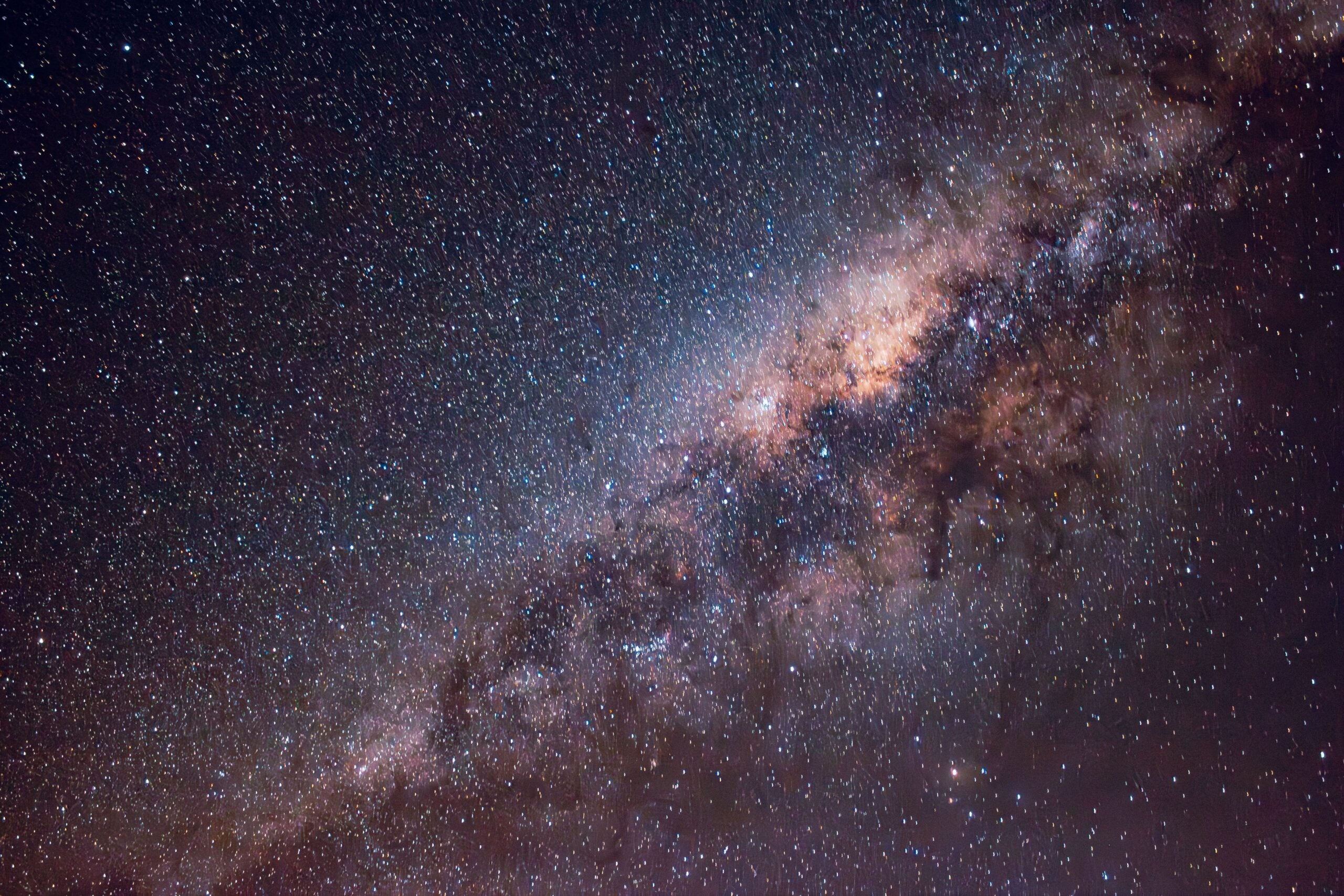
One hundred million years is almost nothing on a cosmic clock. NASA places the universe’s present age at about 13.8 billion years, making that early interval roughly 0.7 percent of everything that has happened since the Big Bang.
The universe then contained stars and dark matter halos, but no mature Milky Way, no Sun and almost none of the carbon, oxygen, silicon or iron needed for familiar planets. Yet a simulation published in The Astrophysical Journal Letters argues that one extreme stellar explosion could create a small, unusually rich pocket where the first steps toward a rocky planet happened far earlier than the cosmic average.
The distinction between a possibility and a discovery matters from the outset. The 2026 study led by Eduard Vorobyov produced planetesimals, not completed planets. Its detailed disk calculation was tied to a somewhat later epoch, around redshift 17. The authors then argued that related halos could compress the sequence enough for similar disks to appear only 50 to 100 million years after the Big Bang.
That makes the headline’s 100 million years an earliest plausible model outcome, not the measured age of a planet and not the exact timestamp of the paper’s worked example. No rocky world from cosmic dawn has been observed. What the simulation changes is the earliest date that the necessary solid building blocks appear physically possible.
The universe first had to manufacture rock
The Big Bang made overwhelmingly hydrogen and helium, with a trace of lithium. It did not make the bulk silicon, magnesium, oxygen, carbon and iron required for a terrestrial planet. Those elements had to be forged inside stars and scattered when some of the first stars died.
Astronomers call those first, essentially metal-free stars Population III. In astronomy, “metal” means almost every element heavier than helium, not only metals in the everyday sense. NASA’s guide to the first stars describes them as likely hotter, more massive and shorter-lived than the Sun, although no individual Population III star has yet been confirmed.
This connects naturally with SpaceDaily’s earlier examination of hypothetical dark stars. Both ideas concern a universe before normal chemical enrichment, but they solve different problems. Dark-star models ask how heating from dark-matter annihilation might support an enormous primordial object. The new work asks how the death of a fusion-powered primordial giant could prepare solid material for the next generation.
The old intuition was gradual. Each generation of stars would add a little more heavy material to its surroundings. Planet formation would grow more efficient as galaxies recycled that material for billions of years. That broad trend can still be true while rare local regions move much faster.
One giant explosion as a local shortcut
The proposed shortcut is a pair-instability supernova. In a sufficiently massive star, energetic gamma rays can convert into electron-positron pairs. Radiation pressure falls, the core contracts and explosive burning can disrupt the star completely rather than leaving a neutron star or black hole.
Models cited by the team place the relevant primordial stars in a broad range around 120 to 260 solar masses and allow the most powerful explosions to eject more than 100 solar masses of heavy elements. A single event can therefore be a prodigious chemical factory as well as a blast.
That is the key contrast between a cosmic average and a local pocket. The early universe as a whole could remain extremely metal-poor while one expanding remnant mixed newly made material into a dense clump. Some modeled regions briefly reached metal abundances approaching the Sun’s, even though the cloud core used for the disk calculation contained about four percent of the solar metal abundance.
Four percent sounds meagre, but metals and dust allow gas to radiate heat more efficiently. A dense enriched clump can cool, contract and fragment into lower-mass stars rather than producing only another giant. In the simulation chain, the supernova’s debris therefore supplied both the raw rocky ingredients and the cooling route to a long-lived parent star.
Water emerged in the same wreckage
The explosion did more than distribute rock-forming elements. Oxygen in the ejecta could react with hydrogen as the remnant expanded and cooled. A 2025 Nature Astronomy simulation by several members of the same team followed water production in primordial core-collapse and pair-instability supernova remnants.
Most diffuse material contained very little water. The important chemistry happened in dense, self-gravitating cores, where higher density sharply accelerated reactions. In the pair-instability case, one core reached a water mass fraction near 10−4 and a metallicity around four percent of solar.
The 2026 work took the inner solar mass of that enriched core and asked the next question: could it collapse not just into a star, but into a star-and-disk system capable of making planetesimals?
What the new simulation actually followed
The calculation began with a slowly rotating cloud core. Once the central gas became sufficiently dense, the code introduced a gravitating point-like protostar. Infalling material preserved angular momentum, flattened and assembled into a rotating circumstellar disk.
The protostar appeared about 24,000 years after collapse began; the disk followed roughly 1,000 years later. By 21,000 years after the star’s birth, the disk had developed spiral structure, a sign that its own gravity was helping redistribute material.
At the end of the calculation, about 100,000 years after the start, the star had reached 0.4 solar masses and was still growing. Its gas disk held roughly half to three-fifths as much mass as the star. Dust delivered from the parent cloud rose to about 15 Earth masses before stellar-brightness bursts began evaporating some of it.
The model was two-dimensional in the disk plane, with vertical behaviour represented through integrated quantities. It solved the dynamics and energy balance of gas and dust, modeled grain growth, and used a sub-grid prescription to convert sufficiently concentrated solids into planetesimals. It did not follow a swarm of those bodies through millions of years of collisions.
How dust crossed the difficult gap
Turning microscopic grains into planets is not simply a matter of continuous sticking. As grains grow, collisions can become fast enough to fragment them. Gas orbits slightly more slowly than solid particles, so aerodynamic drag also robs larger grains of angular momentum and sends them spiralling toward the star.
In the simulation, a relatively quiet inner “dead zone” created a pressure maximum. Millimetre grains drifting inward became trapped instead of being lost. Their local abundance rose, collisions grew some beyond a centimetre, and the dust began to decouple more strongly from the gas.
Under the adopted thresholds, that concentration triggered the streaming instability. This collective dust-gas process can crowd pebbles into filaments dense enough for gravity to assemble much larger solid bodies. Because the global simulation could not resolve the instability directly, the researchers represented its onset and conversion efficiency with criteria calibrated from higher-resolution work.
A separate investigation reached a compatible conclusion through a different kind of dust trap. Simulations of vortices in low-metallicity disks found that planetesimals could appear near four percent of solar metallicity if the vortices concentrated enough solids. In those models, growth to Mars-scale planets or larger required about eight percent of solar. Both studies replace a single global metallicity threshold with local disk physics.
Six Earth masses is not six Earths
In the fiducial run, planetesimal production rose to roughly six Earth masses before levelling off about 37,000 years after the protostar formed. Most of that material occupied an annulus roughly 0.5 to 1 astronomical unit from the star.
Six Earth masses is a reservoir, not a count of finished planets. It could eventually build an Earth-mass or Mars-mass body, several smaller worlds, or no stable planet if collisions, migration, disk dispersal and stellar activity removed too much. The paper explicitly says that calculating the later dynamics requires coupling the disk model to an N-body code.
The mass also changed when assumptions changed. Reducing the maximum collision speed at which grains survived cut the final planetesimal total to about 1.5 Earth masses. Applying a different published threshold for the streaming instability yielded around five Earth masses. A test approximating vigorous magnetically driven turbulence still formed about 0.7 Earth mass.
Those sensitivities do not erase the result. They define it. Across several plausible treatments, a disk with only a small fraction of the Sun’s metal abundance could cross the planetesimal barrier. What remains unproven is how efficiently those building blocks would assemble into a durable rocky world.
Water was present, but the first rocks were dry
The disk’s overall water abundance was only a factor of a few below that estimated for the early Solar System. That does not mean the simulated planetesimals were ocean-rich. They formed inside the water snow line, where temperatures kept water from remaining frozen on grains, so the paper expects them to be water-deficient.
The analogy with Earth comes later. Asteroids or planetesimals forming beyond the snow line by other mechanisms might scatter inward and deliver water to growing rocky worlds. The model contained enough water for that route to be conceivable, but it did not simulate the outer bodies, their scattering or the final water inventory of any planet.
“Habitable world at cosmic dawn” is therefore a possibility layered on top of a firmer result. The calculation made solid precursors with enough combined mass for a terrestrial planet. It did not make an Earth, an ocean, an atmosphere or life.
The 100-million-year claim needs one more step
The modeled core itself came from a supernova remnant at redshift about 17. That places the worked example later than 100 million years after the Big Bang in standard cosmology. The authors’ earliest date comes from applying the same formation route to other halo conditions.
They point to simulations in which dynamical heating and high relative speeds between ordinary matter and dark matter help halos retain part of a pair-instability blast at redshifts around 20 to 25. In that faster pathway, a water-bearing disk with planetesimals might appear within 50 to 100 million years.
This is a defensible “could,” not a demonstrated “did.” It combines a detailed planetesimal-forming disk calculation with separate cosmological results about how early the required enriched core might exist. Future three-dimensional models and N-body follow-up would have to carry the chain further.
A survivor could still be orbiting today
A star of around 0.4 solar masses burns fuel slowly enough to remain on the main sequence for far longer than the universe’s present age. If one formed in a primordial supernova remnant, it could still be shining in the Milky Way’s halo with its planets intact.
Low metallicity alone would not prove such an origin. Stars continued to form from metal-poor gas at later times. The paper suggests looking for the unusual odd-even pattern of elemental abundances predicted for pair-instability ejecta, in which elements with odd atomic numbers are depleted relative to neighbouring even-numbered elements.
A planet transiting a star with that chemical fingerprint, an ancient age and halo-like motion would make a much stronger case. ESA’s Plato mission is designed to survey more than 200,000 stars for terrestrial planets and characterize their hosts, although finding this rare population is far from guaranteed.
The result does not show that Earths were common when the cosmos was less than one percent of its present age. It shows that the universe may not have needed to wait for its average chemistry to mature. One extraordinary supernova, in one well-placed pocket of gas, may have been enough to begin assembling the raw architecture of rocky worlds almost at the beginning.