
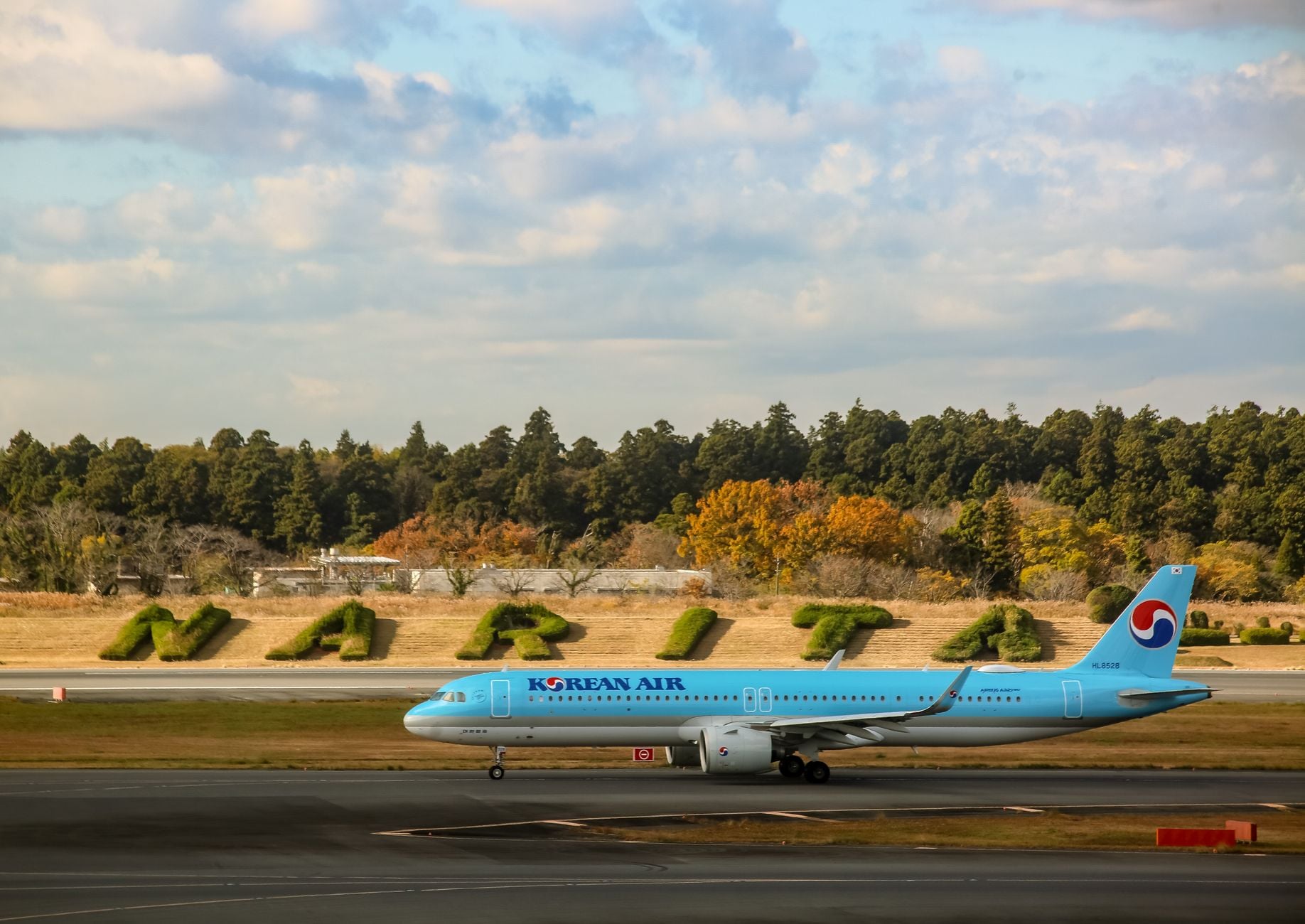
Narita International Airport opened on 20 May 1978 with one runway, although its master plan called for three. The gap was not a minor construction delay. Fierce resistance from local farmers, joined by student activists, had turned the airport into one of modern Japan’s longest and bitterest disputes over land.
Nearly half a century later, the unfinished argument is still visible in the pavement. Farmer Takao Shito has continued growing vegetables on enclosed land within the airport, and a taxiway takes a conspicuous curve around his fields as jets move between runway and terminal.
The feature is frequently misdescribed online as a bent runway. It is not. That distinction matters because Narita’s shortened second runway and its crooked taxiway are related consequences of the same land conflict, but they are not the same structure.
The three-runway airport that opened with one
Japan’s government selected Sanrizuka, in rural Chiba Prefecture, for the new Tokyo international airport in 1966. The decision arrived with little local consultation in communities where families worked fields that the project intended to absorb. Farmers organised against land acquisition, and their campaign later drew radical student groups and other supporters.
The confrontation escalated far beyond ordinary planning objections. Farmers and supporters built towers, fortifications and huts to obstruct construction. The state used compulsory acquisition powers and deployed riot police. Narita’s airport history museum describes casualties on both sides during the clashes, a part of the airport’s history that should not be reduced to the picturesque image of cabbages beside an airliner.
A 1978 white paper from Japan’s transport ministry said the airport had initially been expected to open in 1971. Problems acquiring land and securing a reliable jet-fuel supply helped delay it until 1978. Even then, only the first phase was complete: a 4,000-metre main runway and the first passenger terminal. The planned parallel and crosswind runways remained unbuilt.
Narita could function, but it did not resemble the airport on the original drawings.
How the second runway lost 320 metres
Progress on the second phase remained slow because important plots were still unavailable. A long process of public meetings in the 1990s acknowledged that the state had tried to force the project through without sufficient local agreement. Compulsory acquisition applications were withdrawn, shifting later development towards negotiation.
The result was a provisional second runway designed around what could actually be built. Narita International Airport Corporation’s official airport history records that temporary Runway B entered service in April 2002 at 2,180 metres. Its planned length was 2,500 metres, so the operating strip was exactly 320 metres short.
That missing distance had practical consequences. Runway length is only one factor in aircraft performance, alongside weight, weather and wind, but 2,180 metres restricted the range of heavy long-haul aircraft able to use Runway B. More of that traffic therefore depended on Narita’s 4,000-metre Runway A.
The airport eventually found room to complete the length by extending B at its northern end. Satellite images published by JAXA show the extension under construction between 2007 and 2009. The full 2,500-metre Runway B opened for commercial service on 22 October 2009, allowing larger aircraft to use it and resolving the 320-metre deficit seven years after the provisional opening.
Completing the runway did not make every holdout disappear.
The curve is a taxiway, not a runway
Runway B is straight. The striking bend visible on aerial maps belongs to an outer taxiway, the paved route used by aircraft travelling on the ground between operational areas. It detours around a pocket of land associated with Shito, leaving fields inside fencing while aircraft pass on the airport side.
An AirAsia account of Narita’s farms describes Shito cultivating crops including onions, carrots, garlic and radishes while the taxiway snakes around the plot. The scene is unusual because airports are normally presented as sealed, comprehensively planned systems. Here, the geometry reveals a property boundary that planners could not simply erase.
Shito’s farm should not be made to carry the entire explanation for Narita’s incomplete master plan. Several residents refused to sell, and separate pieces of unacquired land, buildings and protest infrastructure constrained different parts of the airport. The 2009 northern extension also shows that engineers could sometimes work around blocked land without obtaining it.
His fields remain the most recognisable remnant because passengers can sometimes see crops and structures at close range while taxiing. What looks like inefficient airport design is, in fact, infrastructure following a legal and political boundary.
The farmer within the airport perimeter
Shito’s family had worked the land for generations before jets arrived, although the property’s legal history includes leasing as well as ownership disputes. Shito took up the farm and the protest after his father, tending vegetables in conditions shaped by engine noise, security fencing and continuing litigation.
The latest detailed English-language reporting we could verify comes from CBS News in August 2023. Its report showed Shito, then 73, still farming and saying that he intended to remain. It also described police installing fences earlier that year that divided his house and shed from parts of the fields after a court-ordered enforcement action.
That timing needs stating plainly. The 2023 report is strong evidence that Shito was still cultivating the land 45 years after Narita opened. It is not a live inspection of every boundary on the farm in September 2026, and the land subject to enforcement has changed over time. The continuing taxiway detour and the continuing presence of cultivated land are better documented than every detail of possession.
The farm is neither a decorative island preserved by airport management nor a simple victory over compulsory purchase. It sits inside a conflict that brought loss of land, criminal cases, court decisions and deep divisions among neighbours. Shito’s vegetables are part of an active livelihood, but they are also an assertion that the airport’s perimeter did not settle the argument.
A new three-runway plan is taking shape
Narita is again moving towards three runways, though not the arrangement imagined in the 1960s. The airport’s current development plan retains the 4,000-metre Runway A, extends Runway B from 2,500 to 3,500 metres, and adds a new 3,500-metre Runway C. The former crosswind-runway concept has been replaced by a new layout intended to increase capacity.
Airport master plans often meet constraints their diagrams barely show. SpaceDaily recently looked at a Florida airport whose vast proposal produced only one runway beside the Everglades. Narita’s circumstances are different, but both cases make the same practical point: a plan is drawn on land that already has owners, neighbours, ecosystems and history.
Narita’s next runway works will alter the map once more. The older taxiway curve remains, for now, the clearest sign that the airport was built through a dispute rather than on an empty site.
